How to Use Writing to Think and Learn Faster
TL;DR
Writing improves thinking, accelerates skill acquisition, and creates digital leverage by turning ideas into content that can reach an audience. A daily practice of one to two hours can sharpen articulation, strengthen pattern recognition, generate reusable material, and support business activities such as marketing, advertising, emails, posts, scripts, and customer communication.
Transcript
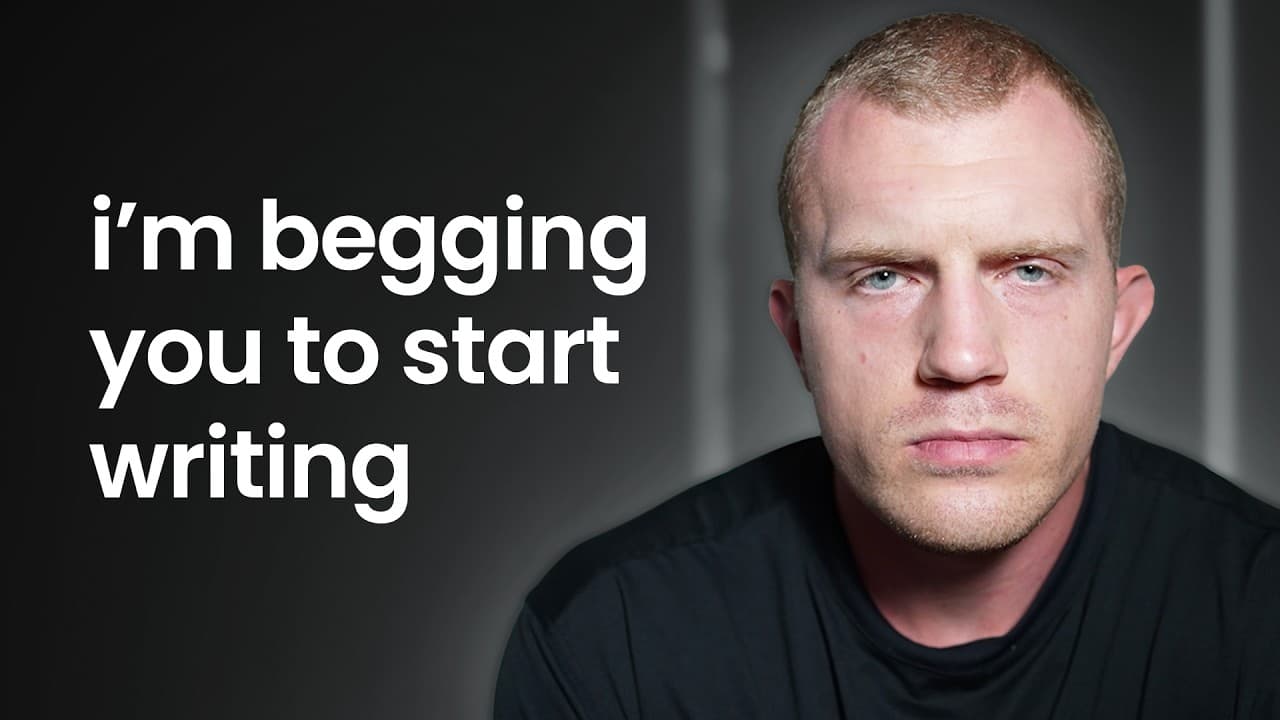
If you don't know what skill to learn Learn to write. Even if you don't consider yourself a writer, or even if that thought has never crossed your brain. Because writing teaches you how to think, how to learn any skill fast, and how to attract an audience that supports your work, which is absolutely needed. If you want to build your own business or... Read More
Key Insights
- Writing is a practical way to train thinking, learning, and distribution at the same time. These capabilities remain valuable in the age of AI because meaningful independent work still requires clear ideas, rapid skill development, and communication that places useful work in front of potential supporters or customers.
- Writing is central to operating a business because marketing, advertising, captions, posts, emails, scripts, and communication with customers or partners all depend on written language. Making writing a daily practice therefore improves a capability on which much of a business can depend.
- Digital leverage is created through intangible assets such as an audience, personal brand, intellectual property, content, data, systems, and software. These assets can be inexpensive to build, scale beyond a local market, and continue attracting attention after the initial creation work is finished.
- Old leverage is based on physical assets such as houses, factories, machinery, trucks, inventory, watches, or gold. Its output is often linear and local because a factory has limited daily capacity and a house generally serves one tenant at a time.
- Writing is an accessible form of leverage because content can be created once and seen by many people. It also supports other forms of leverage, since even a strong product or software application needs persuasive communication before people will notice, use, or purchase it.
- Written content is useful preparation for video and audio because posts can become a backlog of scripts. Practicing how to organize ideas and capture attention on paper can improve future videos, podcasts, and other formats while building an audience before entering those channels.
- A small, valuable audience can support meaningful income without celebrity-level fame. The creator reports replacing freelance income at around 5,000 followers and describes a personal trainer earning more than $100,000 per month at 10,000 followers after developing business, marketing, and sales skills.
- Writing changes observation by encouraging the mind to notice patterns, details, connections, and potential ideas in ordinary experiences. Conversations can become sources of inspiration, while difficult thoughts become material to examine, organize, and articulate instead of remaining vague or untested.
Install to Summarize YouTube Videos and Get Transcripts
Explore YouTube Video Summarizer or Get YouTube Transcript Extractor
Questions & Answers
Q: Why does writing help people think more clearly?
Writing helps clarify thinking because it requires vague thoughts to be organized into language that another person can understand. Repeated practice strengthens articulation, reveals connections among ideas, and encourages closer attention to details in everyday life. Thoughts that might otherwise remain unexamined become material that can be captured, questioned, arranged, and developed into clearer explanations.
Q: How can writing help someone learn skills faster?
Writing supports faster learning by forcing a person to process, organize, and explain what they are trying to understand. The practice makes ideas more concrete and exposes areas where understanding is incomplete. It also increases pattern recognition, allowing connections to form among new information, previous knowledge, conversations, experiences, and the practical problems a person is attempting to solve.
Q: What is digital leverage in writing and content creation?
Digital leverage comes from assets such as an audience, personal brand, intellectual property, content, data, systems, and software. Written material can be produced once and distributed to many people, unlike physical assets with fixed local capacity. A growing library of useful content can continue attracting attention, supporting a business, and creating opportunities beyond the original writing session.
Q: Why is writing important for starting an online business?
Writing underlies many activities required to start and operate an online business. Marketing, advertisements, social posts, captions, emails, direct messages, website copy, articles, video scripts, and communication with customers or partners all require clear written language. Improving this skill strengthens a founder's ability to attract attention, explain value, build relationships, and convert ideas into offers people understand.
Q: How much time should a daily writing practice take?
The creator built his business around one to two hours of writing every morning and describes that routine as the fuel for his business and broader body of work. The description also presents a content system that can run on 60 minutes a day. These examples suggest that a consistent, focused daily session can produce useful ideas and publishable material.
Q: Can a small audience generate meaningful business income?
A small audience can generate meaningful income when it is paired with useful work and developed business skills. The creator reports replacing his freelance income at around 5,000 followers. He also describes a fitness personal trainer earning well over $100,000 per month with 10,000 followers after studying business, marketing, and sales and investing in his education.
Q: How does writing prepare someone to create videos or podcasts?
Writing creates a backlog of organized ideas and scripts that can later become videos or podcast material. It lets a creator practice structuring thoughts and attracting attention before becoming comfortable on camera or finding time to edit. Building an audience through written platforms can also provide an initial group of people to direct toward a new video or audio channel.
Q: How can one idea become a week of content?
One idea can serve as the central project for an entire week, then be developed into multiple pieces of content. The described system combines capturing ideas, finding subjects that are attracting attention, selecting what to write about, and creating unique material. This approach reduces the need to begin from nothing each day and gives related posts a shared focus.
Summary & Key Takeaways
-
Writing is presented as a foundational skill for independent, creative, and meaningful work because it develops thinking, learning, and distribution simultaneously. Regular practice helps organize thoughts, improve articulation, and produce the communication required for marketing, advertising, customer relationships, partnerships, emails, social posts, web pages, articles, and video scripts.
-
Digital assets such as audiences, personal brands, intellectual property, content, data, systems, and software offer leverage without requiring the capital needed for factories, property, machinery, or inventory. Writing is especially accessible because one piece can reach many people, build trust, attract customers, and help unlock other forms of leverage.
-
The proposed writing system begins with capturing useful ideas, identifying subjects worth discussing, and developing content people want to read. Writing also changes how a person observes everyday life: conversations become potential inspiration, connections become easier to notice, and one strong idea can be developed into an entire week of content.
Read in Other Languages (beta)
Share This Summary 📚
Summarize YouTube Videos and Get Video Transcripts with 1-Click
Try YouTube Summary with ChatGPT & Claude or YouTube Transcript Generator
Explore More Summaries from Dan Koe 📚


Summarize YouTube Videos and Get Video Transcripts with 1-Click
Try YouTube Summary with ChatGPT & Claude or YouTube Transcript Generator