How to Use IVUS for Improved Endovascular Outcomes
TL;DR
Intravascular Ultrasound (IVUS) significantly enhances endovascular interventions by improving lesion assessment and vessel sizing, leading to higher procedural success and lower restenosis rates. It provides crucial information on calcium and plaque morphology, aiding in stent optimization and reducing amputation rates in chronic limb-threatening ischemia (CLTI).
Transcript
Thank you for this opportunity Dr. Krishnan and the team here. Um I'm going to be talking to you guys about the use of IVIS and endovvascular interventions. Sorry, going to the last slide. Um I have no relevant disclosures. Um uh just um you know an overview of the use of IVIS among endovvascular interventions. This one's from a database of Medicar... Read More
Key Insights
- IVUS is increasingly used in endovascular interventions, with a significant reduction in major adverse limb events and amputations.
- IVUS provides detailed information on plaque morphology, calcium burden, and thrombotic components, aiding in procedure planning.
- IVUS surpasses angiography in identifying lesions, stents, and complications such as dissections and intramural hematomas.
- IVUS-guided interventions show improved patency rates and reduced reinterventions compared to angiography alone.
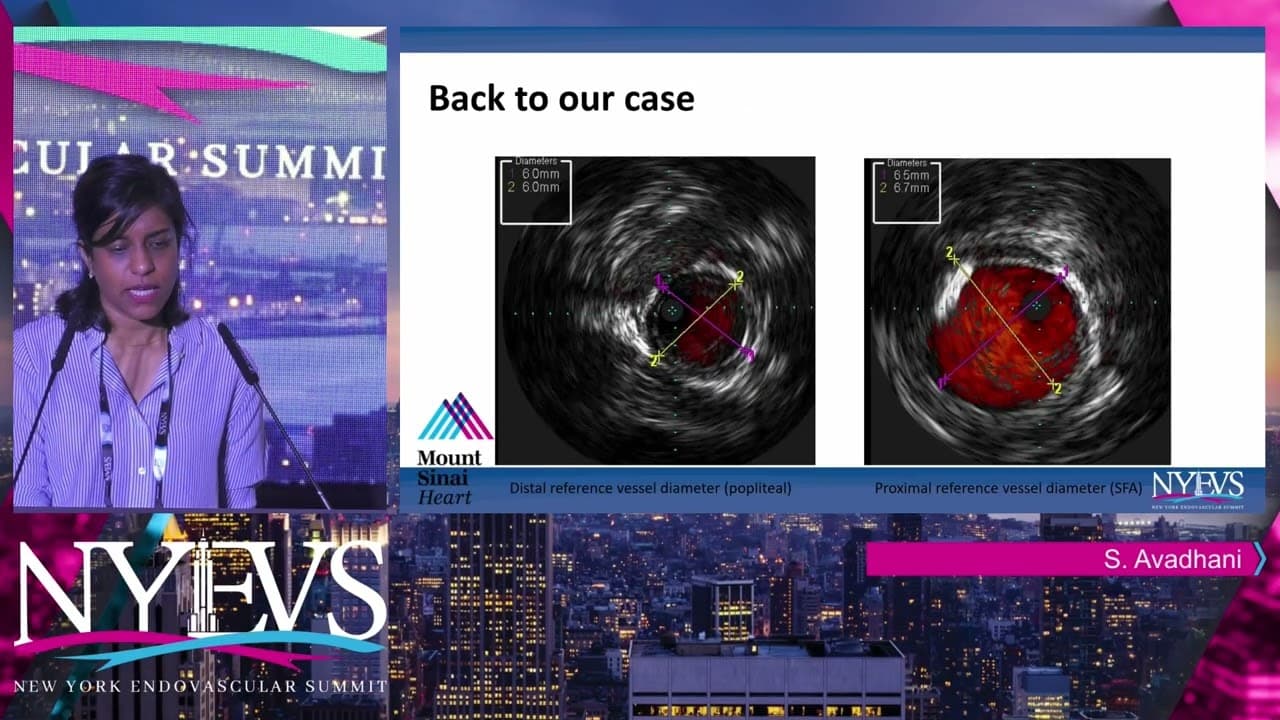
- In femoral-popliteal interventions, IVUS is associated with larger vessel diameters and longer lesions, enhancing procedural outcomes.
- IVUS-guided interventions lead to better wound healing and lower reintervention rates in CLTI patients.
- IVUS detects more lesions and higher stenosis degrees in venous interventions, altering treatment plans significantly.
- Utilizing IVUS during endovascular procedures improves lesion assessment and vessel sizing, optimizing stent placement and reducing restenosis.
Install to Summarize YouTube Videos and Get Transcripts
Explore YouTube Video Summarizer or Get YouTube Transcript Extractor
Questions & Answers
Q: How does IVUS improve endovascular outcomes?
IVUS improves endovascular outcomes by providing detailed insights into lesion characteristics and vessel sizing, which aids in procedure planning and execution. It enhances stent optimization, reduces restenosis rates, and lowers amputation rates in chronic limb-threatening ischemia (CLTI). Additionally, IVUS surpasses angiography in identifying lesions, stents, and complications, leading to higher procedural success and reduced need for reinterventions.
Q: What are the benefits of using IVUS over angiography?
IVUS offers several benefits over angiography, including superior lesion identification and detailed insights into plaque morphology, calcium burden, and thrombotic components. It enables better vessel sizing and stent optimization, leading to improved patency rates and reduced reinterventions. IVUS also detects more lesions and higher degrees of stenosis in venous interventions, significantly influencing treatment plans.
Q: How does IVUS aid in stent optimization?
IVUS aids in stent optimization by providing detailed information on lesion characteristics, vessel sizing, and plaque morphology. This allows for precise stent placement and sizing, reducing the risk of restenosis and improving procedural success. IVUS also helps identify complications such as dissections and malapposition, enabling timely corrective measures to enhance stent efficacy.
Q: What role does IVUS play in femoral-popliteal interventions?
In femoral-popliteal interventions, IVUS plays a crucial role by providing detailed insights into vessel diameters and lesion lengths, which aids in procedure planning and execution. It is associated with larger reference vessel diameters and longer lesions, enhancing procedural outcomes. IVUS-guided interventions demonstrate improved patency rates and reduced restenosis compared to angiography alone, contributing to better clinical outcomes.
Q: How does IVUS impact wound healing in CLTI patients?
IVUS positively impacts wound healing in CLTI patients by providing detailed insights into lesion characteristics and vessel sizing, leading to more effective interventions. IVUS-guided procedures result in larger balloon sizes and improved skin perfusion pressures, enhancing wound healing and reducing the time to wound closure. This leads to better clinical outcomes and lower rates of reinterventions in CLTI patients.
Q: What is the significance of IVUS in venous interventions?
IVUS is significant in venous interventions as it detects more lesions and higher degrees of stenosis than venography, substantially altering treatment plans. It provides detailed insights into lesion characteristics, enabling more precise interventions. IVUS-guided procedures result in improved lesion assessment and vessel sizing, leading to better procedural outcomes and optimized treatment strategies in venous interventions.
Q: How does IVUS contribute to reduced restenosis rates?
IVUS contributes to reduced restenosis rates by providing detailed insights into lesion characteristics, vessel sizing, and plaque morphology, which aids in precise stent placement and sizing. This optimization reduces the risk of restenosis and improves procedural success. IVUS also helps identify complications such as dissections and malapposition, enabling timely corrective measures to enhance stent efficacy and reduce restenosis.
Q: What are the clinical outcomes associated with IVUS use?
Clinical outcomes associated with IVUS use include improved patency rates, reduced restenosis, and lower amputation rates in chronic limb-threatening ischemia (CLTI). IVUS-guided interventions demonstrate superior procedural success, with better wound healing and lower reintervention rates. In venous interventions, IVUS alters treatment plans significantly, leading to optimized intervention strategies and improved clinical outcomes.
Summary & Key Takeaways
-
Intravascular Ultrasound (IVUS) enhances endovascular procedures by providing detailed insights into lesion characteristics, vessel sizing, and stent optimization. This leads to improved procedural outcomes, including lower restenosis and amputation rates. IVUS is particularly beneficial in identifying plaque morphology and thrombotic components, which aids in planning and executing interventions effectively.
-
IVUS-guided interventions demonstrate superior patency rates and reduced reinterventions compared to angiography alone. In femoral-popliteal interventions, IVUS is linked to larger vessel diameters and longer lesions, contributing to better procedural success. The technology also improves wound healing and clinical outcomes in chronic limb-threatening ischemia (CLTI) patients.
-
In venous interventions, IVUS detects more lesions and higher degrees of stenosis than venography, significantly influencing treatment decisions. Overall, IVUS enhances lesion assessment and vessel sizing, resulting in optimized stent placement and reduced restenosis, making it a valuable tool in endovascular procedures.
Read in Other Languages (beta)
Share This Summary 📚
Summarize YouTube Videos and Get Video Transcripts with 1-Click
Try YouTube Summary with ChatGPT & Claude or YouTube Transcript Generator