Are You Learning English? Do You Have A Question? Let Me Answer It For You!
TL;DR
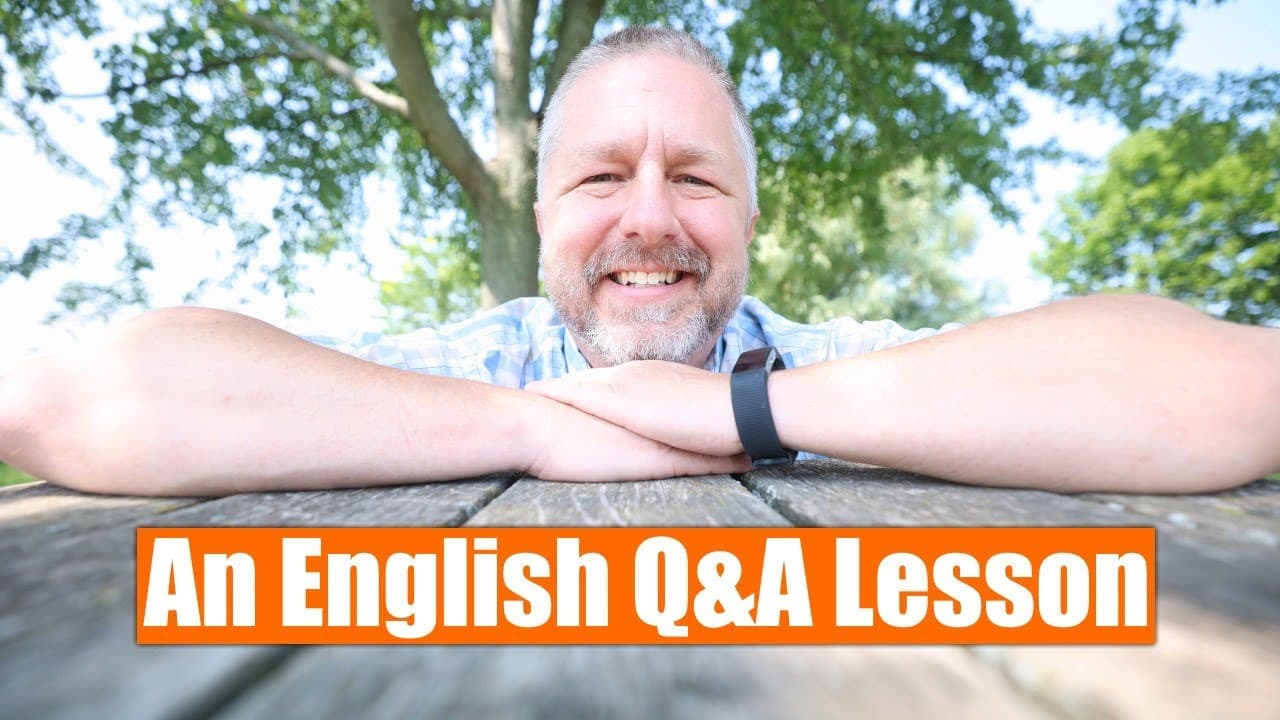
Bob the Canadian answers questions from viewers in his live outdoor English lesson.
Transcript
hi everybody hello and welcome to this outdoor english lesson where you get to ask me some questions and i'll do everything i possibly can to answer them we'll get started in about 20 seconds i'm just going to check the audio and make sure everything's working we'll start in about 10 seconds you might notice the cicadas are out i'll explain a littl... Read More
Key Insights
- 😫 The outdoor English lesson introduces the concept of cicadas as background noise and sets up a virtual "river cam" experience for viewers.
- 🧡 Bob answers a wide range of questions from viewers, covering topics such as vocabulary, grammar, pronunciation, idioms, and language learning strategies.
- 🙊 The Q&A session highlights the importance of vocabulary memorization, finding a speaking partner or language exchange, and using various resources like online tutors or discord servers for language practice.
- ❓ Bob shares personal insights on language learning and emphasizes the importance of consistency and individual progress.
- ❓ The lesson showcases Bob's teaching style, emphasizing clarity, engagement, and inclusivity, regardless of the learner's background or nationality.
- 🫵 The interaction between Bob and viewers demonstrates the effectiveness of virtual learning platforms and the global reach of English language education.
- ❓ Bob's commitment to providing consistent content and online engagement fosters a supportive and inclusive learning community.
Install to Summarize YouTube Videos and Get Transcripts
Explore YouTube Video Summarizer or Get YouTube Transcript Extractor
Questions & Answers
Q: What is the difference between adding "ish" and "y" to the end of words?
Adding "ish" to a word means "sort of" or "a little bit," while adding "y" can be more complex and depends on the specific word. The usage of "ish" and "y" varies and is not limited to a specific rule or pattern.
Q: What do we mean when we say "to sweep something under the rug"?
When we say "to sweep something under the rug," it means hiding or concealing something to avoid addressing or dealing with a specific issue or problem. This phrase is often used metaphorically to refer to covering up or ignoring a problem.
Q: What is the correct way to say "he said he would meet me on Thursday"?
Both "he said he would meet me on Thursday" and "he said he will meet me on Thursday" are correct. Both sentences convey the same meaning and can be used interchangeably.
Q: What phrases do Canadians use to express happiness?
Canadians use various phrases to express happiness, including "I'm happy," "I'm so happy," "I'm ecstatic," and "I'm overjoyed," among others. The choice of phrase depends on the level of happiness or excitement one wants to convey.
Q: What is an illusion?
An illusion is something that appears to be one thing but is actually something else. It can refer to visual tricks, like a mirage in the desert, or be used metaphorically to describe misleading or deceptive ideas or concepts.
Q: How can I improve my English intonation?
Improving English intonation involves practice and listening to native English speakers. Shadowing their speech, imitating their intonation patterns, and being aware of the rise and fall in pitch can help improve intonation skills.
Q: Can you explain the meaning of the phrase "so much for"?
The phrase "so much for" is used to indicate that something did not turn out as expected or planned. It denotes the dismissal or disappointment of a specific outcome or expectation.
Q: How can I improve my English reading skills?
Some tips to improve English reading skills include reading books and articles in English, starting with simpler materials like young adult fiction, and practicing reading comprehension through exercises and tests.
Summary & Key Takeaways
-
Bob introduces his outdoor live English lesson, mentioning the cicadas in the background.
-
He requests viewers to imagine sitting by the river with him and introduces the river cam set up.
-
Bob then proceeds to answer various questions asked by viewers, covering topics such as word endings, idioms, expressions, pronunciation, and language learning strategies.
Read in Other Languages (beta)
Share This Summary 📚
Summarize YouTube Videos and Get Video Transcripts with 1-Click
Try YouTube Summary with ChatGPT & Claude or YouTube Transcript Generator
Explore More Summaries from Learn English with Bob the Canadian 📚

Summarize YouTube Videos and Get Video Transcripts with 1-Click
Try YouTube Summary with ChatGPT & Claude or YouTube Transcript Generator