How to Invest During a Nike Swoosh Recovery
TL;DR
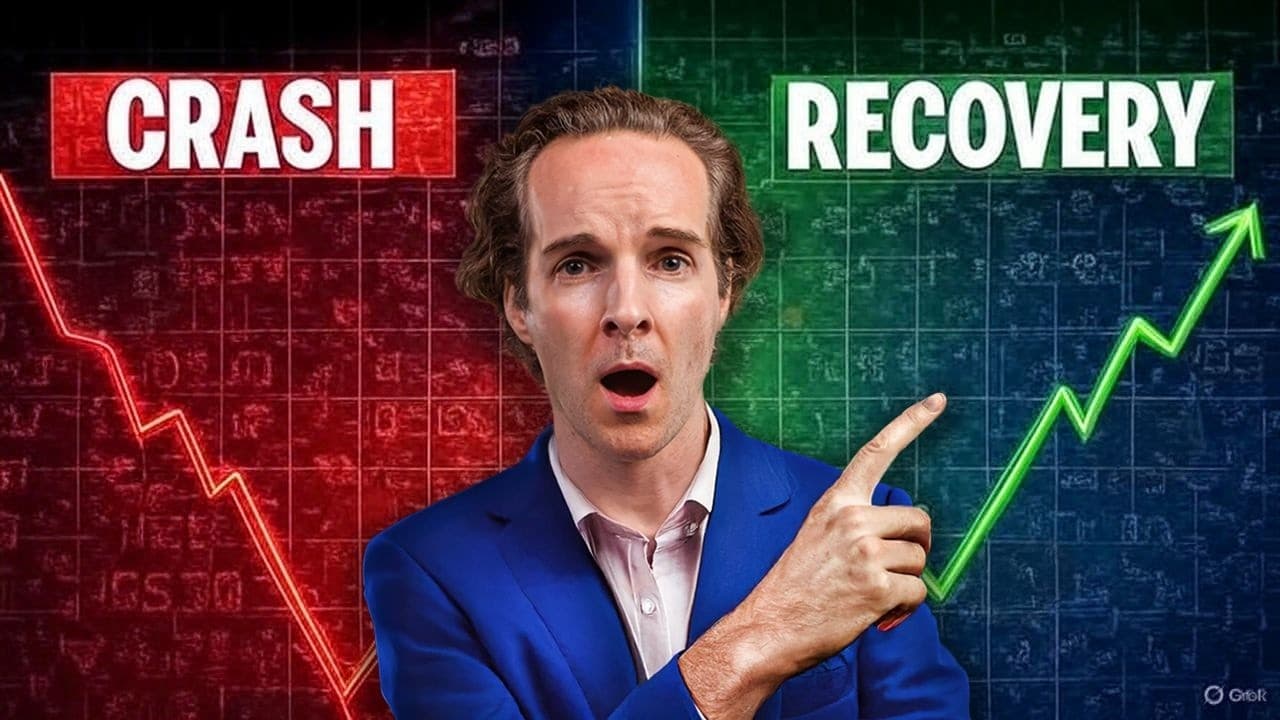
Invest during a Nike swoosh recovery by favoring quality companies, staying patient and flexible, and following economic data and capital flows rather than relying on a fixed forecast. Torsten Slok shifted from a 90% recession probability to a gradual-recovery outlook after consumer spending, employment, tariffs, and markets proved more resilient than expected. Read on to understand the recovery shape, remaining risks, and sectors discussed.
Transcript
Are we on the verge of a massive market crash or is this the beginning of an epic recovery that could send stocks soaring? Well, there's one guy out there who manages $650 billion and of course McKitten Alberta who are going to answer that question for you in the next couple of minutes. Now, the guy who's managing $650 billion is called Torston SLO... Read More
Key Insights
- Torsten Slok changed his outlook from a 90% probability of recession to a Nike swoosh economy after economic indicators and markets showed greater resilience than expected. His revised scenario projects several quarters of slowing activity followed by a gradual and sustained recovery.
- Stagflation is a combination of high inflation, slow economic growth, and rising unemployment. It complicates monetary policy because raising interest rates can deepen the slowdown, while cutting rates to stimulate growth and employment can increase inflationary pressure.
- Tariffs were initially expected to create a stagflationary shock by increasing prices while weakening economic activity. The transcript says their effects became more manageable after a 90-day pause began on April 9, helping markets recover from the earlier sell-off.
- Consumer spending is a central source of economic resilience because American consumers account for more than 60% of the economy, according to the transcript. Spending remained robust despite concerns about trade conflict and high borrowing costs, supporting the improved recovery outlook.
- The labor market remained relatively resilient even as it slowed. Jobs continued to be added, while unemployment rose slightly to 4.2%, which the presenter characterized as historically low and inconsistent with the economic catastrophe that had previously been feared.
- Corporate profits were stronger than expected across the software companies reviewed by the presenter. All 40 companies in that sample beat earnings expectations, supporting the argument that market fundamentals remained solid even as some individual valuations appeared expensive.
- A Nike swoosh recovery is a sharp decline followed by a curved, gradual improvement rather than an immediate V-shaped rebound or an extended period near the bottom. Under this scenario, market volatility continues before economic activity and stocks recover more steadily.
- The proposed investment strategy is to favor quality companies, follow capital flows, and remain data-dependent. Health care, utilities, telecommunications, electric utilities, aerospace and defense, and semiconductors were identified as areas that may withstand uncertainty or attract meaningful investor interest.
Install to Summarize YouTube Videos and Get Transcripts
Explore YouTube Video Summarizer or Get YouTube Transcript Extractor
Questions & Answers
Q: How should investors approach a Nike swoosh recovery?
The proposed approach favors quality companies with strong balance sheets and steady cash flow. Investors should remain patient, flexible, and data-dependent while monitoring capital flows across health care, utilities, telecommunications, electric utilities, aerospace and defense, and semiconductors.
Q: What is a Nike swoosh economy?
A Nike swoosh economy experiences a slowdown over several quarters followed by a gradual, sustained recovery. Unlike a sharp V-shaped rebound, it drops and then curves upward progressively rather than immediately returning to its previous trajectory.
Q: Why did Torsten Slok change his recession outlook?
Torsten Slok changed his outlook after consumer spending remained robust, the economy continued adding jobs, and unemployment reached 4.2%. Tariffs also caused less disruption than feared, leading him to replace a 90% recession probability with the Nike swoosh scenario.
Q: How did the 90-day tariff pause affect the stock market?
The tariffs were paused for 90 days on April 9, after an April sell-off in which the S&P 500 dropped about 20% in just over a month. Markets then rallied dramatically, and the S&P 500 recovered to new all-time highs by June.
Q: What is stagflation, and why is it difficult to manage?
Stagflation combines high inflation, slow economic growth, and rising unemployment. Raising interest rates to fight inflation can worsen the slowdown, while cutting rates to stimulate growth and employment can add inflationary pressure.
Q: Which economic indicators supported the recovery outlook?
Consumer spending remained robust despite trade-war concerns and high borrowing costs, while American consumers represented more than 60% of the economy. The job market kept adding jobs, unemployment was 4.2%, and the initial tariff effects were less severe than feared.
Q: Which sectors were highlighted for an uneven recovery?
The discussion identified health care, utilities, telecommunications, electric utilities, aerospace and defense, and semiconductors. Some were presented as capable of weathering uncertainty, while others were highlighted because substantial investor capital was flowing into them.
Q: What risks remain under the Nike swoosh recovery scenario?
The scenario still anticipates slowing economic activity over several quarters and continued market volatility before a sustained recovery develops. Cautious investor sentiment and changing recession forecasts reinforce the need for patience, flexibility, and decisions based on incoming data.
Summary & Key Takeaways
-
Apollo economist Torsten Slok shifted from warning of a 90% recession probability to describing a Nike swoosh economy. The revised outlook anticipates a slowdown over several quarters followed by a gradual, sustained recovery, reflecting stronger consumer spending, continued job creation, and tariff effects that proved less severe than initially feared.
-
The market recovered sharply after the 90-day tariff pause announced on April 9. By June, the S&P 500 had reached new all-time highs. As of August 2025, it had gained almost 20% from a year earlier and roughly 8% during the year, despite increasingly cautious investor sentiment.
-
The proposed investment response emphasizes quality businesses, patience, and flexibility rather than fixed economic predictions. Companies with strong balance sheets and steady cash flow may handle uncertainty better. The sectors discussed include health care, utilities, telecommunications, electric utilities, aerospace and defense, and semiconductors, particularly where substantial investor capital is already flowing.
Read in Other Languages (beta)
Share This Summary 📚
Summarize YouTube Videos and Get Video Transcripts with 1-Click
Try YouTube Summary with ChatGPT & Claude or YouTube Transcript Generator
Explore More Summaries from Felix & Friends (Goat Academy) 📚


Summarize YouTube Videos and Get Video Transcripts with 1-Click
Try YouTube Summary with ChatGPT & Claude or YouTube Transcript Generator