How to Stop Waiting and Start Living Fully
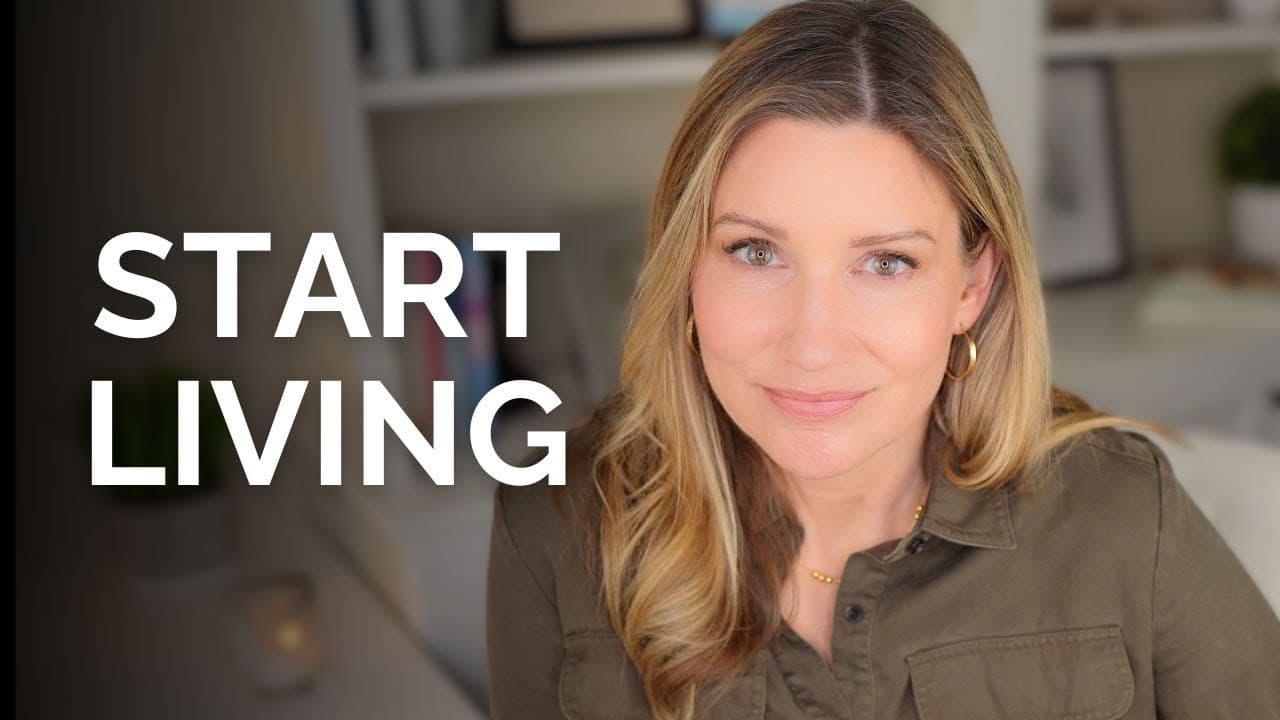
TL;DR
Reclaim your life by noticing where your time goes and completing a five-minute daily alignment check-in. Pause in stillness, confront what intuition and fear are telling you, picture an ideal ordinary day, and choose one bold move. Small daily decisions can replace productivity without purpose, outside expectations, and comfort-driven avoidance with greater clarity and alignment.
Transcript
regret doesn't show up all at once it builds slowly year by year in every moment that you silence your intuition or shrink your dreams you push it down you tell yourself "Now's not the right time." And one day you look up and you realize you've been waiting your whole life to start living but it doesn't have to be that way give me 12 minutes an... Read More
Key Insights
- Regret is a gradual result of repeatedly ignoring intuition, shrinking dreams, and postponing meaningful action. Waiting for the perfect time can become a lifelong pattern because life continues moving even when a person remains in a holding pattern.
- Time scarcity can partly reflect misplaced attention rather than an absolute lack of available time. The transcript states that the average adult spends between three and four and a half hours daily on a phone, which can accumulate to more than eight years.
- The productivity illusion is motion without meaningful alignment. Full calendars, detailed lists, email, and low-impact tasks can create a sense of progress while helping people avoid larger questions about what they want and why they are postponing it.
- Parkinson's law is presented as the principle that work expands to fill the time available for completion. Giving email three hours may make it consume three hours, while a thirty-minute limit can encourage the same work to be completed more quickly.
- Living by other people's expectations can produce outward success alongside inward emptiness. Cultural, family, school, and professional scripts may define achievement without asking what success personally means, leaving people disengaged from their values even when their lives appear impressive.
- The comfort zone can become restrictive after a person outgrows it. Stability, respect, and familiarity may reduce immediate risk, but remaining within those boundaries can flatten energy, limit potential, and turn a previously comfortable situation into a cage.
- The daily alignment check-in begins with one minute of stillness without a phone, podcasts, or other input. This brief interruption reduces reactive behavior, creates space for self-awareness, and helps a person hear thoughts that constant noise and activity may obscure.
- A bold daily move is a personally courageous action rather than a routine task or chore. Applying before feeling ready, requesting help, sharing an honest perspective, or declining a prestigious but misaligned opportunity can move life toward greater purpose.
Install to Summarize YouTube Videos and Get Transcripts
Explore YouTube Video Summarizer or Get YouTube Transcript Extractor
Questions & Answers
Q: How can I stop waiting for the perfect time to live?
Start by recognizing that the idea of someday can serve as protection from discomfort. Notice where your attention currently goes, especially into scrolling, reactive work, and obligations that do not reflect your values. Then use a daily alignment check-in to reconnect with yourself, identify what you are avoiding, picture a meaningful ordinary day, and take one brave action toward it.
Q: What are the three hidden time traps that steal your life?
The three traps are productivity without purpose, living according to other people's expectations, and shrinking dreams to fit a comfort zone. They are difficult to detect because they can look responsible, successful, or realistic. Together, they keep people busy but misaligned, encourage pursuit of approval rather than personal meaning, and make familiarity more important than growth or possibility.
Q: Why can productivity make someone feel stuck?
Productivity can create constant motion without progress toward what actually matters. Color-coded lists, full calendars, Zoom calls, email, and low-impact tasks offer clear completion and control, so they can distract from harder questions about purpose and avoidance. The result is a treadmill effect: the person remains highly functional and visibly busy but feels disconnected from meaningful work, creativity, and joy.
Q: How do other people's expectations affect personal fulfillment?
Outside expectations provide inherited definitions of success from culture, family, school, mentors, status systems, and professional environments. A person may build a respected career, financial stability, and admired achievements while privately feeling numb or empty. Fulfillment requires asking what success personally means and accepting that an earlier definition can be outgrown, especially when it no longer matches current values.
Q: When does a comfort zone become a cage?
A comfort zone becomes a cage when a person has outgrown it but remains because the situation is stable, respected, predictable, or familiar. The transcript describes this condition as functioning without thriving, accompanied by restlessness and flat energy. Progress then requires expanding the comfort zone to fit the desired life instead of continually reducing dreams to preserve existing boundaries.
Q: How does the five-minute daily alignment check-in work?
The practice begins with one minute of stillness without input. The next minute uses three questions about ignored knowledge, fear-based avoidance, and what an eighty-year-old self would recommend. Minute three visualizes an ideal ordinary day, and minute four selects one personally bold action. Minute five introduces a daily identity anchor, although the provided transcript ends before fully describing that step.
Q: What questions should I ask during a daily self-check-in?
Ask, "What am I pretending not to know?", "What am I avoiding out of fear?", and "What would my eighty-year-old self want me to do today?" The first surfaces intuition that has been suppressed, the second gives a name to delayed conversations or decisions, and the third shifts attention away from immediate approval, likes, and inbox completion toward a longer perspective.
Q: Why should I visualize an ideal ordinary day?
Visualizing an ideal ordinary day gives the mind a clear picture of what it is moving toward, rather than focusing only on what it wants to escape. Consider when you wake, how the morning feels, what work energizes you, who surrounds you, and how those relationships feel. The resulting picture can become a practical blueprint for gradual decisions and changes.
Summary & Key Takeaways
-
Regret develops gradually whenever people silence their intuition, reduce their dreams, or postpone meaningful experiences until conditions seem perfect. Life continues during these delays, while phone use, constant responsibilities, and reactive routines consume time. Recognizing this drift is the first step toward deliberately reclaiming attention, purpose, creativity, and joy.
-
Three hidden traps keep people disconnected: productivity without purpose, success defined by other people, and dreams reduced to fit a familiar comfort zone. These patterns can appear responsible because they reward busyness, stability, and approval. However, they may produce motion without meaning, external achievement without fulfillment, and functioning without genuine growth.
-
The daily alignment check-in offers a gradual alternative to completely overhauling life. It begins with stillness, continues with three honest questions, and adds visualization of an ideal ordinary day. The practice then asks for one personally bold move and introduces a daily identity anchor, helping replace passive drift with intentional decisions.
Read in Other Languages (beta)
Share This Summary 📚
Summarize YouTube Videos and Get Video Transcripts with 1-Click
Try YouTube Summary with ChatGPT & Claude or YouTube Transcript Generator
Explore More Summaries from Kim Foster, M.D. 📚

Summarize YouTube Videos and Get Video Transcripts with 1-Click
Try YouTube Summary with ChatGPT & Claude or YouTube Transcript Generator