How to Transform Your Life in One Day
TL;DR
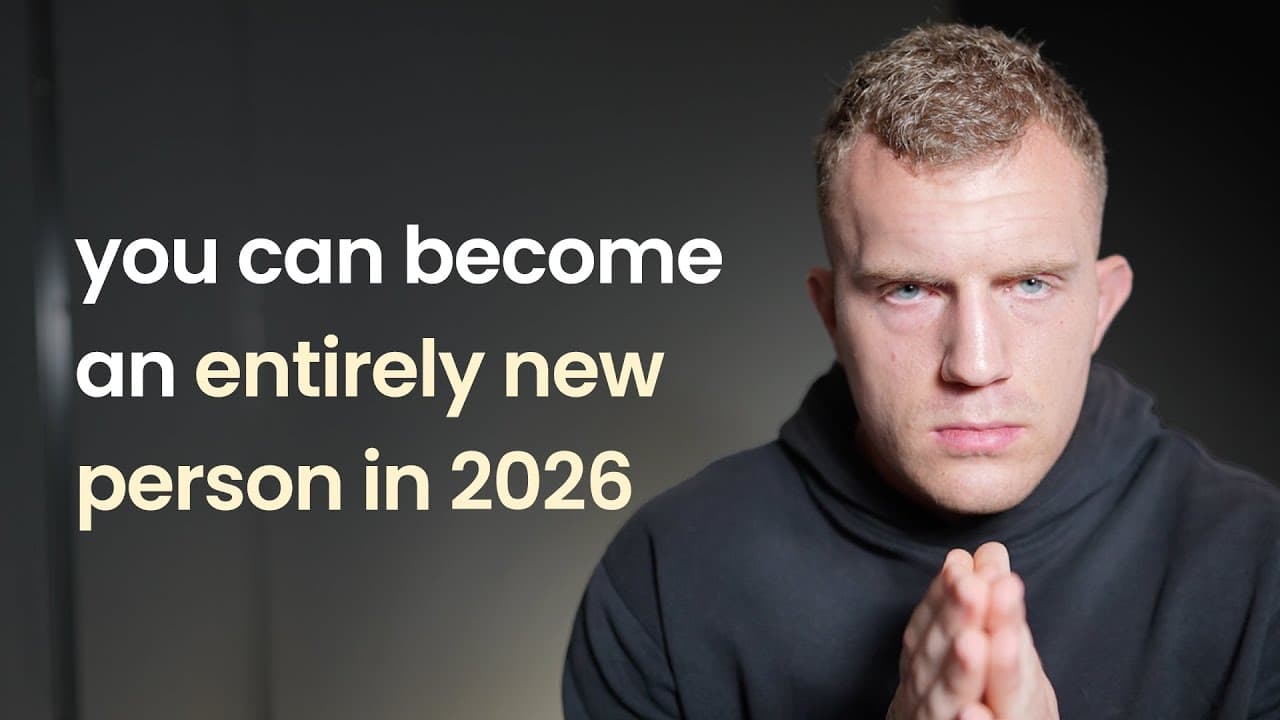
You can transform your life by changing your identity so that better behavior follows naturally, then using a structured day of reflection to clarify what you truly want. The approach covers six ideas followed by a seventh, day-long protocol involving morning journaling, continued contemplation, and evening synthesis. Read on for the mindset shifts and questions designed to expose unconscious patterns and turn your insights into meaningful goals.
Transcript
You're probably going to quit your New Year's resolution. And that's okay. Most people do. Studies actually show that it's around 80 to 90% of people quit their New Year's resolutions. And that's because most people don't actually want to change on a deep internal level. And with New Year's resolutions going into 2026, people just go about changing... Read More
Key Insights
- Most people fail at New Year's resolutions because they don't change on a deep, internal level.
- True change requires altering your identity so that desired behaviors follow naturally.
- Behavior is always goal-oriented, even if the goals are unconscious and self-sabotaging.
- Identity is shaped by conditioning from parents, society, and past experiences.
- To change your life, you must understand and reprogram your mind's goals and perceptions.
- Intelligence involves the ability to iterate, learn from mistakes, and adapt to achieve goals.
- A profound life change can occur through a structured day of self-reflection and questioning.
- Turning life into a 'video game' with clear goals and constraints can enhance focus and enjoyment.
Install to Summarize YouTube Videos and Get Transcripts
Explore YouTube Video Summarizer or Get YouTube Transcript Extractor
Questions & Answers
Q: How can I transform my life in one day?
Focus first on changing who you are, not merely forcing different actions. Dedicate a full day to the structured reflection protocol: journal in the morning, contemplate your insights throughout the day, and synthesize them into meaningful goals in the evening.
Q: Why do most New Year's resolutions fail?
The transcript says around 80% to 90% of people quit their New Year's resolutions because they do not truly want to change at a deep internal level. They pursue surface-level goals and temporary discipline without changing the identity beneath their behavior.
Q: Why is identity more important than action for lasting change?
Changing actions is described as second-order change, while changing who you are is first-order change. When your identity aligns with a goal, the necessary behavior follows more naturally instead of depending on a brief burst of discipline.
Q: What are the seven ideas for changing your life?
The material presents six ideas about behavior change, psychology, and productivity, followed by a seventh idea that is actually a protocol. The excerpt explains the first idea: you are not where you want to be because you are not yet the person who would naturally be there.
Q: What is the one-day self-reflection protocol?
It is a full-day process that begins with morning journaling about your dissatisfaction and ideal life. You continue contemplating those insights during the day, then synthesize them into actionable goals in the evening to help break unconscious patterns and establish a new vision.
Q: Should you quit goals that no longer fit?
Yes, the speaker argues that you may need to quit more goals than you set because this helps you narrow in on the correct goals. He gives his abandoned book project as an example and distinguishes thoughtful redirection from repeatedly returning to old patterns.
Q: How can treating life like a video game improve motivation?
Give your life clear goals and constraints, with your vision serving as the win condition. Daily tasks then become quests that move you toward that vision, creating more structure, focus, and enjoyment.
Q: How is intelligence connected to achieving goals?
Intelligence is defined here as the ability to achieve what you want in life. It involves seeing the larger picture, learning from mistakes, adapting, and repeatedly refining your approach until you make progress toward meaningful goals.
Summary & Key Takeaways
-
Changing your life in one day is possible by altering your identity, not just your actions. This involves understanding your mind's goals and perceptions, which are often shaped by societal conditioning. By engaging in a day of deep self-reflection and questioning, you can uncover profound insights that align your life with your true desires.
-
The video outlines a protocol for self-exploration that includes morning journaling, day-long contemplation, and evening synthesis. This process helps break unconscious patterns and establish a new vision for your life. By treating life like a video game, with clear goals and constraints, you can enhance focus and enjoyment.
-
Intelligence is defined as the ability to achieve what you want in life, and it involves iterating, learning from mistakes, and adapting. Setting meaningful goals and understanding the mind's workings are crucial for true change. The video emphasizes the importance of changing your identity to align with desired behaviors.
Read in Other Languages (beta)
Share This Summary 📚
Summarize YouTube Videos and Get Video Transcripts with 1-Click
Try YouTube Summary with ChatGPT & Claude or YouTube Transcript Generator
Explore More Summaries from Dan Koe 📚

Summarize YouTube Videos and Get Video Transcripts with 1-Click
Try YouTube Summary with ChatGPT & Claude or YouTube Transcript Generator