Why Expensive Hi-Fi May Not Improve Music
TL;DR
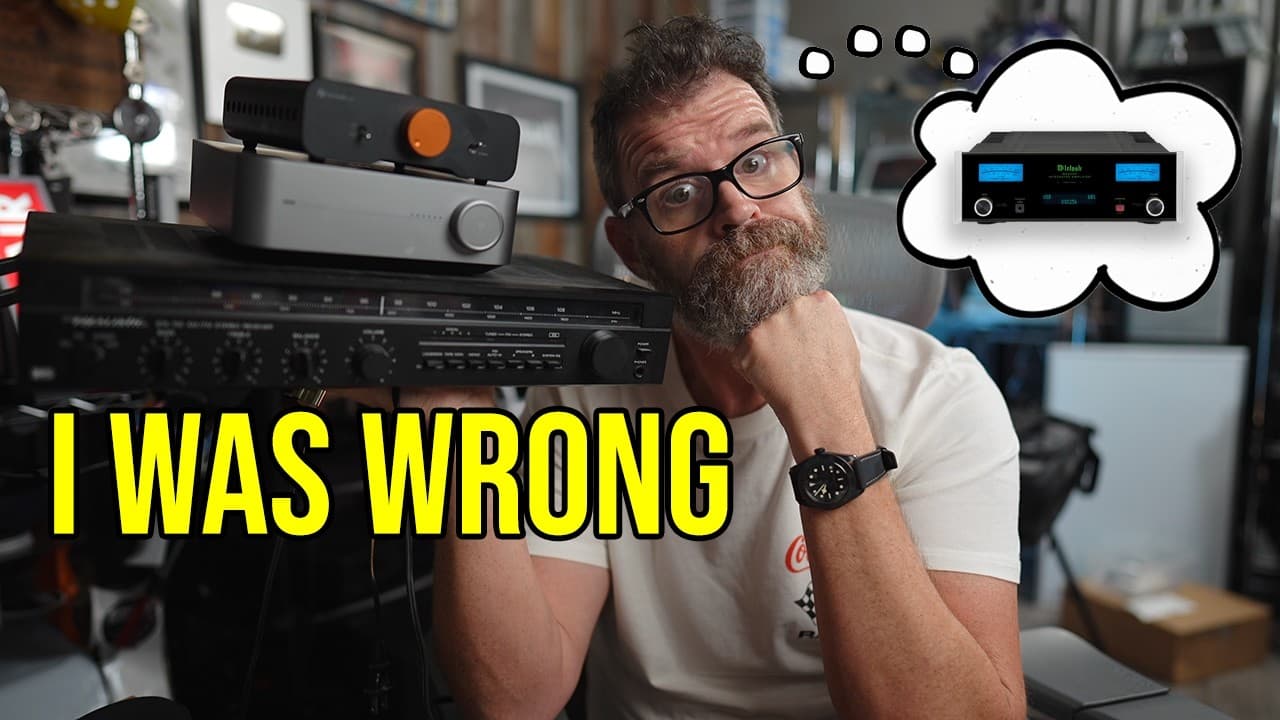
Expensive audio equipment does not automatically make music more enjoyable or produce improvements proportional to its price. After comparing a $2,000 integrated amplifier with a $650 home theater system and preferring $600 ELAC speakers to $1,200 KEF LS50s, the creator concluded that emotional connection, personal taste, and practical satisfaction matter more than audiophile status.
Transcript
My hi-fi journey. It's not what I expected. This is me 35 years ago. Look at that denim jacket. Look at that car. That, my friends, is a 1979 Dodge Aspen RT with a slant 6 engine and it made about 110 horsepower. However, I was 14 and this is where my hi-fi journey began. Actually, not really. We've got to go back a few years. It actually started i... Read More
Key Insights
- The creator's hi-fi interest began with accessible equipment, including a portable cassette player in 1982 and a used 12-watt Realistic receiver with a CD player in 1986. These modest systems mattered because they gave him direct access to music, not because they met audiophile standards.
- The first car stereo he bought and installed himself created a strong sense of ownership. Although the installation left speaker cables across the floor and replaced only an old eight-track player with a cassette deck, completing the project with his own money made the result feel personally significant.
- The difference between needs and wants repeatedly drove dissatisfaction. His 1979 Dodge Aspen RT and inexpensive stereo provided transportation, freedom, and music, yet newer cars and better systems owned by other teenagers made equipment that met his needs feel insufficient.
- Affordable home theater equipment delivered genuine enjoyment. A low-cost Yamaha receiver, inexpensive two-way Sony speakers, a subwoofer, and Jurassic Park on VHS created a satisfying experience, even though the creator still wanted equipment beyond what he could afford at the time.
- More than $4,000 from selling vintage action figures funded the creator's first major hi-fi purchase. The system included used KEF LS50 speakers, a used Moon by Simaudio integrated receiver, a discounted Marantz NR1711, and ELAC Debut Reference speakers.
- The expensive integrated amplifier produced only a small perceived improvement over the less costly home theater system. The creator thought the $2,000 Moon amplifier sounded slightly better than the $650 Marantz setup, but he did not consider the difference worth the additional $1,300.
- The less expensive speakers better matched the creator's preferences. He preferred the $600 ELAC Debut Reference speakers to the $1,200 KEF LS50s because the KEFs seemed to lack bass and high-frequency energy while sounding overly centered in the middle frequencies.
- Music's emotional associations mattered more to the creator than recording quality or audiophile approval. Metallica gave him energy, Alice in Chains' Jar of Flies helped during a sad breakup, and other familiar music accompanied important experiences, including his first submarine deployment.
Install to Summarize YouTube Videos and Get Transcripts
Explore YouTube Video Summarizer or Get YouTube Transcript Extractor
Questions & Answers
Q: Why did expensive hi-fi equipment disappoint the creator?
The expensive system did not sound the way the creator expected after more than 30 years of anticipation. He heard little bass, limited high-frequency energy, and a presentation concentrated in the middle frequencies. He also found that the $2,000 integrated amplifier sounded only slightly better than his $650 home theater system, while the cheaper ELAC speakers sounded better to him than the KEF LS50s.
Q: How did the creator begin his hi-fi journey?
His interest developed through several early experiences rather than one definitive starting point. He received a portable cassette player in 1982, then a CD player and a used 12-watt Realistic receiver in 1986. At age 14, he also ordered an inexpensive car stereo from a Crutchfield catalog and installed it himself in a 1979 Dodge Aspen RT.
Q: What did the creator learn from installing his first car stereo?
The installation showed him how meaningful audio equipment could feel when he paid for it and completed the work himself. He did not know exactly what he was doing, and loose speaker cables caused problems, but the cassette player worked. The achievement mattered because it was the first music-playing purchase he handled with his own money from beginning to end.
Q: How did comparison with other people affect his audio purchases?
Comparison turned adequate equipment into something that felt undesirable. His old car and cassette stereo already supplied freedom and music, but other teenagers had newer cars and better systems. He later repeated the pattern with home audio and watches, accepting affordable compromises while continuing to focus on more prestigious products that seemed closer to what he truly wanted.
Q: How did selling action figures fund his hi-fi system?
His parents returned a box containing carefully preserved G.I. Joe and Star Wars figures, vehicles, weapons, accessories, and backpacks. He initially considered selling the entire collection for $100, but listed the pieces individually through eBay auctions. One loose Snake Eyes figure sold for $150, and selling most of the collection eventually produced more than $4,000 for audio purchases.
Q: Did the $2,000 amplifier outperform the $650 receiver?
The creator heard a slight improvement from the $2,000 Moon by Simaudio integrated amplifier when he compared it with the $650 Marantz home theater system. However, the two sounded largely similar to him, and he did not believe the small difference justified an additional $1,300. That comparison challenged his expectation that substantially higher prices would create correspondingly larger audible gains.
Q: Why did the creator prefer the ELAC speakers to the KEF LS50s?
The creator felt that the $600 ELAC Debut Reference speakers sounded much better than the $1,200 KEF LS50s in his system. He described the KEFs as lacking bass and high-frequency sparkle, with too much emphasis in the middle, almost like sound coming from a television. His preference showed that price and audiophile reputation did not determine personal enjoyment.
Q: Why does emotional connection matter more than recording quality?
The creator values music for the memories, energy, and comfort associated with it, even when the recordings are compressed or unlikely to impress audiophiles. Metallica gave him energy, Alice in Chains' Jar of Flies supported him through a sad breakup, and familiar music accompanied his submarine deployment. Those personal associations could not be replaced simply by acquiring more expensive equipment.
Summary & Key Takeaways
-
The creator traces his interest in audio from a portable cassette player in 1982 and his first CD player and used 12-watt Realistic receiver in 1986. Installing a cassette stereo in his 1979 Dodge Aspen RT made music personally meaningful because he bought and installed the system himself.
-
His pursuit continued through an affordable Yamaha home theater receiver, inexpensive Sony speakers, and a subwoofer. Although that setup made Jurassic Park on VHS enjoyable, comparison with what other people owned kept creating dissatisfaction. The same difference between needs and wants also appeared in his interest in watches and other possessions.
-
After selling vintage action figures for more than $4,000, he bought used KEF LS50 speakers, a used Moon integrated receiver, a discounted Marantz NR1711, and ELAC Debut Reference speakers. The costly system disappointed him, leading him to sell it, record his first YouTube video, and reconsider what makes music rewarding.
Read in Other Languages (beta)
Share This Summary 📚
Summarize YouTube Videos and Get Video Transcripts with 1-Click
Try YouTube Summary with ChatGPT & Claude or YouTube Transcript Generator
Explore More Summaries from cheapaudioman 📚

Summarize YouTube Videos and Get Video Transcripts with 1-Click
Try YouTube Summary with ChatGPT & Claude or YouTube Transcript Generator