How to Build Skills AI Cannot Easily Replace
TL;DR
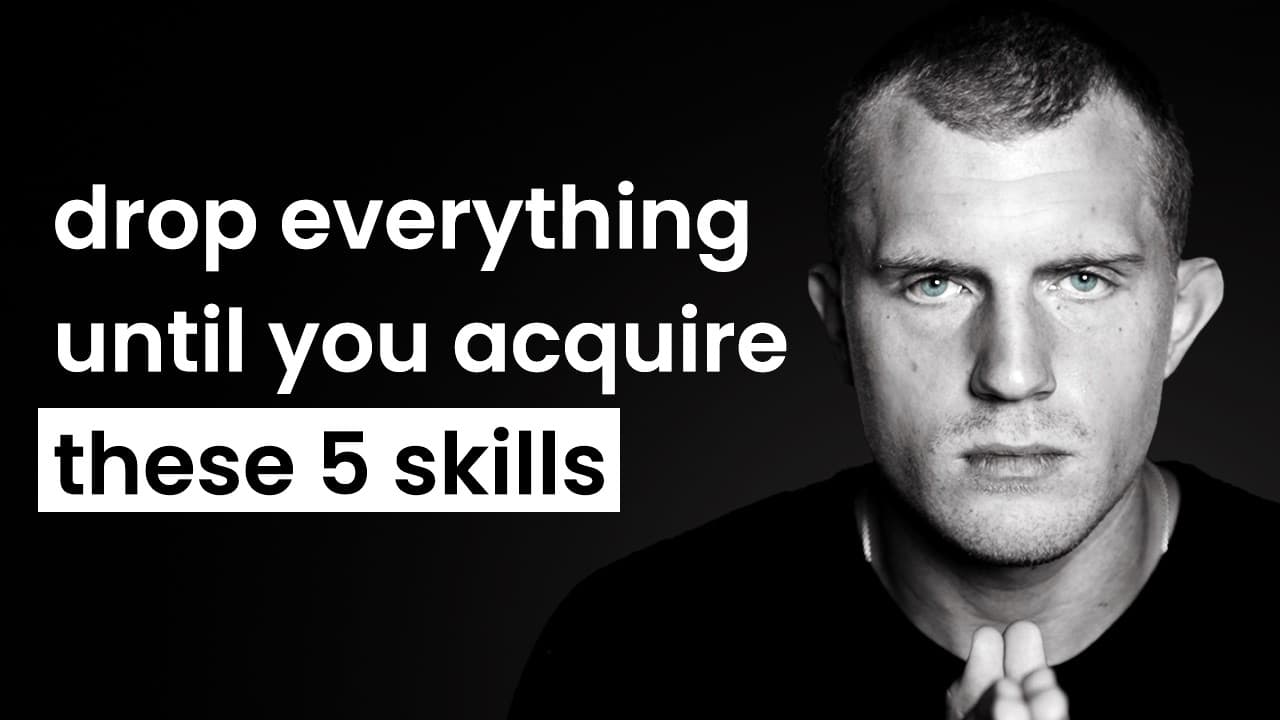
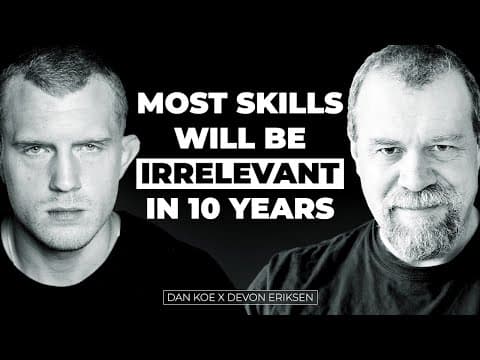
Career resilience comes from reducing dependence on a single employer, continually expanding your skills, and building projects that expose you to real feedback. Use employment as a stepping stone for experience, then pursue increasingly difficult challenges that strengthen autonomy, mastery, curiosity, passion, and purpose rather than relying on one specialized role forever.
Transcript
So unfortunately, all jobs are going to be gone in like the next five seconds. At least that's what it feels like. If you listen to loud people on social media or listen to YouTube titles like My own. And you may even get to the point of adopting the anti ideology as your new identity, screaming about how much you hate AI so you can feel like you'r... Read More
Key Insights
- AI is not presented as the primary threat because dependence on employers and institutions creates the deeper vulnerability. When those institutions perceive a threat to their own survival, they may protect themselves by dismissing workers, regardless of expectations about loyalty or care.
- Career resilience requires continuous adaptation because technology can change which skills produce value. Keeping the same skill set throughout life creates exposure, while broadening abilities and learning how the surrounding business system works can create more options beyond a single role.
- A job is described as a useful stepping stone for gaining skills and experience, not something that must always be rejected. The problem emerges when employment becomes the only available means of survival and the worker lacks the skills or resources to create alternatives.
- Enjoyment and flow are associated with challenges that sit slightly above a person's current ability. Tasks that are too difficult can create anxiety, while tasks that are too easy can create boredom, so a fulfilling structure should allow challenge and skill to rise together.
- Routine employment can become exhausting after the initial learning period because the challenge may plateau. Once tasks become predictable, attention can move away from the work, yet the worker may still lack enough energy after the day to pursue health, growth, or meaningful personal goals.
- Personal projects can support curiosity, passion, purpose, autonomy, and mastery because the individual chooses both the goal and the challenge. A conventional job or career may offer advancement, but another person or organization often retains control over which objectives deserve attention.
- Narrow specialization can make a person effective inside someone else's system while leaving them unable to build an independent system. Understanding only one assigned function limits awareness of how value is created, distributed, and converted into income across the broader process.
- Independent work develops through trial and error because real outcomes reveal whether an idea produces value. The video's proposed path includes excavating personal raw material, identifying a contrarian perspective, publishing an initial idea, and using feedback to guide continued development.
Install to Summarize YouTube Videos and Get Transcripts
Explore YouTube Video Summarizer or Get YouTube Transcript Extractor
Questions & Answers
Q: How can I become less vulnerable to AI-driven job loss?
Reduce dependence on a single employer by continually expanding your skills, understanding the system that pays for your work, and developing projects of your own. The speaker does not claim to know whether mass job loss will occur. Instead, the argument is that technological change will alter valuable skills, so adaptation and alternative sources of value provide more resilience than online opposition alone.
Q: Why does depending entirely on an employer create career risk?
An employer has its own survival to protect and may dismiss workers when it perceives a serious threat. If losing one job would immediately cause catastrophe and a worker has no skills for creating alternatives, that dependence sharply limits personal control. The proposed remedy is not simply quitting, but gradually acquiring experience, broader capabilities, savings, and independent ways to produce value.
Q: Are jobs useful for building an independent career?
Jobs can be worthy stepping stones because they provide skill acquisition and practical experience. The criticism applies when a job becomes a permanent source of dependence, offers little continuing challenge, or consumes the energy needed for further development. A worker can use employment strategically while learning beyond an assigned role and developing the capabilities required to create something independently.
Q: What makes work enjoyable and likely to produce flow?
Enjoyment and flow are linked to pursuing a challenge slightly above the person's current skill level. A challenge far beyond present ability can produce anxiety, while one below it can produce boredom. The speaker also identifies curiosity, passion, purpose, autonomy, and mastery as drivers, suggesting that people benefit from choosing meaningful goals whose difficulty increases as their abilities improve.
Q: Why can routine work feel exhausting even when it is not physically demanding?
Routine work can become draining when training ends, the challenge plateaus, and the same tasks repeat each day. The speaker describes feeling exhausted after sitting in a web design agency cubicle and beginning to skip the gym despite a longstanding interest in fitness. The explanation offered is that boredom and a lack of meaningful immersion can consume attention and motivation.
Q: Why is narrow specialization risky in a changing economy?
Narrow specialization can teach someone to perform one role without teaching how the larger system creates value or generates income. That person may become highly capable inside an employer's structure but remain unable to design an independent alternative. The speaker therefore recommends learning across domains, understanding the process surrounding one's assigned function, and adapting as technology changes the skills associated with success.
Q: How do personal projects help build career resilience?
Personal projects place more control over the goal, challenge, and direction in the individual's hands. They can create opportunities to practice curiosity, passion, purpose, autonomy, and mastery while revealing gaps in knowledge. Building independently also forces broader learning because the person must understand more than one specialized function and must respond directly to whether real people value the resulting work.
Q: How should someone begin changing their career trajectory?
The chapter outline recommends setting aside 15 minutes, excavating personal raw material, naming a contrarian spine, and posting a first idea the next day. These steps turn reflection into a visible experiment. Publishing creates feedback, while identifying existing experience and a distinctive viewpoint provides material to develop. Continued trial and error can then guide which skills, ideas, and projects deserve further effort.
Summary & Key Takeaways
-
The central threat is dependence, not AI alone. Employers and governments protect their own survival when pressured, so relying entirely on them creates vulnerability. Complaining about technological change does not prevent jobs or required skills from changing. The practical response is to evolve, broaden your abilities, and create alternatives under your control.
-
Jobs can provide valuable experience and skill acquisition, but repetitive work may stop challenging a person after training. The speaker links enjoyment and flow to challenges slightly above current ability. Personal projects can offer greater control over goals, difficulty, curiosity, passion, purpose, autonomy, and mastery than routine employment commonly provides.
-
Specializing in one role can leave a worker unable to understand the broader system that produces and pays for their work. Financial stress, exhaustion, and limited time then reinforce dependence. The proposed alternative is to build something independently, learn through trial and error, and regularly publish ideas to receive feedback closer to reality.
Read in Other Languages (beta)
Share This Summary 📚
Summarize YouTube Videos and Get Video Transcripts with 1-Click
Try YouTube Summary with ChatGPT & Claude or YouTube Transcript Generator
Explore More Summaries from Dan Koe 📚


Summarize YouTube Videos and Get Video Transcripts with 1-Click
Try YouTube Summary with ChatGPT & Claude or YouTube Transcript Generator