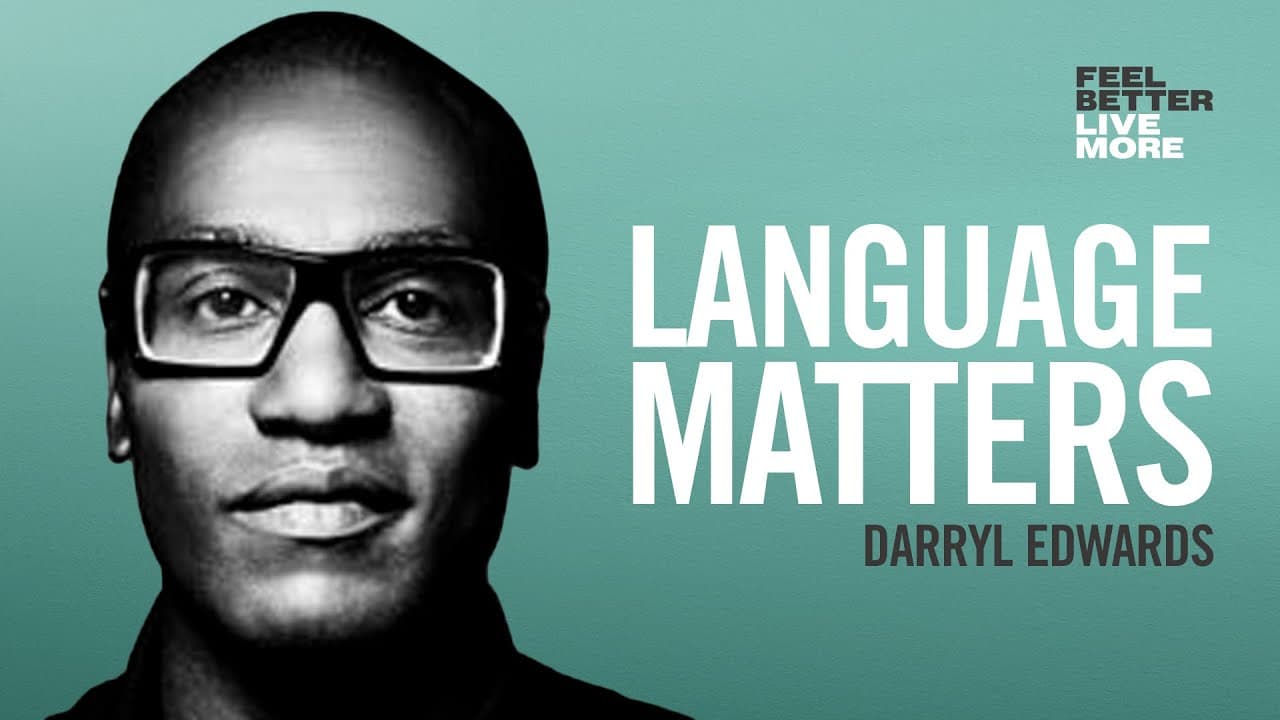
Why Black Lives Matter: How Did the Social Construct of Race Begin? | Darryl Edwards, Feel Better Live More Podcast
TL;DR
Race based on skin color began as a social construct that helped justify European expansion, the transatlantic slave trade, and the dehumanization of African people. Darryl Edwards traces its development to the late 14th and early 15th centuries and explains how its legacy persisted through segregation, restricted rights, institutional bias, stereotypes, and racialized brutality. Read on to understand how that history shapes present experiences and privilege.
Transcript
in the 1415 century when there was just this justification for the atrocities or that big documented turns out in slave trade no language changed black became bad you know language changed black males blacklisted you know white became associated with what was angelic yeah black what was seemed into sin and that's still part of our language today li... Read More
Key Insights
- Race is described as a social construct rather than a biological or genetic division. Edwards argues that learning how racial categories were created helps people understand why present experiences differ and why systemic advantages or disadvantages may remain invisible to those who inherit them.
- The modern racial construct began, according to Edwards, in the late 14th and early 15th centuries. Before that development, people still traded, fought wars, conquered others, and practiced slavery, but these relationships were generally organized around status, class, or conquest rather than skin color.
- European exploration of the Americas was driven by the search for riches and precious metals that could not be sourced through Europe. Edwards says Spanish colonizers encountered existing populations and annihilated much of the native population, while Portuguese trade with West Africa formed part of the developing historical context.
- Racial language helped justify atrocities connected to the transatlantic slave trade. Edwards notes that blackness became associated with evil, sin, blacklisting, and blackmail, while whiteness became associated with angelic qualities, embedding a hierarchy through ordinary words and repeated cultural associations.
- The legacy of slavery continued after formal abolition through new laws and institutions. Edwards says formerly enslaved people were denied the promised compensation of 40 acres and a mule, lost access to property and self-provision, and faced the destruction of political representation through restricted voting rights.
- Jim Crow laws imposed segregation even though the Constitution stated that all men were created equal. Edwards describes laws that prevented people from dining, working, living, and participating in communities together, preserving a structure that continued to treat Black people as less than fully human.
- Racialized police brutality is presented as a specific form of a broader problem. Edwards distinguishes brutality that can affect anyone from violence shaped by systemic and institutional racism, describing George Floyd's death as one example within a much larger pattern he had repeatedly encountered through recorded footage.
- Privilege is described as a spectrum rather than a simple Black and white binary. Edwards says Black people, other immigrant groups, and people who identify as brown can have distinct experiences within the same structural system, ranging from extreme racial violence to apparently minor conduct treated as harmless or acceptable.
Install to Summarize YouTube Videos and Get Transcripts
Explore YouTube Video Summarizer or Get YouTube Transcript Extractor
Questions & Answers
Q: How did race based on skin color begin?
Darryl Edwards traces the modern racial construct to European expansion in the late 14th and early 15th centuries and the developing transatlantic slave trade. Racial categories based on skin color helped justify enslavement, exploitation, atrocities, and the dehumanization of African people.
Q: What does it mean to say that race is a social construct?
Edwards says racial divisions are social classifications rather than biological or genetic divisions. He explains that societies created categories based on skin color, ethnicity, and origin, then used them to rank people and justify unequal treatment.
Q: Why does Darryl Edwards say Black Lives Matter is necessary?
Edwards connects Black Lives Matter to a distinct history of racial prejudice, institutional discrimination, stereotypes, and racialized brutality. He argues that understanding how these disadvantages were created and maintained explains why Black experiences can differ from those of other communities.
Q: How did racism continue after slavery ended?
Formal abolition did not dismantle the institutions that restricted Black freedom, wealth, and political power. Edwards describes formerly enslaved people being denied the promised 40 acres and a mule, losing access to property and self-provision, and facing restricted voting rights and destroyed political representation.
Q: What were Jim Crow laws according to Darryl Edwards?
Jim Crow laws imposed racial segregation after slavery. Edwards says they prevented Black and white people from dining, working, living, and participating in communities together, preserving inequality despite constitutional language declaring that all men were created equal.
Q: How does language reinforce racial prejudice?
Edwards says language attached negative meanings to blackness and positive meanings to whiteness. He cites blackmail, blacklisted, associations between blackness and sin, and portrayals of whiteness as angelic, describing these familiar patterns as deeply ingrained subliminal messaging.
Q: Why is racism not only a United States issue?
Edwards traces racial classification and transatlantic slavery to European expansion and says Britain capitalized on that system. He also discusses growing up Black in the UK as a first-generation Black British person of African descent whose Jamaican grandparents arrived in the early 1950s.
Q: How does Darryl Edwards explain privilege?
Edwards describes privilege as a spectrum rather than a simple Black-and-white binary. He says Black people, brown people, immigrants, and other groups can occupy different positions within the same systemic and structural conditions, while people with privilege may not recognize advantages that feel ordinary to them.
Summary & Key Takeaways
-
Darryl Edwards describes himself as first-generation Black British and of African descent, with Jamaican parents and grandparents who came to the UK in the early 1950s. He argues that understanding this history helps explain why Black experiences of racism differ from those of other immigrant communities and why privilege is often invisible.
-
The conversation traces race as a social construct to European expansion during the late 14th and early 15th centuries. Edwards says earlier divisions were commonly based on status, class, or conquest rather than skin color. Racial categories later helped justify enslavement, exploitation, and the dehumanization of African people.
-
Edwards connects historical systems to present inequalities and racialized police brutality. He explains that ending slavery did not end racism, because denied compensation, restricted property ownership, destroyed political representation, Jim Crow segregation, cultural stereotypes, and institutional structures preserved the hierarchy established during slavery and allowed its effects to continue.
Read in Other Languages (beta)
Share This Summary 📚
Summarize YouTube Videos and Get Video Transcripts with 1-Click
Try YouTube Summary with ChatGPT & Claude or YouTube Transcript Generator
Explore More Summaries from Dr Rangan Chatterjee 📚



Summarize YouTube Videos and Get Video Transcripts with 1-Click
Try YouTube Summary with ChatGPT & Claude or YouTube Transcript Generator