How to Shift Your Identity for Greater Success

TL;DR
Lasting change starts by reshaping the identity that governs what you believe you deserve, tolerate, and can sustain. The guide argues that changing actions alone cannot overcome subconscious limits, so you must identify recurring self-sabotage, release the old self-concept, and practice becoming someone who can comfortably receive and retain the desired outcome.
Transcript
Quasi here. So, I've been seeing something very strange happen over the last few months. Clients who've been crushing it for years all of a sudden are hitting invisible walls. Traders with flawless strategies watching their accounts implode for no logical reason. You know, entrepreneurs who know exactly what to do but just can't seem to execute. An... Read More
Key Insights
- Identity is presented as the hidden constraint on lasting results. The guide argues that people can know the correct strategy and still fail to execute or sustain success when their self-concept belongs to an older version of themselves.
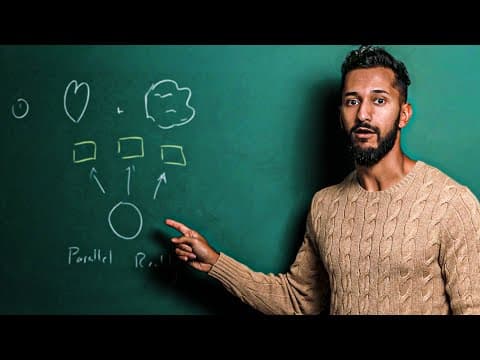
- The having, doing, and being framework distinguishes outcomes from actions and identity. Having is the physical result, doing is the set of inputs intended to produce it, and being is the internal self-concept that determines which experiences feel acceptable or sustainable.
- An upper limit is described as the threshold of success a person can comfortably experience. When money, achievement, or another desired result exceeds that internal threshold, discomfort may trigger spending, avoidance, poor decisions, or other behaviors that restore the familiar condition.
- A lower limit is described as the minimum condition a person is willing to tolerate. Together with the upper limit, it creates an internal range of familiar experience that can guide behavior even when someone consciously wants a substantially different life.
- Self-sabotage is framed as an identity problem disguised as a practical problem. The guide uses repeated business failures, poor real-money trading performance, regained weight, and difficulty retaining wealth as examples of external patterns allegedly driven by internal beliefs.
- Behavioral change is portrayed as insufficient when identity remains unchanged. Working harder, improving habits, thinking positively, or optimizing a strategy may produce temporary movement, but the guide claims these tactics cannot permanently override beliefs about worthiness, suffering, or permission to succeed.
- The presenter characterizes 2026 as a period of forced reinvention. He connects this interpretation to Jupiter's astrological exaltation in June, a universal year 1 in numerology, and fire horse energy in Chinese astrology, while acknowledging that he does not usually rely on astrology.
- Conscious reinvention is offered as the alternative to resisting disruptive patterns. The process involves recognizing an outdated identity, dissolving attachment to it, defining a more suitable version of oneself, and using exercises plus guided meditation to experience and reinforce the proposed shift.
Install to Summarize YouTube Videos and Get Transcripts
Explore YouTube Video Summarizer or Get YouTube Transcript Extractor
Questions & Answers
Q: How do you shift your identity to create lasting change?
Identity shifting begins by examining repeated outcomes that persist despite correct strategies or strong effort. The guide recommends identifying the old self-concept behind those patterns, including beliefs about worthiness, success, suffering, and what feels safe to receive. You then consciously release that version of yourself and practice being someone who can execute the required actions and comfortably sustain the desired result.
Q: What is the difference between having, doing, and being?
Having is the physical outcome you want, such as more money, love, or better health. Doing consists of the actions and inputs expected to create that outcome, such as working on a business. Being is the underlying identity that shapes beliefs, comfort levels, and behavior. The guide argues that being ultimately limits what doing can produce and what having can be sustained.
Q: Why can correct actions still fail to produce lasting results?
Correct actions may fail when they are performed from an identity that conflicts with the desired outcome. According to the guide, a person can understand the right business strategy, trading method, or health routine while still carrying beliefs that make success feel unsafe or undeserved. Those beliefs can interfere with execution or provoke self-sabotage after progress occurs, returning the person to familiar circumstances.
Q: What is an identity-level upper limit?
An identity-level upper limit is the maximum amount of success, money, or another positive experience that a person feels comfortable receiving and maintaining. The guide claims that exceeding this threshold can produce discomfort, even when the result was consciously desired. That discomfort may prompt spending, avoidance, impulsive decisions, or other self-sabotaging behavior until circumstances again match the person's familiar self-concept.
Q: How does identity affect the ability to keep money?
The guide argues that receiving money and retaining it require an identity that feels worthy and comfortable possessing it. Someone who sees unexpected wealth as temporary, accidental, or undeserved may feel pressure to spend or lose it. The presenter uses lottery winners, clients who cannot keep large account balances, and Mike Tyson's lost earnings to illustrate this proposed link between self-concept and financial behavior.
Q: Why does a trader perform well in a demo account but struggle with real money?
The guide interprets this difference as an identity problem that appears to be a psychology problem. A trader may execute a strategy flawlessly when no real money is at risk, yet behave differently when gains and losses affect an actual account. The implication is that real stakes activate beliefs, discomfort, or self-destructive patterns that remain hidden during simulated trading and interfere with consistent execution.
Q: Why do people repeat the same failures with different strategies?
Repeated failure across different strategies may indicate that the stable cause is not the external method but the identity using it. The guide describes an entrepreneur who launches different businesses but repeatedly produces the same result. Changing industries or tactics does not resolve the pattern if beliefs, emotional limits, execution habits, and expectations continue to recreate circumstances that match the same old self-concept.
Q: What does the guide claim is significant about 2026?
The presenter describes 2026 as the first year of a new 9-year cycle because its digits produce 10 and then 1 in numerology. He also cites Jupiter reaching astrological exaltation in June and accelerated motion, plus fire horse energy in Chinese astrology. He interprets these systems as pointing toward rapid transformation, compressed lessons, and pressure to release outdated identities.
Summary & Key Takeaways
-
The guide presents recurring failure as an identity-level problem rather than merely a shortage of effort, discipline, strategy, or positive thinking. Entrepreneurs, traders, and people pursuing better health may repeat the same outcomes because their behaviors remain constrained by an internal self-concept that has not changed with their external goals.
-
The framework separates existence into having, doing, and being. Having refers to the desired physical result, while doing covers the actions expected to produce it. Being is described as the deeper identity that establishes an upper threshold for what someone can comfortably receive and a lower standard for what they will tolerate.
-
The proposed solution is conscious identity reinvention supported by exercises and a guided identity-alternating meditation. The presenter asks viewers to release an outdated self-concept rather than apply surface-level tactics to recurring problems. The intended result is an identity capable of executing appropriate actions and sustaining money, success, health, or relationships without self-sabotage.
Read in Other Languages (beta)
Share This Summary 📚
Summarize YouTube Videos and Get Video Transcripts with 1-Click
Try YouTube Summary with ChatGPT & Claude or YouTube Transcript Generator
Explore More Summaries from Quazi Johir 📚




Summarize YouTube Videos and Get Video Transcripts with 1-Click
Try YouTube Summary with ChatGPT & Claude or YouTube Transcript Generator