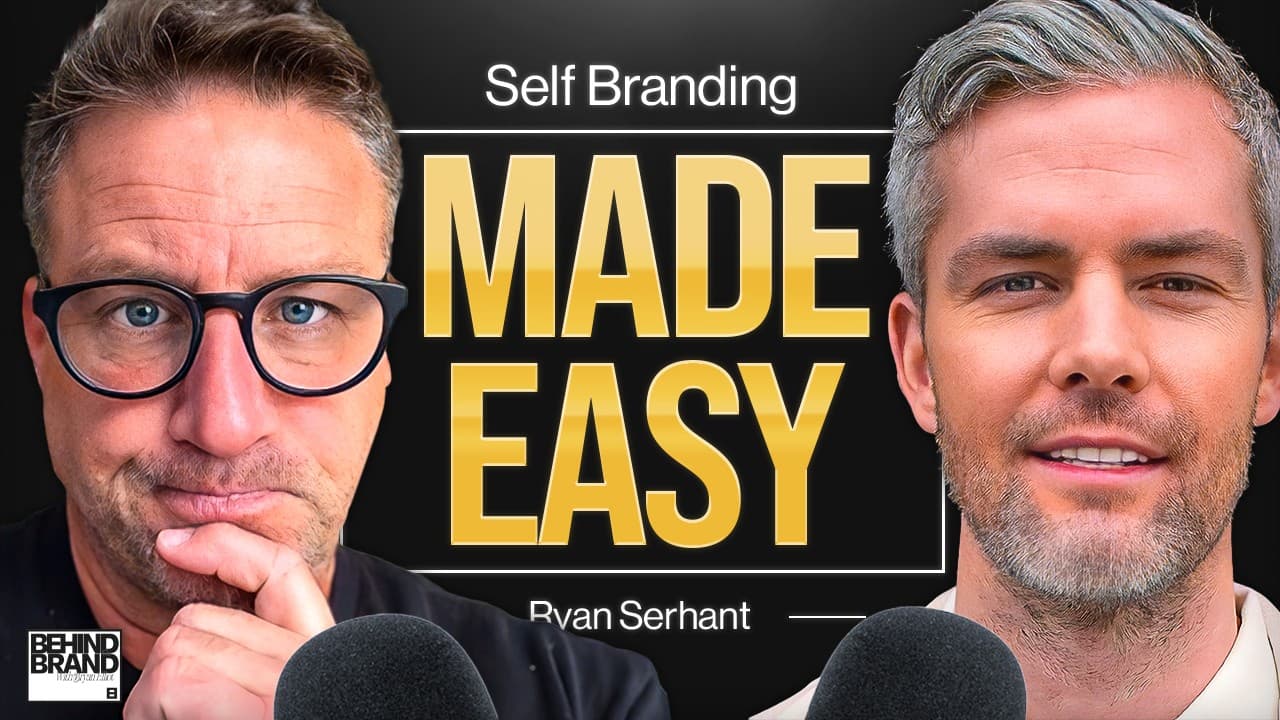
How to Build a Personal Brand Like Ryan Serhant
TL;DR
To build a successful personal brand, start by identifying your core identity and what makes you unique. Focus on creating consistent content that resonates with your audience, and leverage community engagement to enhance brand awareness. Finally, manage your time effectively to achieve incremental wins, as consistent effort leads to long-term success.
Transcript
five years ago I believed you had to be a jack of all trades if you wanted to be successful you had to understand all the individual pieces of the widget right you had to know everything about something and something about everything um and I still think that's fine today given the advancements in technology given the efficiencies that have now bee... Read More
Key Insights
- Ryan Serhant emphasizes the importance of focusing on what you do best and leveraging others for areas where they excel.
- A brand is more than just a logo; it starts with core identity and builds into a reputation, eventually becoming a brand.
- In today's gig economy, personal branding is crucial for standing out and generating leads.
- Serhant's brand strategy involves three phases: core identity, consistent content, and amplification.
- Building a brand requires creating a community and engaging with it to drive commerce.
- Time management is a critical skill for success, with Serhant advocating for a 'thousand-minute rule' to maximize productivity.
- Successful branding involves being your own biggest advocate and consistently sharing your successes.
- Understanding and defining your brand requires honest feedback from others to identify how you are perceived.
Install to Summarize YouTube Videos and Get Transcripts
Explore YouTube Video Summarizer or Get YouTube Transcript Extractor
Questions & Answers
Q: What is the core idea behind Ryan Serhant's brand strategy?
Ryan Serhant's brand strategy is built on three phases: core identity, consistent content, and amplification. He believes in starting with a strong understanding of your core identity, which then shapes the perception others have of you. Consistent content helps in maintaining this perception, and amplification involves promoting your successes to build a strong brand reputation.
Q: How does Ryan Serhant view the role of community in brand building?
Ryan Serhant views community as a crucial element in brand building. He believes that content should lead to community engagement, which then drives commerce. By creating a community around a brand, businesses can foster a sense of belonging and loyalty among customers, ultimately leading to increased brand awareness and sales.
Q: What is the 'thousand-minute rule' that Ryan Serhant mentions?
The 'thousand-minute rule' is a time management strategy advocated by Ryan Serhant. He suggests that individuals have approximately 1,440 minutes in a day, and they should aim to be productive for at least 1,000 of those minutes. This approach encourages people to focus on maximizing their productivity and effectively managing their time to achieve their goals.
Q: Why does Ryan Serhant believe in focusing on what you do best?
Ryan Serhant believes in focusing on what you do best because it allows individuals to excel in their area of expertise while leveraging the skills of others for areas where they may not be as strong. This approach not only enhances efficiency but also ensures that individuals can provide the best value in their niche, ultimately leading to greater success.
Q: How does Ryan Serhant suggest individuals should handle negative feedback?
Ryan Serhant suggests that individuals should take the best from negative feedback and leave the rest. He emphasizes the importance of seeking honest feedback from others to understand how you are perceived. This feedback can provide valuable insights into areas for improvement and help in refining one's brand identity.
Q: What are Ryan Serhant's views on the future of the gig economy?
Ryan Serhant believes that the gig economy will continue to grow, with more people opting for flexible work arrangements over traditional employment. He highlights the importance of personal branding in this context, as individuals in the gig economy need to stand out and attract clients. Building a strong personal brand can help in generating leads and establishing a successful career.
Q: What does Ryan Serhant identify as a common misconception about branding?
A common misconception about branding, according to Ryan Serhant, is that it is purely visual. He argues that branding starts with a strong core identity and builds into a reputation before becoming a brand. Visual elements like logos are important but come into play only after a brand's identity and reputation are established.
Q: How does Ryan Serhant incorporate media into his real estate business?
Ryan Serhant incorporates media into his real estate business by having an in-house production company that creates organic content for agents, properties, and developers. This media presence helps in generating leads and building a strong brand identity. For clients, the media component can drive awareness and interest in properties, enhancing the overall real estate experience.
Summary & Key Takeaways
-
Ryan Serhant discusses the evolution of his understanding of brand, emphasizing the importance of core identity and consistent content. He shares his journey of building a brand through personal experiences and lessons learned from failures.
-
Serhant highlights the significance of community in brand building, explaining how content should lead to community engagement before commerce. He shares insights from interviews with other brand experts, emphasizing the need for brands to have a clear identity.
-
The conversation touches on the future of the gig economy and the increasing importance of personal branding. Serhant shares his strategies for time management and productivity, encouraging individuals to focus on micro wins and consistent efforts.
Read in Other Languages (beta)
Share This Summary 📚
Summarize YouTube Videos and Get Video Transcripts with 1-Click
Try YouTube Summary with ChatGPT & Claude or YouTube Transcript Generator
Explore More Summaries from Behind the Brand 📚

Summarize YouTube Videos and Get Video Transcripts with 1-Click
Try YouTube Summary with ChatGPT & Claude or YouTube Transcript Generator