How to Build a $127M Cybersecurity Company
TL;DR
Rebecca Chin built Titan Shield into a cybersecurity company projected to generate $127 million in annual revenue by teaching herself to code, identifying an underserved market gap, and reinvesting earnings in product development and talent. Her family continued treating the venture as a failure until Fortune selected her story for its December cover after naming her among 25 CEO of the Year finalists.
Transcript
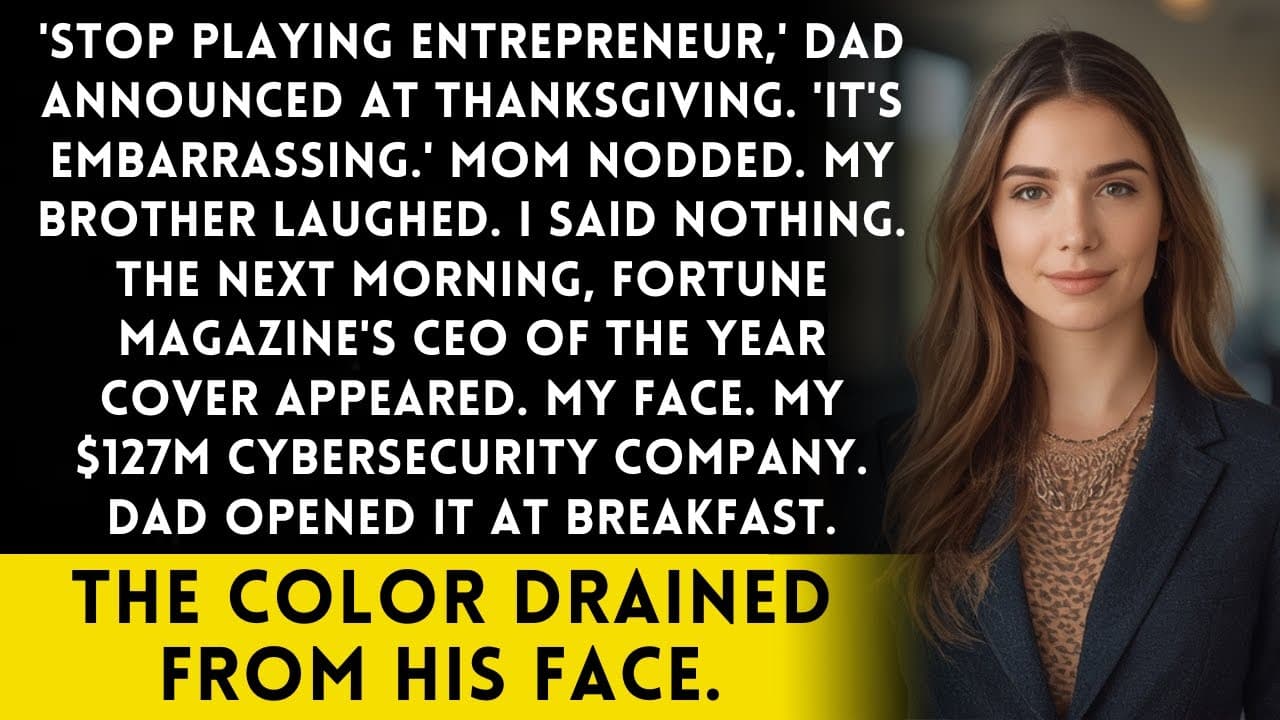
Stop playing entrepreneur. Dad announced at Thanksgiving. It's embarrassing. Who nodded? My brother laughed. I said nothing. The next morning, Fortune magazine so of the year cover appeared. My face, my $127 million cyber security company. Dad opened it at breakfast. The color drained from his face. But let me back up because this story doesn't sta... Read More
Key Insights
- Titan Shield is a proactive cybersecurity platform designed to use AI to predict and prevent attacks before they happen, rather than responding only after an attack occurs. Rebecca developed the product after three years of self-directed coding, market research, and testing.
- Rebecca's family judged career success through conventional credentials, prestigious employers, visible wealth, and established professional titles. Because she lacked a technical degree and had left several corporate jobs, they interpreted her intensive software development work as unemployment rather than a serious business effort.
- Titan Shield's first commercial breakthrough was a $180,000 contract from a midsized financial services company in Austin. The agreement covered implementation and one year of service, enabling Rebecca to clear her credit card balances, obtain business insurance, and improve her living situation.
- Titan Shield's early growth was rapid and measurable, progressing from four clients to 12 and then 27 within months of its first contract. By year three, the company served 140 clients and reported $8.3 million in revenue.
- Rebecca's scaling strategy was to hire people smarter than herself and continually improve the product. She said that company earnings were directed back into development or talent, and she did not begin paying herself what she considered a real salary until year four.
- Titan Shield reached 220 clients, $47 million in annual revenue, and 120 employees by year five. Its growing organization included a CFO, chief technology officer, vice president of sales, PR firm, and six initial engineers recruited through online coding communities.
- Outside investment accelerated Titan Shield's expansion without creating the company’s initial success. A venture capital firm invested $12 million in year four, when the business already had clients, revenue, employees, and a demonstrated product with significant market demand.
- Fortune's recognition made Rebecca's previously private success publicly visible. From more than 3,000 applicants, the publication selected 25 finalists, interviewed her, and planned a December cover describing how she built a company projected to earn $127 million while her family assumed she was struggling.
Install to Summarize YouTube Videos and Get Transcripts
Explore YouTube Video Summarizer or Get YouTube Transcript Extractor
Questions & Answers
Q: How did Rebecca Chin start a cybersecurity company without a technical degree?
Rebecca Chin spent three years teaching herself to code, studying the cybersecurity market, identifying gaps that existing providers were not filling, and testing her software before signing a client. Although her bachelor's degree was in communications, she relied on sustained self-education and preparation. She described her advantage as innovation rather than direct competition with established companies.
Q: What is Titan Shield and how does its cybersecurity approach work?
Titan Shield is a next-generation cybersecurity platform developed to use AI for predicting and preventing attacks before they happen. Rebecca characterized the product as proactive protection rather than reactive security. She believed this approach addressed a market gap that competitors were not filling, and she continued investing company revenue in research, product development, and improvements intended to maintain its lead.
Q: How did Titan Shield get its first paying client?
Titan Shield secured its first client 20 months after the family dinner at which Rebecca's plans were dismissed. The customer was a midsized financial services company in Austin that paid $180,000 for implementation and one year of service. That initial contract allowed Rebecca to clear two maxed-out credit cards, secure business insurance, and move into a better apartment.
Q: How quickly did Titan Shield grow after its first contract?
Titan Shield expanded from its first contract to four clients, then 12, and then 27. By year three, it served 140 clients and generated $8.3 million in revenue. By year five, it had 220 clients, $47 million in annual revenue, 120 employees, its own office building, and a leadership team supporting continued expansion.
Q: What strategy did Rebecca use to scale Titan Shield?
Rebecca identified two central scaling practices: hiring people smarter than herself and never stopping product improvement. She reinvested every available dollar in development or talent and delayed paying herself what she considered a real salary until year four. She also hired senior leaders, engaged a PR firm, and invested heavily in research and development.
Q: Why did Rebecca hide Titan Shield's success from her family?
Rebecca stopped sharing details because her parents and brother had already decided that the company was a failure and rarely asked meaningful questions about it. She viewed their doubt as fuel but also wanted to protect her work from discouragement. Her employees, partners, investors, and journalists knew about the company's progress, while her family heard only that she remained busy.
Q: How did Fortune recognize Rebecca and Titan Shield?
Fortune informed Rebecca in September of year seven that she had been nominated for its CEO of the Year award because of Titan Shield's growth, innovation, and industry impact. The PR firm had submitted an application in June. More than 3,000 CEOs applied, and Rebecca was selected as one of 25 finalists before the interview and photo shoot.
Q: What business milestones had Titan Shield reached before the Fortune cover?
Before the planned December Fortune cover, Titan Shield had grown from a self-funded project into a company with substantial clients, revenue, staff, leadership, and outside investment. It reported $47 million in annual revenue and 120 employees by year five, received a $12 million venture capital investment in year four, and projected $127 million in revenue for year seven.
Summary & Key Takeaways
-
Rebecca Chin left an unhappy corporate marketing career at 23 to develop proactive cybersecurity software, despite having a communications degree and no conventional technical credentials. Her parents and brother dismissed her self-directed education, financial sacrifices, and long working days as unemployment, repeatedly urging her to abandon entrepreneurship for a traditional career.
-
After spending three years researching, coding, and testing Titan Shield, Rebecca secured a financial services client that paid $180,000 for implementation and one year of service. The business subsequently reached 140 clients and $8.3 million in revenue by year three, then expanded through deliberate hiring, reinvestment, and continuous product improvement.
-
By year five, Titan Shield had 220 clients, $47 million in annual revenue, and 120 employees. A venture capital firm invested $12 million in year four, while Rebecca's family remained unaware of her progress. Fortune later recognized the company and planned a December cover about its projected $127 million year.
Read in Other Languages (beta)
Share This Summary 📚
Summarize YouTube Videos and Get Video Transcripts with 1-Click
Try YouTube Summary with ChatGPT & Claude or YouTube Transcript Generator
Explore More Summaries from Revenge Realm 📚






Summarize YouTube Videos and Get Video Transcripts with 1-Click
Try YouTube Summary with ChatGPT & Claude or YouTube Transcript Generator