How to Get Ahead of 99% of People: Sam Parr's 5 Rules
TL;DR
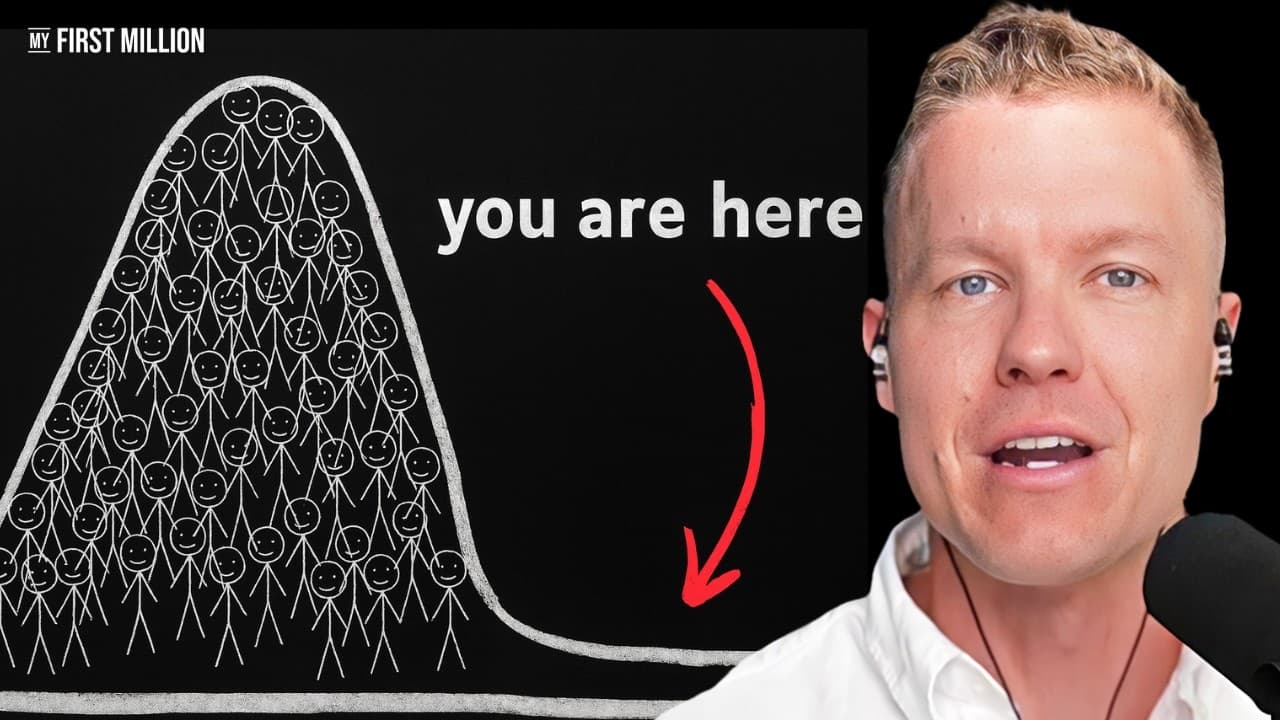
The single biggest predictor of a happy, healthy life is not money, fame, or exercise but the quality of close relationships, according to Harvard's 85-year study. Sam Parr inverts common advice into five ways to be miserable, so doing the opposite builds a good life: keep a few real best friends, decide fast, and set trackable goals.
Transcript
If you're ambitious, you've heard a thousand tips on how to live a happier, better life. Forget all of them. I grew up in a blueco collar family. And today, I know lots of different billionaires. I've met thousands of successful founders. And I've hired hundreds of people. And across all of those lives, I've spotted patterns in the people who are m... Read More
Key Insights
- The number one predictor of long-term health and happiness in Harvard's 85-year study was the quality of close relationships, not money, fame, power, or exercise. What protects you is having even one person you can count on through thick or thin.
- Aristotle divided friendships into three types: utility (you get money, favors, or connections), pleasure (friends who exist just for fun), and virtue. Virtue friendships are the rarest and most valuable, built on mutual admiration and loyalty no matter what.
- You only need one to three best friends to live well, according to Aristotle. Sam Parr says he has three named Jack, Ramone, and Neville, and knowing they have his back lets him sleep like a baby.
- Locking into a decision makes the brain manufacture happiness. In Dan Gilbert's artwork experiment, students who could swap their pick grew less happy over time, while those locked in convinced themselves they loved their choice.
- Nearly all decisions are reversible, which removes the fear of choosing wrong. Parr moved from Tennessee to San Francisco at 21 with about $2,000 saved, knowing his mother would let him move back home for 6 to 12 months as a protected worst case.
- Making decisions time-bound beats endless planning. Setting a fixed deadline like 'I have six months to decide' and then acting leads to more happiness than spending months only thinking, since inaction breeds doubt and fear.
- Tracking is the first step to change. John Rockefeller tracked every expense and income in a book called Ledger A starting at 16, and Parr copied this to cut his monthly expenses to $2,000 and save toward $50,000.
- A real goal is SMART: specific, measurable, achievable, relevant, and time-bound. Parr's goal to make $20 million liquid by age 30 gave him seven years to build a business worth roughly $15 million in revenue, which became his newsletter The Hustle.
Install to Summarize YouTube Videos and Get Transcripts
Explore YouTube Video Summarizer or Get YouTube Transcript Extractor
Questions & Answers
Q: What is the number one predictor of a long and happy life?
According to Harvard's 85-year study, the longest study of adult life ever done, the number one predictor of long-term health and happiness was the quality of close relationships. It was not money, fame, power, or even exercise. The study tracked hundreds of people from youth to old age and found that what protects you is having a few people, even just one person, who you can count on through thick or thin.
Q: What are Aristotle's three types of friendship?
Aristotle divided friendships into three types. Utility friendships are ones where you get something out of the person, such as money, favors, or connections, and end once the usefulness ends, like co-workers. Pleasure friendships exist just for fun and end when the fun ends. Virtue friendships are the rarest and most valuable, built on mutual admiration and loyalty no matter what. These are your true best friends, and you only need one to three.
Q: Why are locked-in decisions better for happiness?
Psychologist Dan Gilbert ran an experiment where college students picked artwork for their dorm. One group could swap their choice a week later, while the other was locked in. Over time, the group that could swap grew less happy, wondering if they chose wrong, while the locked-in group convinced themselves they loved their pick. The takeaway is that once we commit to a decision, the brain makes peace with it and literally manufactures happiness.
Q: How do you make a decision reversible to reduce fear?
Parr says nearly all decisions are reversible, and the goal is to try before you buy. When he moved from Tennessee to San Francisco at 21, he saved about $2,000 and confirmed with his mother that he could move back home for 6 to 12 months if it failed, which protected the worst case. When choosing a neighborhood, he rented Airbnbs in different areas a week at a time, which was far cheaper than buying and regretting.
Q: Why should decisions be time-bound?
Parr argues that indecision and staying in research mode forever make people miserable. Setting a firm deadline, such as 'I have six months to decide' where you commit no matter what, makes big choices about where to live, work, or who to marry far easier. He cites Dale Carnegie's book How to Stop Worrying and Start Living and its line that inaction breeds doubt and fear, so you should get out and get busy. Acting usually beats endless thinking.
Q: How did John Rockefeller use tracking to build wealth?
In the biography Titan, Rockefeller, described as the richest man to ever live and two times richer than Elon Musk today, said his first step to becoming rich at age 16 was tracking all his expenses and salary. He recorded every bit of income and every expense in a book called Ledger A. Parr stole this idea and, around age 23 or 24, tracked every single cent for six months, which made it far easier to cut his monthly expenses to $2,000 and save toward $50,000.
Q: What makes a goal a good goal?
Parr says a real goal is SMART, standing for specific, measurable, achievable, relevant, and time-bound. He compares it to a trainer who needs to know whether you want Arnold Schwarzenegger muscle, a lean build, or a fast 5K. His own example was making $20 million liquid by age 30. That gave him seven years to build a business reaching roughly $15 million in revenue that he could sell for around $30 million and net $20 million after tax.
Q: How did Sam Parr apply goals and tracking to start The Hustle?
Parr's goal of making $20 million liquid by 30 is where the idea for The Hustle, his newsletter business, came from. He broke the large target into small, approachable chunks that felt achievable. His goal for the first year of the newsletter was to grow the subscriber base by 3% every single week, because he knew consistent weekly growth compounded into the audience he needed. Pairing specific goals with daily tracking is what turns ambition into measurable progress.
Summary & Key Takeaways
-
Sam Parr, who grew up in a blue-collar family and later met billionaires and hired hundreds of people, inverts standard advice by listing five guaranteed ways to live a miserable life. Doing the opposite, he argues, is how you actually build a good one.
-
The first rule is friendship. Using Aristotle's three types (utility, pleasure, and virtue) and Harvard's 85-year study, Parr shows that one to three virtue-based best friends, not acquaintances, are the top predictor of lifelong health and happiness.
-
The remaining rules cover decisiveness and goals. Because most decisions are reversible and the brain manufactures happiness once locked in, act fast within a deadline. Then track everything, as Rockefeller did, and pair that tracking with specific SMART goals.
Read in Other Languages (beta)
Share This Summary 📚
Summarize YouTube Videos and Get Video Transcripts with 1-Click
Try YouTube Summary with ChatGPT & Claude or YouTube Transcript Generator
Explore More Summaries from My First Million 📚

Summarize YouTube Videos and Get Video Transcripts with 1-Click
Try YouTube Summary with ChatGPT & Claude or YouTube Transcript Generator