How to Keep AI Copywriting Human and Strategic
TL;DR
AI produces stronger copy when marketers supply a detailed creative brief covering the client, audience, fears, obstacles, motivations, market position, and brand voice. Treat it as a trained assistant that automates suitable responsibilities, then apply human intelligence, strategic judgment, and editing instead of publishing its first response unchanged.
Transcript
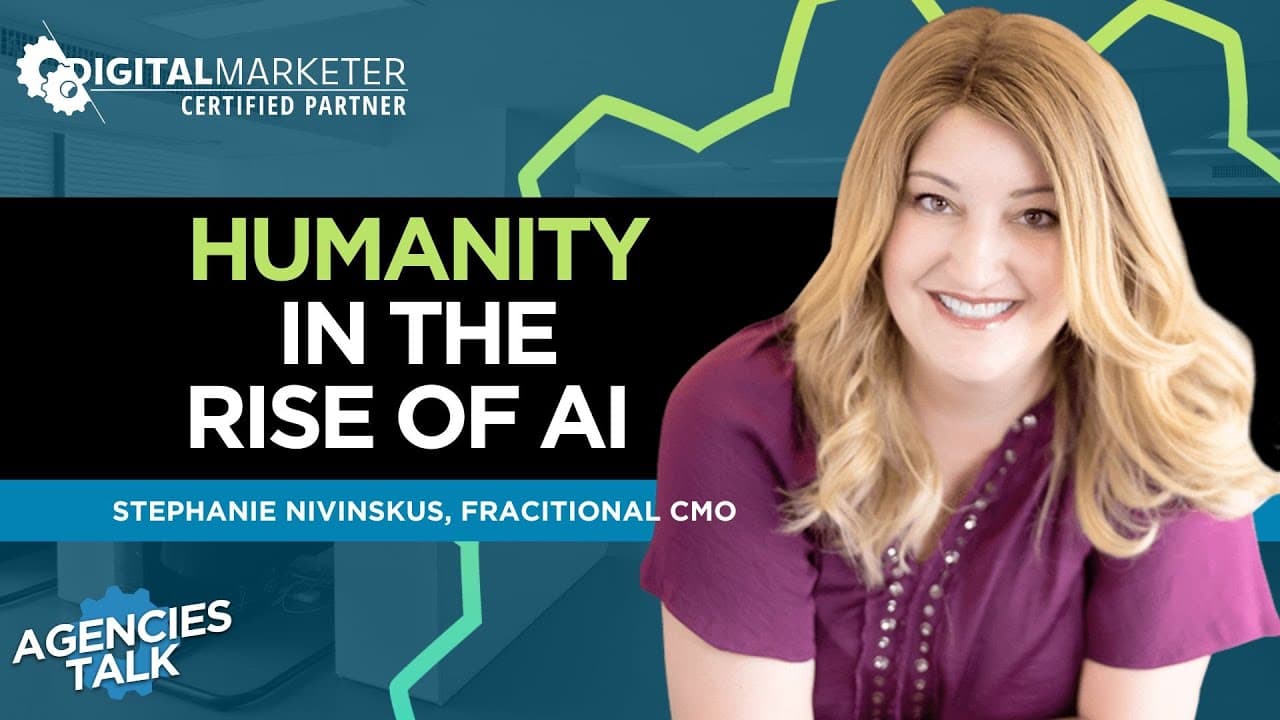
and welcome everybody to agencies talk this is our weekly talk show where we get the chance to sit down with agency professionals and those who serve agencies to talk about what's going on in their world what they're passionate about and the various Journeys that they have of course taken to get to this success that they have now today we are joine... Read More
Key Insights
- AI copywriting is a collaborative process that combines machine assistance with human intelligence. Stephanie Nivinskus warns that current tools should not work autonomously because strategic review, contextual understanding, and human judgment remain necessary before generated copy is used.
- AI output quality depends on the quality of its instructions. Complaints about weak generated copy often reflect weak prompts, incomplete context, or insufficient training, which the discussion summarizes through the familiar principle that poor input produces poor output.
- A creative brief is the foundation of useful AI-generated copy. It should identify the client, audience priorities, fears, obstacles, persistent concerns, and motivations so the system has the strategic information needed to generate relevant language.
- Brand voice and market position must be taught to the AI. Without that training, the system cannot reliably produce material that sounds appropriate for the brand or reflects how the client wants to compete and communicate.
- Human review is necessary before AI-generated text is published. Copying and pasting a response without adding strategic intelligence can allow inaccurate, generic, or unsuitable material to reach the audience, making the workflow risky rather than efficient.
- AI can automate suitable responsibilities rather than simply eliminate whole positions. A knowledgeable marketer can use it as an amplifier, complete more tasks personally, and reduce the need to assign every routine activity to additional people or departments.
- Email subject-line generation is an example of practical AI efficiency. A trained system can suggest options quickly, while a person working without assistance might spend much longer trying to create language that feels concise, appealing, and likely to earn an open.
- Collaborative intelligence rewards marketers who combine capable people with capable tools. The discussion frames AI adoption as a call for stronger human thinking because automation handles repeatable tasks while people remain responsible for strategy, discernment, and the quality of the final result.
Install to Summarize YouTube Videos and Get Transcripts
Explore YouTube Video Summarizer or Get YouTube Transcript Extractor
Questions & Answers
Q: How can marketers make AI-generated copy sound human?
Marketers can make AI-generated copy sound more human by supplying detailed strategic context and then applying their own judgment to the result. The prompt should describe the client, audience, brand voice, market position, concerns, obstacles, fears, and motivations. The generated response should be treated as a draft that requires human intelligence and review, not as finished copy ready for immediate publication.
Q: What information should an AI copywriting brief include?
An AI copywriting brief should explain who the client is, what the intended audience cares about, what scares that audience, which obstacles stand in its way, what keeps its members awake, and what motivates them to act. It should also define the brand voice and market position. This strategic information gives the system a clearer foundation for producing relevant copy.
Q: Why does AI sometimes produce poor marketing copy?
AI sometimes produces poor marketing copy because it receives vague prompts or insufficient information. The system does not automatically know a particular client's audience, voice, positioning, fears, or objectives. Stephanie Nivinskus compares the process to training a team member or a dog: useful performance depends on clear guidance, relevant context, and deliberate training from the person using the tool.
Q: Can AI replace an experienced copywriter?
The discussion argues that AI cannot autonomously replace a seasoned copywriter with a documented record of results. It can automate suitable tasks and accelerate parts of the writing process, but it still needs strategic direction and human review. Experienced copywriters contribute audience understanding, judgment, positioning, brand sensitivity, and the ability to decide whether generated language actually supports the client's goals.
Q: How does AI change marketing jobs and responsibilities?
AI is presented as more likely to replace or automate particular responsibilities than entire positions. It allows knowledgeable marketers to complete more tasks and can reduce the need to outsource every routine activity or maintain a large department for automatable work. The professional remains responsible for strategy and quality, while the tool increases the speed and range of execution.
Q: What is collaborative intelligence in AI marketing?
Collaborative intelligence is the practice of combining capable people with capable AI tools to produce stronger outcomes. In copywriting, the person supplies strategy, audience knowledge, brand context, and critical judgment, while AI assists with automatable execution. Stephanie Nivinskus describes success in the emerging marketing environment as taking ownership of this partnership rather than expecting the technology to operate independently.
Q: When should marketers review AI-generated copy?
Marketers should review AI-generated copy before it is published or delivered to a client. The conversation specifically warns against copying and pasting a system's response without adding human intelligence. Review should determine whether the material reflects the brand voice, matches the market position, addresses the audience's real concerns, and fulfills the strategic purpose described in the creative brief.
Q: How can AI help write email subject lines efficiently?
AI can generate email subject-line options after it has been trained with the relevant brand, audience, and campaign context. This can reduce the time spent trying to invent concise, appealing wording from scratch. The marketer should still evaluate the suggestions for accuracy, voice, and strategic fit, but the tool can handle the initial generation process much more quickly.
Summary & Key Takeaways
-
Stephanie Nivinskus argues that AI should support copywriters rather than operate autonomously. Its output depends heavily on the strategic context supplied by the marketer. Copying and publishing an unreviewed response can produce poor material, while combining a trained tool with experienced human judgment can lead to stronger and more efficient work.
-
A productive AI workflow resembles briefing a human copywriter inside an agency. The marketer should explain who the client is, what the audience values, what frightens them, which obstacles they face, what keeps them awake, and what motivates action. Brand voice and market position also need to be clearly communicated.
-
AI changes responsibilities more readily than entire positions because skilled professionals can use it to complete more tasks. It can quickly handle work such as generating email subject-line options, leaving marketers more time for strategic priorities. The resulting marketplace rewards people who combine strong tools with developed knowledge and active human intelligence.
Read in Other Languages (beta)
Share This Summary 📚
Summarize YouTube Videos and Get Video Transcripts with 1-Click
Try YouTube Summary with ChatGPT & Claude or YouTube Transcript Generator
Explore More Summaries from DigitalMarketer 📚

Summarize YouTube Videos and Get Video Transcripts with 1-Click
Try YouTube Summary with ChatGPT & Claude or YouTube Transcript Generator