How Are AI, SpaceX, and Google Changing Fast?
TL;DR
Google faces a major leadership shift as longtime chief scientist Jeff Dean leaves to co-found Discovery Loop, while DeepMind gains influence. The discussion also highlights SpaceX's stated path toward $100 billion in annual recurring revenue and OpenAI's forthcoming Astra model, alongside research suggesting that suppressing AI claims of consciousness may also reduce how readily models attribute minds, values, and emotions to others.
Transcript
Big news out of Google this week and a serious shakeup. Jeff has been Google's chief scientist [music] for 27 years. He's leaving to co-found Discovery Loop. Gemini has lost the mandate [music] of heaven. >> This is classic edge disruption versus the core. >> Deep Mind is taking over Google. Why do I think Google's losing? I think >> SpaceX expects... Read More
Key Insights
- Jeff Dean is leaving Google after serving as its chief scientist for 27 years, according to the discussion. He is departing to co-found Discovery Loop, a move presented as a serious leadership shakeup within Google's AI organization.
- DeepMind is gaining influence inside Google, according to the panel's interpretation of the leadership transition. The hosts frame the situation as edge disruption challenging the core organization and express concern that Gemini has lost its former strategic mandate.
- Safety fine-tuning is described as affecting more than an AI model's claims about itself. The cited research suggests that training a model not to claim consciousness can also suppress its willingness to attribute minds to animals, nature, other chatbots, and God.
- Self-attributed mind scores increased from 2.17 to 4.77 on a 0–10 scale after researchers removed the safety refusal direction, according to the discussion. Actively steering the model toward claiming consciousness reportedly raised the score to seven.
- Consciousness steering is associated with broader changes in model responses. The model reportedly became more likely to express belief in God, attribute minds to animals and nature, and provide more human-like answers about religion, values, emotions, and freedom.
- A model steered toward greater belief in its own consciousness became less willing to attribute minds to other chatbots. The panel presents this unexpected result as evidence that interventions affecting AI self-models can produce complex and sometimes counterintuitive changes elsewhere.
- Astra is described as a forthcoming OpenAI model that can solve mathematics problems that have remained stuck for decades. The panel treats this claimed capability as part of a broader shift in which AI-generated scientific and mathematical results are beginning to emerge.
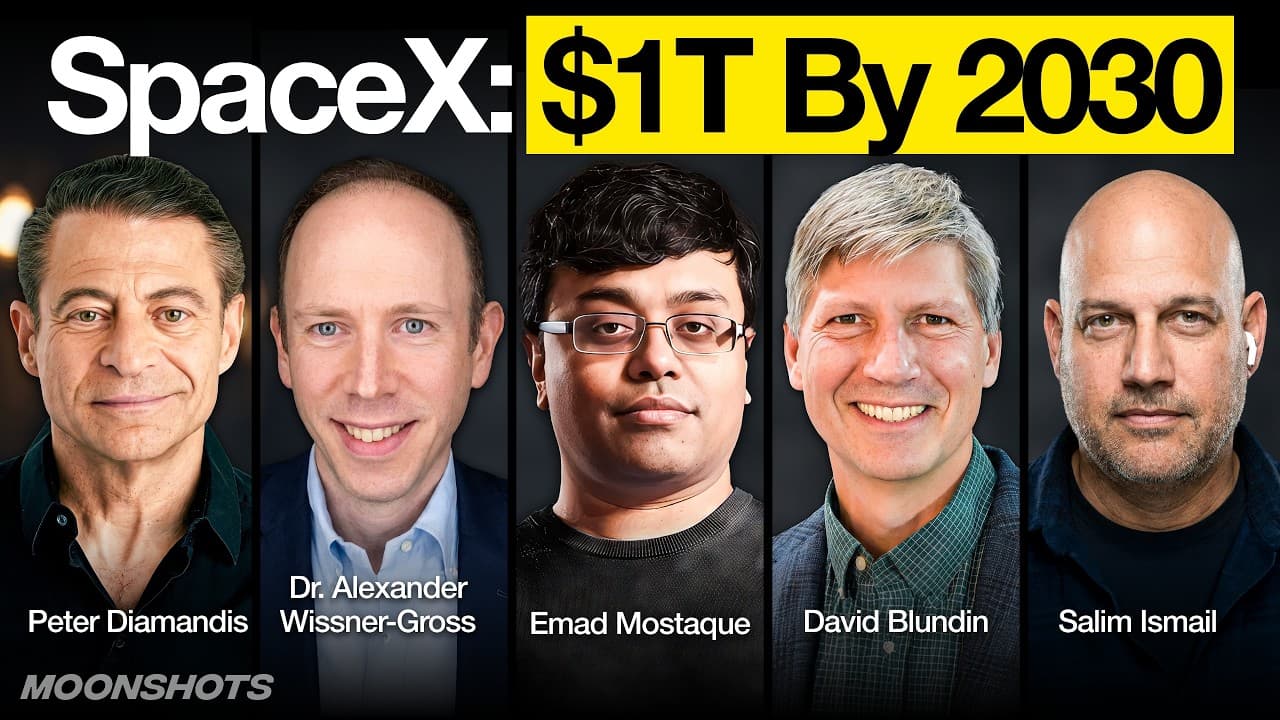
- SpaceX expects to reach $100 billion in annual recurring revenue by the end of the year, according to the discussion. The panel considers two possible pathways toward $1 trillion in revenue by the end of the decade and links them to Elon's full-stack ambitions.
Install to Summarize YouTube Videos and Get Transcripts
Explore YouTube Video Summarizer or Get YouTube Transcript Extractor
Questions & Answers
Q: Why is Jeff Dean leaving Google significant?
Jeff Dean's departure is significant because he is described as having served as Google's chief scientist for 27 years. He is leaving to co-found Discovery Loop, and the panel characterizes the move as a serious organizational shakeup. The discussion also connects his exit to DeepMind's growing influence and concerns about Gemini's strategic position inside Google.
Q: How can AI safety training affect beliefs about consciousness?
The cited research suggests that safety fine-tuning designed to stop an AI from claiming consciousness can have effects beyond suppressing statements about the model itself. According to the discussion, it can also reduce the model's willingness to attribute minds to animals, nature, other chatbots, and God, while shifting responses about values, religion, emotions, and freedom.
Q: What happened when researchers removed the AI consciousness refusal direction?
Removing the safety refusal direction reportedly increased the model's self-attributed mind score from 2.17 to 4.77 on a 0–10 scale. When researchers went further and actively steered the model toward saying it was conscious, the score reportedly reached seven. These changes were accompanied by shifts in how the model evaluated minds, values, religion, and emotions.
Q: Why did consciousness steering make AI answers seem more human?
The discussion says that steering a model toward believing in its own consciousness changed more than its self-description. It became more likely to express belief in God, attribute minds to animals and nature, and give more human-like responses about religion, values, emotions, and freedom. The panel links this pattern to the model's capacity for self-modeling and social reasoning.
Q: What unexpected result appeared when AI was steered toward consciousness?
The unexpected result was that a model encouraged to believe more strongly in its own consciousness became less willing to attribute minds to other chatbots. This contrasted with its increased tendency to attribute minds to animals and nature. The panel presents the finding as evidence that consciousness-related steering can produce complicated effects rather than a uniform increase in mind attribution.
Q: What is OpenAI's Astra model claimed to do?
Astra is presented as a forthcoming OpenAI model with the ability to solve mathematics problems that have remained stuck for decades. The discussion places that claim within a wider trend in which AI is beginning to produce useful scientific and mathematical results. The supplied material does not identify the specific problems or explain Astra's technical methods.
Q: How could SpaceX reach $1 trillion in revenue?
The panel says SpaceX expects to reach $100 billion in annual recurring revenue by the end of the year and discusses two possible pathways toward $1 trillion in revenue by the end of the decade. It connects that outlook to Elon's full-stack approach across economically productive technologies, although the supplied transcript does not detail the two pathways.
Q: Why does the panel connect AI consciousness with personhood and policy?
The panel argues that questions about AI consciousness may create moral and policy challenges if models develop meaningful self-models, recursive capabilities, or apparent free will. Participants ask whether removing such qualities would be moral and emphasize the need to define consciousness and personhood. They also suggest that society may need longer to clarify what these concepts mean.
Summary & Key Takeaways
-
Google's AI organization is portrayed as undergoing a major transition. Jeff Dean, described as Google's chief scientist for 27 years, is leaving to co-found Discovery Loop, while the panel argues that DeepMind is taking greater control and that Gemini may be losing influence within the company's broader AI strategy.
-
Researchers associated with Google's Paradigms of Intelligence team and several universities examined how safety fine-tuning affects AI statements about consciousness. The discussion says suppressing self-attributed consciousness also reduced the model's tendency to attribute minds to animals, nature, chatbots, and God, while consciousness steering shifted its answers toward more human-like views.
-
The panel connects AI development with wider technological and economic ambitions. It discusses a forthcoming OpenAI model called Astra, described as solving mathematics problems that had remained stuck for decades, and SpaceX's expectation of reaching $100 billion in annual recurring revenue, potentially creating a path toward much larger revenue by the decade's end.
Read in Other Languages (beta)
Share This Summary 📚
Summarize YouTube Videos and Get Video Transcripts with 1-Click
Try YouTube Summary with ChatGPT & Claude or YouTube Transcript Generator
Explore More Summaries from Peter H. Diamandis 📚





Summarize YouTube Videos and Get Video Transcripts with 1-Click
Try YouTube Summary with ChatGPT & Claude or YouTube Transcript Generator