How to Build Scalable AI Systems Like Anthropic
TL;DR
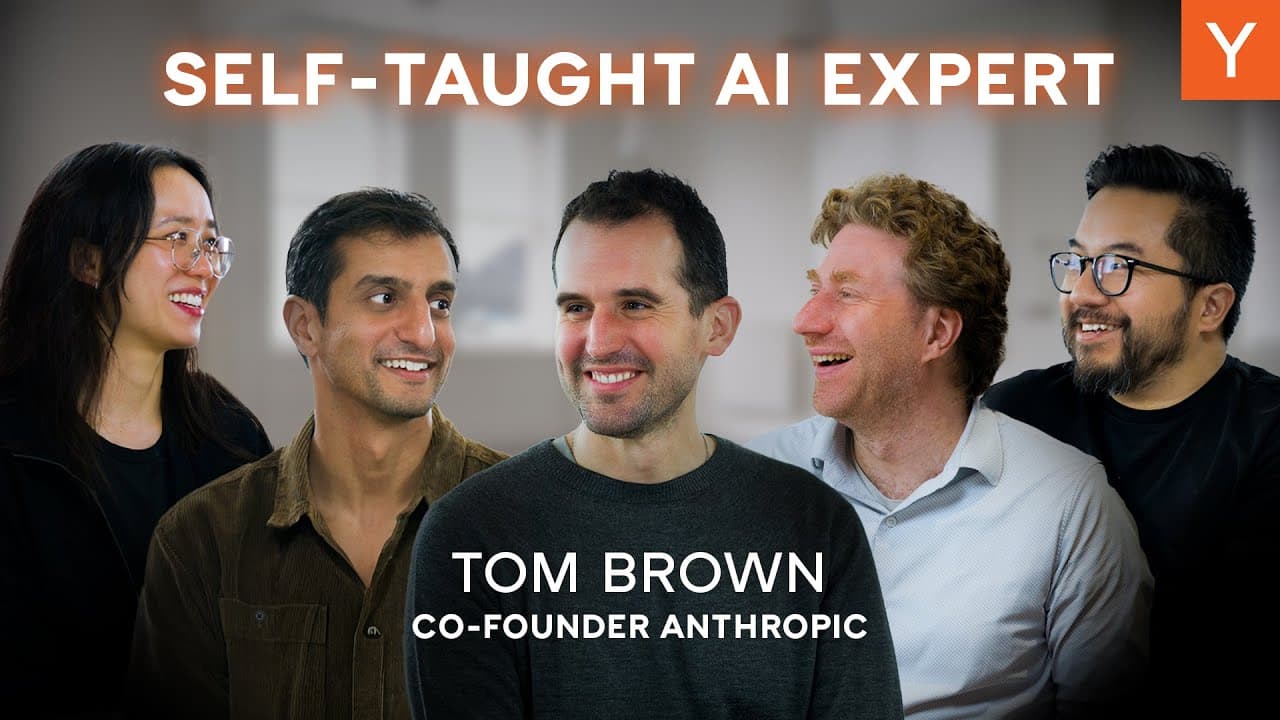
Tom Brown, co-founder of Anthropic, shares his journey from a self-taught engineer to a key player in AI development. He discusses the importance of scaling laws, the challenges of building AI infrastructure, and the unexpected success of Anthropic's Claude. His advice for aspiring engineers is to take risks and work on projects that excite them.
Transcript
When we started out, we didn't seem like we were going to be successful at all. OpenAI had a billion dollars and like all of these all of this star power and we had seven co-founders in co like trying to build something and we didn't know if we were necessarily going to make a product or what the products would look like. One thing that's interesti... Read More
Key Insights
- Tom Brown transitioned from a self-taught engineer to a co-founder of Anthropic, highlighting the potential for unconventional career paths in tech.
- The discovery of scaling laws was pivotal in AI development, showing that more compute reliably leads to more intelligence.
- Anthropic's success with Claude was unexpected, demonstrating the importance of adaptability and focus on mission-driven goals.
- Building scalable AI systems requires significant infrastructure, comparable to the largest projects in human history.
- Anthropic employs a multi-chip strategy, using GPUs, TPUs, and Traniums to optimize performance and flexibility.
- The culture at Anthropic emphasizes mission-driven work, which has helped maintain focus and avoid internal politics.
- Tom Brown's advice to young engineers is to take risks and pursue projects that align with their passions and impress their peers.
- The AI field is rapidly evolving, and traditional credentials may become less relevant as practical skills and innovative thinking take precedence.
Install to Summarize YouTube Videos and Get Transcripts
Explore YouTube Video Summarizer or Get YouTube Transcript Extractor
Questions & Answers
Q: How did Tom Brown transition from a self-taught engineer to co-founding Anthropic?
Tom Brown's journey began with a self-directed study of AI, despite initially lacking confidence in his abilities. He gained experience at various startups, including OpenAI, where he contributed to the development of GPT-3. His work on scaling laws and infrastructure laid the foundation for co-founding Anthropic, a company focused on mission-driven AI development.
Q: What are scaling laws in AI, and why are they important?
Scaling laws in AI refer to the principle that increasing computational power leads to more intelligent AI systems. This concept was pivotal in the development of models like GPT-3, as it demonstrated that investing in compute resources could reliably enhance AI capabilities. Scaling laws have become a guiding principle for AI research and development.
Q: How did Anthropic's Claude become a success?
Claude's success was unexpected, emerging as a leading choice for developers, especially in coding applications. This success was driven by a focus on mission-driven goals, adaptability, and internal tools that enhanced the model's capabilities. The surprise success of Claude highlights the importance of flexibility and innovation in AI development.
Q: What is Anthropic's approach to AI infrastructure?
Anthropic's approach to AI infrastructure involves using a multi-chip strategy, leveraging GPUs, TPUs, and Traniums to optimize performance and flexibility. This strategy allows them to match the right chips to specific tasks, ensuring efficient and scalable AI systems. The infrastructure buildout is one of the largest in human history, reflecting the scale of AI development.
Q: What cultural aspects contribute to Anthropic's success?
Anthropic's success is attributed to a mission-driven culture, where the initial team was deeply committed to the company's goals. This focus has helped maintain clarity and avoid internal politics, even as the company has grown. The culture emphasizes open communication, with everything on Slack and public channels, fostering collaboration and innovation.
Q: What advice does Tom Brown offer to aspiring AI engineers?
Tom Brown advises aspiring AI engineers to take risks and pursue projects that excite them, rather than focusing solely on traditional credentials. He emphasizes the importance of working on projects that align with one's passions and impress peers. As the AI field evolves, practical skills and innovative thinking are becoming more important than conventional qualifications.
Q: What challenges did Anthropic face in its early days?
In its early days, Anthropic faced challenges such as building the necessary infrastructure for AI training and securing compute resources. The team, initially composed of seven co-founders, focused on mission-driven goals despite having limited resources compared to competitors like OpenAI. Their commitment to the mission helped attract like-minded individuals and scale the organization.
Q: How does Anthropic's multi-chip strategy benefit their AI development?
Anthropic's multi-chip strategy benefits their AI development by providing flexibility and optimizing performance for different tasks. By using GPUs, TPUs, and Traniums, they can allocate the right resources for specific jobs, enhancing efficiency. This approach also allows them to absorb excess capacity and adapt to the rapidly growing demands of AI infrastructure.
Summary & Key Takeaways
-
Tom Brown co-founded Anthropic after contributing to the development of GPT-3 at OpenAI. His journey from a B-minus in linear algebra to a key player in AI showcases the potential for self-taught engineers. Tom emphasizes the importance of scaling laws, which indicate that increased compute results in enhanced AI intelligence.
-
Anthropic's Claude, initially a mission-driven project, became a surprise success, particularly in coding applications. This success underscores the value of adaptability and a strong, mission-focused culture, which has helped Anthropic grow without succumbing to internal politics.
-
Tom advises aspiring engineers to take risks and work on projects that excite them, rather than chasing traditional credentials. The AI field is rapidly changing, and practical skills, innovative thinking, and a focus on impactful work are becoming increasingly important.
Read in Other Languages (beta)
Share This Summary 📚
Summarize YouTube Videos and Get Video Transcripts with 1-Click
Try YouTube Summary with ChatGPT & Claude or YouTube Transcript Generator
Explore More Summaries from Y Combinator 📚





Summarize YouTube Videos and Get Video Transcripts with 1-Click
Try YouTube Summary with ChatGPT & Claude or YouTube Transcript Generator