How Could Zohran Mamdani Make NYC Affordable?

TL;DR
Making New York City more affordable will require expanding housing supply, lowering operating costs, and accelerating permits, not merely freezing rents or raising taxes. Business leaders support Mamdani’s affordability goal but argue that property-tax reform, private investment, office conversions, government efficiency, and incentives for development offer a more workable path while preserving the city’s ability to attract employers and talent.
Transcript
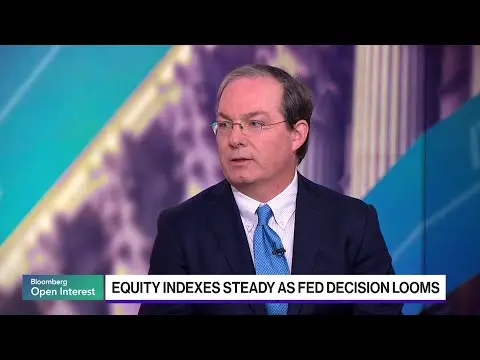
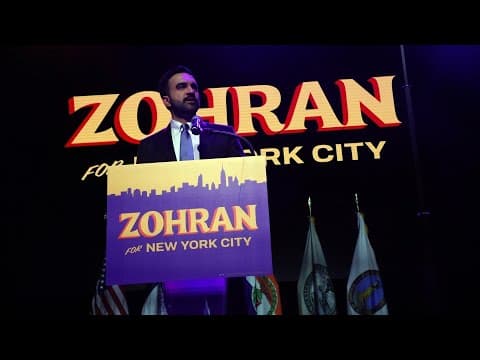
The future is in our hands. The business community is kind of taking a wait andsee attitude. He's a new phenomenon. Until he won the primary election in June, they really didn't know or care who he was. He was an anonymous assemblyman. Katherine Wild is the president and CEO of Partnership for New York, a group that represents businesses in the cit... Read More
Key Insights
- Mamdani’s affordability platform includes lower grocery prices, universal child care, free buses, rent freezes, and possible tax increases. Business leaders share the affordability objective but question whether the proposed financing and housing policies will achieve it without producing additional costs for residents and employers.
- Higher business taxes can worsen affordability when companies pass increased costs to consumers, according to Partnership for New York CEO Kathryn Wylde. She argues that New York should seek alternatives and views Mamdani’s promise to make government more efficient as a constructive starting point.
- New York’s competitiveness depends on continuing to attract skilled workers, businesses, jobs, and tax revenue. The financial industry must pay workers a premium exceeding 20 percent for a comparable New York lifestyle versus Tennessee, Florida, or Texas, illustrating the city’s substantial cost disadvantage.
- Property-tax reform could make rent stabilization more workable because real estate taxes represent 30 percent of rent, according to Wylde. She says Mamdani acknowledged that rental housing taxes must fall if rents are frozen and committed to reforming the city’s property-tax system.
- Rent controls may discourage the private investment needed to expand housing supply, according to BXP CEO Owen Thomas. He argues that New York needs hundreds of thousands of homes and cannot rely on public funding alone, making supportive incentives and development rules essential.
- Office conversions can simultaneously reduce excess office space and expand housing. At 25 Water Street, GFP converted a 1.1 million-square-foot former office building into 1,320 apartments by removing exterior brick, carving two light wells, and adding 10 stories.
- The 467M incentive provides a 30-year tax abatement for qualifying office-to-residential conversions that begin by the middle of 2026, according to Thomas. He says about 13 million square feet of New York office buildings are currently being converted into housing under favorable market and regulatory conditions.
- Faster housing approvals are among the most important actions available to the new administration. Developers want agency leaders who empower staff to review plans, make decisions, and issue permits more quickly instead of adding regulations, obstacles, and procedural delays.
Install to Summarize YouTube Videos and Get Transcripts
Explore YouTube Video Summarizer or Get YouTube Transcript Extractor
Questions & Answers
Q: How could Zohran Mamdani make New York City more affordable?
Mamdani could combine efficient government, property-tax reform, faster housing approvals, and incentives that attract private development capital. His stated agenda also includes lower grocery prices, universal child care, free buses, and rent freezes. Business leaders support the affordability objective but argue that expanding housing supply and reducing operating costs will work better than policies that increase taxes or discourage investment.
Q: Why do business leaders oppose raising taxes to fund Mamdani’s plans?
Business representatives argue that higher taxes do not remain confined to companies. Businesses may pass those costs to consumers, causing New Yorkers to pay more and potentially worsening the affordability problem. They also note that other states and countries compete for New York’s jobs and tax revenue. Mamdani’s emphasis on making government more efficient was therefore received more favorably than another explicit call for tax increases.
Q: Would a rent freeze make New York housing more affordable?
A rent freeze could limit immediate increases for tenants in rent-stabilized apartments, but the interviewees argue that it cannot succeed sustainably if building costs continue rising. Wylde highlights that real estate taxes account for 30 percent of rent and welcomes Mamdani’s interest in property-tax reform. Thomas warns that broader rent controls could deter private capital from financing the new housing New York needs.
Q: Why does New York City need private capital for housing?
New York needs hundreds of thousands of additional housing units, according to BXP CEO Owen Thomas, and the required investment cannot come entirely from the public sector. Private developers must finance many projects, but they need incentives and workable rules. Policies that restrict potential returns may keep capital away, while tax benefits, faster approvals, and predictable development conditions can make construction and conversion projects financially feasible.
Q: How do office-to-residential conversions create housing in New York?
Developers purchase underused office buildings and redesign them as apartments, provided the structures and locations support conversion. At 25 Water Street, GFP transformed a 1.1 million-square-foot former office building into 1,320 apartments. The project required removing much of the exterior brick, carving two light wells to bring illumination into the building, and using additional floor area to add 10 stories.
Q: What is the 467M office conversion incentive?
The 467M incentive gives qualifying developers a tax break for converting office buildings into residences. According to Owen Thomas, a conversion must begin by the middle of 2026 to receive a 30-year tax abatement. He connects this policy and the oversupply of offices to about 13 million square feet of office property currently being converted, presenting it as public and private sector cooperation.
Q: Can office conversions solve New York City’s housing shortage?
Office conversions can add apartments, reduce underused office inventory, reuse existing structures, and potentially generate more city tax revenue and neighborhood activity. However, developers say conversions are only one part of the solution. New York continues to attract residents and has more jobs than ever before, while expensive land, high construction costs, complex rules, and community concerns limit how much housing can be produced.
Q: What should Mamdani’s administration do to accelerate housing construction?
The administration should appoint officials who empower city departments to make decisions, review plans, and issue permits faster. Developers identify shorter approval and construction timelines as one of the most important opportunities for increasing housing. They will watch whether new appointees remove delays and support project execution or instead introduce more regulations, obstacles, and hurdles that make housing creation slower and more difficult.
Summary & Key Takeaways
-
Zohran Mamdani’s affordability agenda includes lower grocery costs, universal child care, free buses, rent freezes, and potentially higher taxes. Business representatives agree with the underlying goal but warn that tax increases could flow through businesses to consumers. They respond more positively to his stated interest in efficient government and property-tax reform.
-
Housing is the central affordability challenge. Business leaders argue that rent controls could discourage the private capital needed to build hundreds of thousands of homes. They favor incentives, faster approvals, lower operating costs, and rules that enable development, while recognizing that expensive land, construction costs, regulations, and community considerations complicate new housing projects.
-
Office-to-residential conversion offers a practical but incomplete response. The former JP Morgan headquarters at 25 Water Street became 1,320 apartments after extensive structural changes. Tax abatements encourage similar projects, with about 13 million square feet undergoing conversion, but developers emphasize that New York must also construct substantially more housing across the city.
Read in Other Languages (beta)
Share This Summary 📚
Summarize YouTube Videos and Get Video Transcripts with 1-Click
Try YouTube Summary with ChatGPT & Claude or YouTube Transcript Generator
Explore More Summaries from Bloomberg Television 📚




Summarize YouTube Videos and Get Video Transcripts with 1-Click
Try YouTube Summary with ChatGPT & Claude or YouTube Transcript Generator