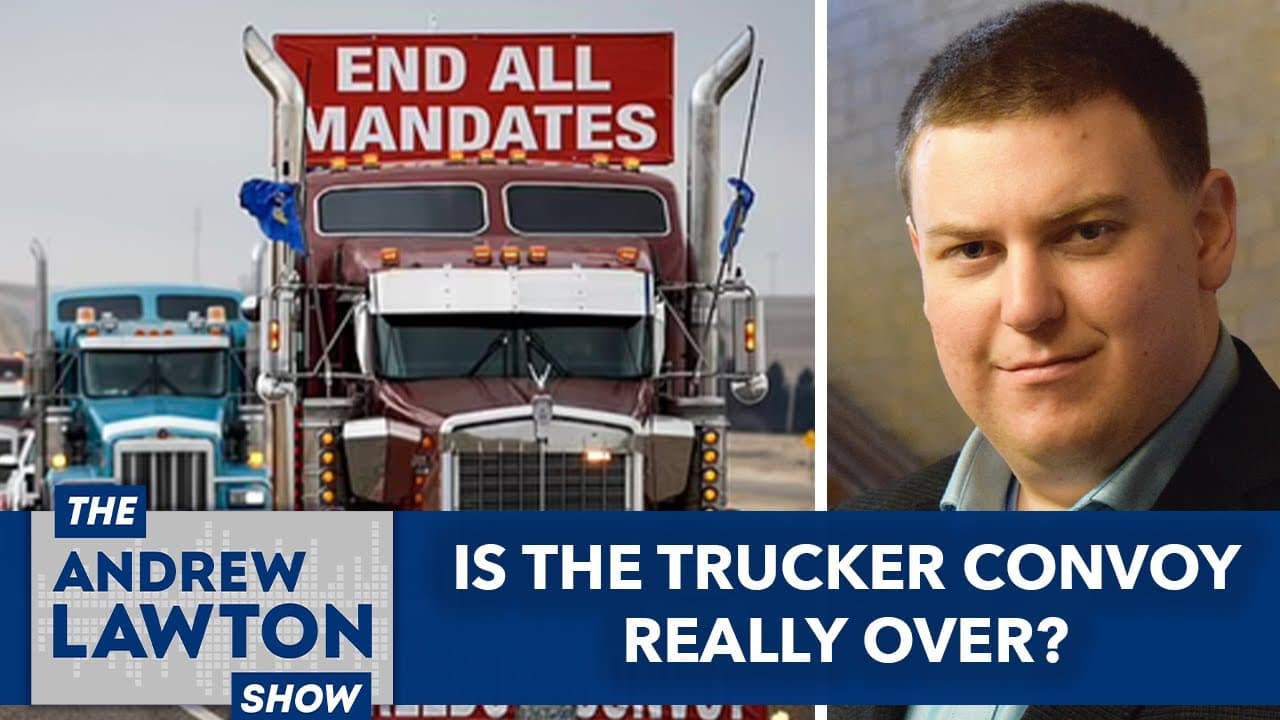
Is the trucker convoy really over?
TL;DR
The Freedom Convoy sparked significant political discourse and protests in Canada, despite being dismantled.
Transcript
welcome to canada's most irreverent talk show this is the andrew lawton show brought to you by true north hello and welcome to you all this is the andrew lawton show canada's most irreverent talk show here on true north it is tuesday february 22nd 022-2022 i should have done the show at 2 22 just to have some fun with it but i figured that would ju... Read More
Key Insights
- 💋 The Freedom Convoy marked a pivotal moment in Canadian history, highlighting widespread civil unrest against government mandates.
- 🤬 The narrative surrounding the convoy shifted as it transitioned from a localized protest to an international symbol of resistance against governmental control.
- ❣️ The police's heavy-handed approach during the protests triggered debates about civil rights and the limits of government authority in crisis situations.
- 🇸🇹 Volunteer involvement, such as that of Tom Moratzo, illustrates how grassroots movements rely on diverse backgrounds to organize effectively and respond to unfolding situations.
- ⁉️ The employment of the Emergencies Act fundamentally altered the conversation around the convoy, introducing questions of legality and ethical governance.
- 😑 As the protest formally ended, many supporters expressed a resolve to maintain pressure on political entities through continued activism.
- 🤨 Financial repercussions following the protests have raised concerns about government overreach into personal freedoms and financial autonomy.
Install to Summarize YouTube Videos and Get Transcripts
Explore YouTube Video Summarizer or Get YouTube Transcript Extractor
Questions & Answers
Q: What sparked the Freedom Convoy protests in Canada?
The protests were primarily initiated in response to COVID-19 vaccine mandates affecting truck drivers, reflecting broader discontent about governmental restrictions and perceived overreach on individual freedoms. The movement quickly expanded to encompass wider frustrations with federal policies, mobilizing diverse groups advocating for personal liberties.
Q: How did the police response escalate during the convoy's presence in Ottawa?
The police actions escalated significantly as the convoy persisted, culminating in aggressive tactics such as pepper spraying demonstrators and arresting journalists. The transition from a peaceful protest to clashes with law enforcement began notably with the invocation of the Emergencies Act, which heightened tensions and altered the context of the protest.
Q: What role did Tom Moratzo play in the Freedom Convoy protests?
Tom Moratzo served as a volunteer, utilizing his military background to assist in logistical planning for the convoy. He aimed to minimize disruptions to Ottawa residents while focusing the protest’s pressure on Parliament. His involvement illustrates the blend of civilian and organized efforts within the grassroots movement.
Q: What implications did the convoy have on Canadian politics?
The Freedom Convoy played a crucial role in mobilizing public discourse surrounding government accountability and personal freedoms. It challenged established political narratives and indicated a growing discontent among Canadians regarding governmental actions. This movement may pave the way for significant political shifts and discussions in the future.
Q: How has the rhetoric surrounding the convoy changed post-protests?
Following the protests, the perspective shifted, emphasizing that the movement was about more than just the immediate issues of mandates. Many now see it as a catalyst for ongoing activism, with broader implications for Canadians' rights and freedoms. The government’s responses, including financial sanctions against supporters, have further fueled this discourse.
Q: What are the protesters advocating for now that the convoy has dissipated?
The protesters continue to seek political reform and push for greater accountability from their representatives. Many activists maintain that the fight against governmental overreach, particularly regarding personal liberties, is far from over, and they call for sustained engagement in the political process and local activism.
Q: What challenges do participants and supporters of the convoy now face?
Many participants report having their bank accounts frozen and facing legal challenges as a result of their involvement in the convoy. There is growing fear among supporters regarding potential repercussions, including social ostracization and financial repercussions stemming from their activism. Ensuring support among their communities has become paramount.
Q: What immediate actions do convoy supporters suggest to promote their cause?
Supporters are encouraged to continue grassroots protests, take off masks as a form of silent resistance, and exert pressure on political representatives to acknowledge and address their concerns. Building unity among like-minded individuals remains a central strategy for maintaining momentum and fostering change.
Summary & Key Takeaways
-
The Andrew Lawton Show discusses the tension surrounding the Freedom Convoy, detailing the involvement of various volunteers and organizers in Ottawa’s protests against COVID-19 mandates.
-
Lawton highlights the transition of the convoy’s peaceful protest into confrontational policing actions, reflecting on personal experiences like being pepper-sprayed during coverage.
-
Tom Moratzo, a key volunteer, emphasizes the grassroots nature of the movement and asserts that despite setbacks, the convoy ignited a larger struggle for freedom awareness across Canada.
Read in Other Languages (beta)
Share This Summary 📚
Summarize YouTube Videos and Get Video Transcripts with 1-Click
Try YouTube Summary with ChatGPT & Claude or YouTube Transcript Generator
Explore More Summaries from True North 📚
Summarize YouTube Videos and Get Video Transcripts with 1-Click
Try YouTube Summary with ChatGPT & Claude or YouTube Transcript Generator