7 Years of Progress In Snow Simulation! ❄️
TL;DR
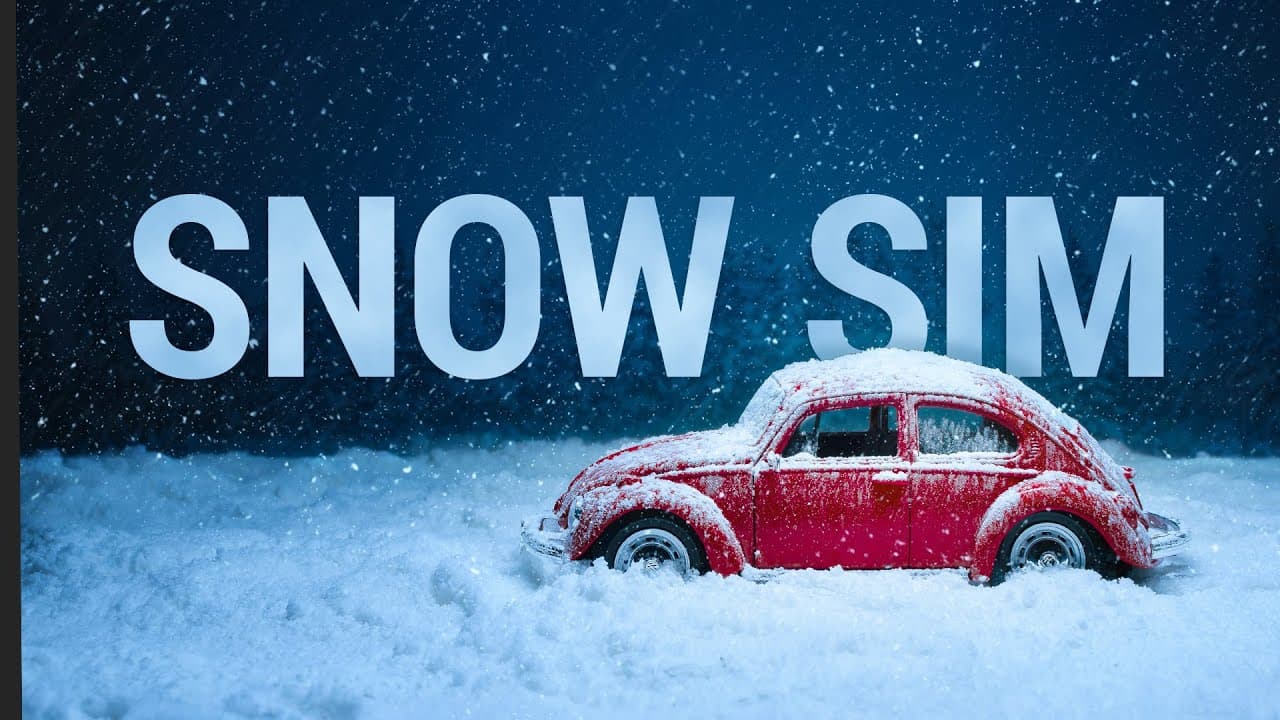
Snow simulation progressed from costly methods with limited interactions to a new technique that handles clumping, deformation, compression, fracturing, avalanches, powder snow, friction, and melting. Whereas earlier simulations could take half an hour per frame, the new method processes smaller scenes in a few seconds per frame and tracks millions of particles using only a couple hundred megabytes. Read on to see how its controls and temperature visualization work.
Transcript
Dear Fellow Scholars, this is Two Minute Papers with Dr. Károly Zsolnai-Fehér. Let’s talk about snow simulations! Being able to simulate snow on our computers is not new, it’s been possible for a few years now, for instance, this legendary Disney paper from 2013 was capable of performing that. So why do researchers write new papers on this? Well, b... Read More
Key Insights
- 🏂 The new snow simulation technique overcomes limitations of previous methods, enabling realistic and efficient simulations of snow dynamics, including complex behaviors like fracturing and avalanches.
- 🏂 The simulation accurately represents physical phenomena such as friction, compression, deformation, and phase change from fluid to snow.
- 🫠 Visual effects like tire marks and melting are realistically simulated, enhancing the overall realism of the snow simulation.
- ⌛ The computational efficiency of the new method is significantly improved, reducing simulation times from hours per frame to seconds per frame for smaller scenes.
- ❓ Memory usage is also optimized, with the simulation requiring only a fraction of the expected memory for millions of particles.
Install to Summarize YouTube Videos and Get Transcripts
Explore YouTube Video Summarizer or Get YouTube Transcript Extractor
Questions & Answers
Q: How has snow simulation progressed since the 2013 Disney paper?
The 2013 Disney paper could simulate snow, but previous methods were computationally expensive and struggled with fracturing interactions. The new method can simulate clumping, deformation, compression, fracturing, powder snow, avalanches, friction, and phase changes from fluid to snow.
Q: What were the main limitations of earlier snow simulations?
Many earlier snow simulations took half an hour per frame, requiring all-night computations. They were also less capable at fracturing interactions, while powder snow and avalanches remained out of reach.
Q: Why is snow challenging to simulate?
Snow exhibits several interacting behaviors: it clumps, deforms, breaks, and hardens under compression. Simulating its phase change from fluid to snow adds another difficult physical process.
Q: What effects can the new snow simulation produce?
The method produces effects such as windshield-wiper interactions, tire marks, sticky snow, breaking clumps, compression, and fracturing. It also demonstrates melting and the phase change from fluid to snow.
Q: What does the boundary friction coefficient control?
The boundary friction coefficient, labeled Vb, controls friction between the snow and boundaries. A low value produces very little friction, while increasing it makes the simulated material substantially stickier.
Q: How does the simulation visualize temperature and melting?
Virtual bunnies are color-coded by temperature, beginning blue at -100°C and changing color as they approach zero degrees Celsius. Near zero, they begin falling apart before melting, while another demonstration explicitly shows melting in action.
Q: How fast is the new snow simulation method?
Large-scale simulations involving millions of particles typically require a few minutes per frame. Smaller scenes can be computed in a few seconds per frame, compared with the half-hour-per-frame cost described for many previous methods.
Q: How much memory does the simulation use for millions of particles?
Despite tracking millions of particles, the method uses only a couple hundred megabytes of memory. The presenter had expected a few gigabytes, so the actual requirement was only a fraction of that expectation.
Summary & Key Takeaways
-
Previous snow simulation methods were expensive and time-consuming, often taking half an hour per frame and lacking in features like fracturing and avalanches.
-
The new paper introduces a method that accurately simulates snow dynamics, including clumping, deformation, fracturing, and phase change from fluid to snow.
-
The technique also enables realistic visual effects such as tire marks and melting, and offers significantly improved computational efficiency and memory usage.
Read in Other Languages (beta)
Share This Summary 📚
Summarize YouTube Videos and Get Video Transcripts with 1-Click
Try YouTube Summary with ChatGPT & Claude or YouTube Transcript Generator
Explore More Summaries from Two Minute Papers 📚


Summarize YouTube Videos and Get Video Transcripts with 1-Click
Try YouTube Summary with ChatGPT & Claude or YouTube Transcript Generator