Which Jobs Will Disappear Due to AI in 24 Months?
TL;DR
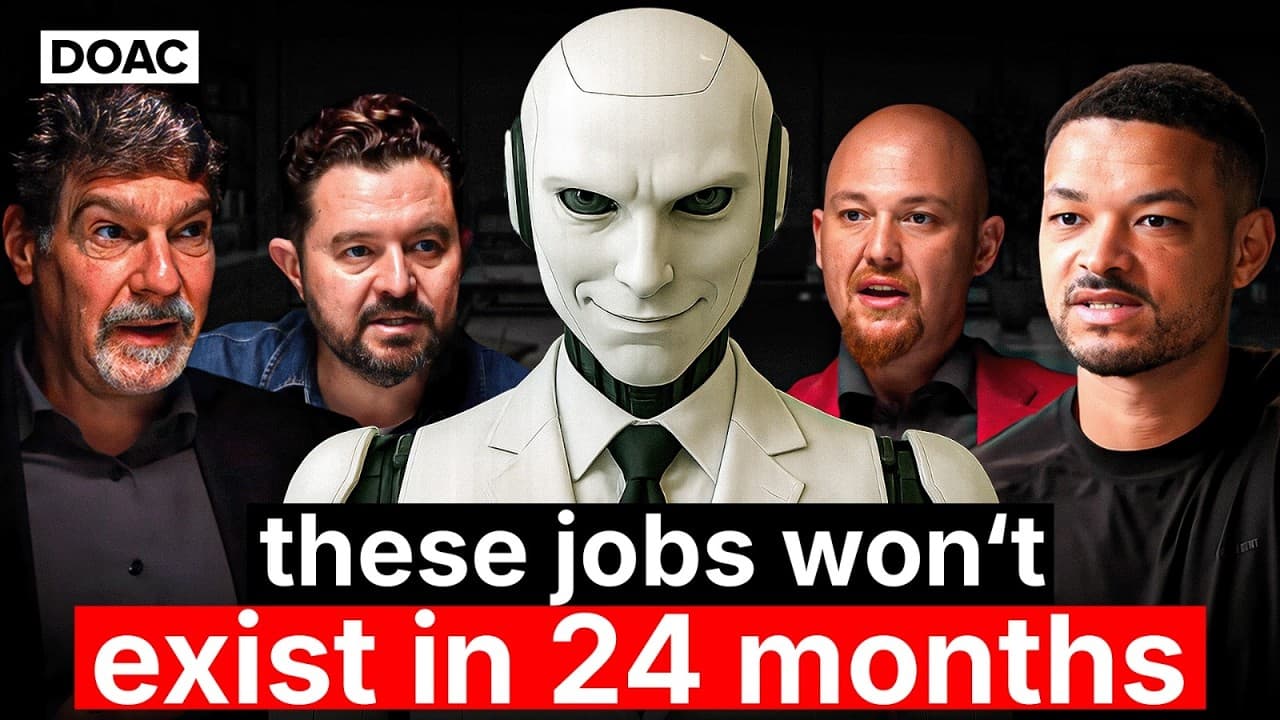
AI is set to eliminate millions of jobs, particularly those involving routine tasks, while simultaneously creating new avenues for wealth generation. The discussion focuses on the transformative impact of AI technology on various industries and the urgent need for education and skill development to adapt to this evolving landscape.
Transcript
i think a lot of people don't realize how massive the positive impact AI is going to have on their life well I would argue that the idea that this AI disruption doesn't lead us to human catastrophe is optimistic for example people are going to be unemployed in huge numbers you agree with that don't you yes if your job is as routine as it comes it's... Read More
Key Insights
- AI is expected to replace routine jobs in the next few years, potentially leading to massive unemployment but also new wealth creation opportunities.
- AI agents can perform tasks autonomously, transforming industries by handling tasks like customer service and even complex processes like mergers and acquisitions.
- The rise of AI could lead to economic displacement, affecting jobs across various sectors and raising questions about universal basic income.
- AI's potential to enhance or hijack human consciousness is debated, with concerns about its impact on creativity and personal agency.
- Education systems must adapt to prepare individuals for a rapidly changing job market, focusing on lifelong learning and generalist skills.
- AI could exacerbate existing issues like loneliness and declining birth rates by altering human relationships and societal norms.
- The ethical use of AI is crucial, with discussions on how to harness its power responsibly and prevent misuse.
- The future may see a divide between those who leverage AI effectively and those who do not, emphasizing the importance of understanding and utilizing AI tools.
Install to Summarize YouTube Videos and Get Transcripts
Explore YouTube Video Summarizer or Get YouTube Transcript Extractor
Questions & Answers
Q: How will AI impact the global workforce?
AI is expected to replace routine jobs, leading to significant unemployment but also creating new opportunities for wealth creation. The impact will be felt across various industries, necessitating adaptation and skill development to leverage AI effectively.
Q: What are AI agents and how do they function?
AI agents are autonomous systems that can perform tasks indefinitely until they achieve a goal or encounter an error. They can access tools like web browsers and programming environments, making them powerful tools for automating complex processes.
Q: How might AI affect creative industries?
AI has the potential to disrupt creative industries by automating tasks traditionally performed by humans. This raises concerns about the loss of human creativity and the need for ethical guidelines to ensure AI complements rather than replaces human creativity.
Q: What skills will be important in an AI-powered future?
Critical thinking, adaptability, and the ability to leverage AI tools will be crucial skills in the AI era. Education systems must focus on lifelong learning and developing a generalist toolkit to prepare individuals for a rapidly changing job market.
Q: What role should education play in preparing for the AI age?
Education should focus on teaching generalist skills and adaptability, preparing individuals for a job market that is constantly evolving due to AI. Emphasizing lifelong learning and critical thinking will be key to thriving in the AI era.
Q: How can AI be used ethically?
Ethical AI use involves ensuring that AI complements human abilities rather than replacing them, and addressing potential misuse. This requires responsible development and deployment of AI technologies, with a focus on benefiting society as a whole.
Q: What are the potential societal impacts of AI?
AI could exacerbate existing issues like loneliness and declining birth rates by altering human relationships and societal norms. It may also lead to economic inequality, with those who effectively leverage AI gaining a significant advantage.
Q: How might AI change the concept of work and purpose?
AI could lead to a world where traditional jobs are less common, necessitating a redefinition of work and purpose. This may involve finding new ways to derive meaning from life beyond traditional employment, potentially through creative and personal pursuits.
Summary & Key Takeaways
-
AI agents are poised to replace millions of jobs, especially those involving routine tasks, while creating new opportunities for wealth generation. The debate highlights the massive impact AI will have on the global workforce.
-
The conversation explores the potential for AI to disrupt creative industries and the way humans interact with technology, raising concerns about the ethical implications and the need for responsible AI use.
-
Education and skill development are essential for adapting to the AI era, with a focus on teaching critical thinking, adaptability, and the ability to leverage AI as a tool for innovation and problem-solving.
Read in Other Languages (beta)
Share This Summary 📚
Summarize YouTube Videos and Get Video Transcripts with 1-Click
Try YouTube Summary with ChatGPT & Claude or YouTube Transcript Generator
Explore More Summaries from The Diary Of A CEO 📚





Summarize YouTube Videos and Get Video Transcripts with 1-Click
Try YouTube Summary with ChatGPT & Claude or YouTube Transcript Generator