What Are Hypergolic Reactions and Their Role in Rocket Fuel?
TL;DR
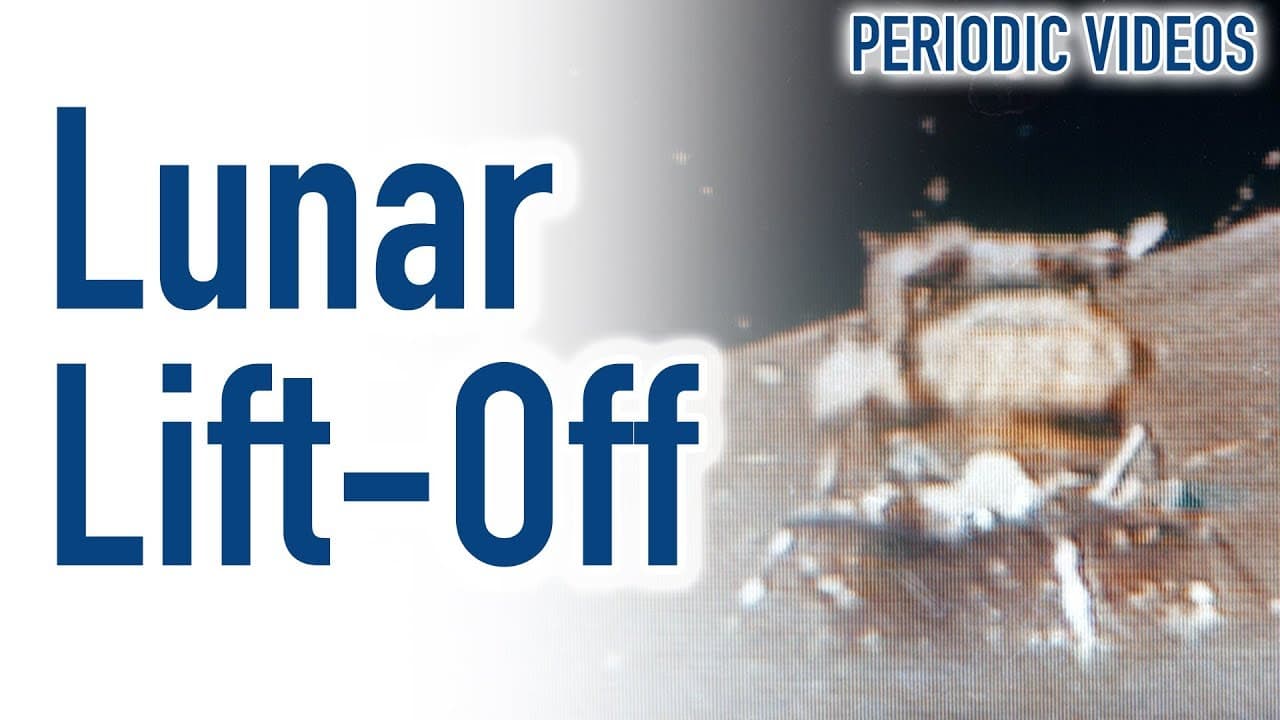
Hypergolic reactions are vital for rocket propulsion, utilizing N2O4 and asymmetric dimethyl hydrazine to create thrust without needing an external ignition. This chemistry allows for a reliable and powerful reaction that quickly produces thrust, crucial for spacecraft like the Apollo lunar module to return safely from the moon.
Transcript
I can Army's out there I'm gonna get the pro now think about it when you're on the moon with the rocket that's going to take you home there's several things that are really important the first thing is that you want your fuel and the oxidizer to react you don't want to have to get out of the rocket and start lighting matches in the hope that the th... Read More
Key Insights
- ❓ Hypergolic reactions with N2O4 and asymmetric dimethyl hydrazine ensured rapid thrust for Apollo spacecraft.
- 👨🔬 Ray Thompson's research at the University of Nottingham significantly impacted the chemistry of rocket fuel used in the Apollo program.
- ℹ️ Avoiding external ignition sources, hypergolic reactions provided a reliable method for spacecraft operations.
- 🥮 Chemistry connections between Nottingham and the Apollo program highlighted in the safe return from the moon.
- ✋ N2O4's reactivity and production of nitrogen contributed to the high-energy reactions for thrust.
- 🥶 Importance of keeping N2O4 cold to maintain its liquid state and reactive properties.
- 🥺 Hypergolic mixtures led to instantaneous exothermic reactions, essential for rocket propulsion.
Install to Summarize YouTube Videos and Get Transcripts
Explore YouTube Video Summarizer or Get YouTube Transcript Extractor
Questions & Answers
Q: What role did N2O4 play in the Apollo spacecraft's safe return?
N2O4 acted as a reactive compound in the fuel tank, producing nitrogen and releasing significant heat for thrust during reaction, aiding in the spacecraft's safe return from the moon.
Q: How did Ray Thompson's research contribute to the Apollo program?
Ray Thompson's research on hypergolic reactions, especially with N2O4 and asymmetric dimethyl hydrazine, provided crucial insights for achieving rapid and safe thrust in the Apollo program without external ignition sources.
Q: Why was hypergolic reaction preferred for the Apollo spacecraft?
Hypergolic reactions were preferred due to their instant ignition upon mixing, avoiding the need for external ignition sources, reducing the risk of failure during spacecraft operations, especially crucial in the Apollo program.
Q: How does the chemistry from the University of Nottingham connect to the Apollo astronauts' return from the moon?
Chemistry research at the University of Nottingham, notably Ray Thompson's work on hypergolic reactions, directly contributed to the safe return of Apollo astronauts by providing efficient fuel and oxidizer mixtures.
Summary & Key Takeaways
-
Chemistry student Ray Thompson's thesis on hypergolic reactions for rocket fuel.
-
Importance of N2O4 and asymmetric dimethyl hydrazine in fuel and oxidizer mixture.
-
Hypergolic mixtures for rapid thrust without external ignition source.
Read in Other Languages (beta)
Share This Summary 📚
Summarize YouTube Videos and Get Video Transcripts with 1-Click
Try YouTube Summary with ChatGPT & Claude or YouTube Transcript Generator
Explore More Summaries from Periodic Videos 📚



Summarize YouTube Videos and Get Video Transcripts with 1-Click
Try YouTube Summary with ChatGPT & Claude or YouTube Transcript Generator