How Mongolia Maintains Peace with Russia and China
TL;DR
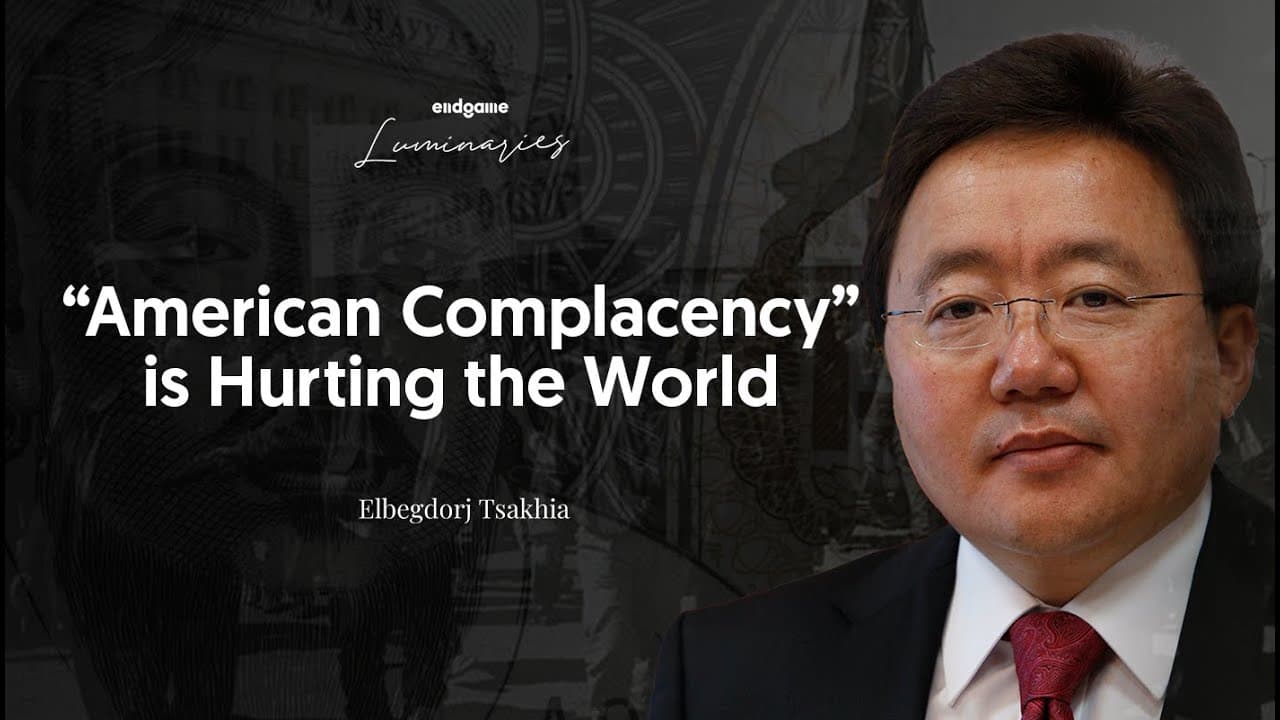
Mongolia, positioned between Russia and China, maintains peace through diplomacy and a commitment to democratic principles. Former President Elbegdorj Tsakhia discusses Mongolia's peaceful transition from communism to democracy in 1990 and the country's ability to navigate complex geopolitical relations. He emphasizes the importance of dialogue, the rejection of war as a tool for resolving conflicts, and Mongolia's unique approach to balancing relationships with its powerful neighbors.
Transcript
Hi friends, today we're honored to be visited by the former Prime Minister and President of Mongolia, President Elbegdorj Tsakhia. Mr. President, thank you so much for gracing our show. As always I like to ask many questions, but the first one is with respect to how you grew up. You grew up in the western part of Mongolia, Zereg. Tell us. Mongolia ... Read More
Key Insights
- Mongolia is geographically sandwiched between Russia and China, yet it maintains its independence and sovereignty through diplomatic efforts.
- The Mongolian Revolution of 1990 transitioned the country from communism to democracy without violence, highlighting the power of peaceful protest.
- Mongolia's democratic system is seen as a counterbalance to the autocratic systems of its neighbors, providing a unique political landscape in the region.
- Elbegdorj Tsakhia emphasizes that war is no longer a viable tool for resolving international conflicts, advocating for peaceful negotiations instead.
- Despite historical challenges, Mongolia has successfully defined and secured its borders with both Russia and China, ensuring territorial integrity.
- Mongolia's economic growth was bolstered by democratic reforms and the opening of its markets, attracting international investment.
- Elbegdorj Tsakhia credits Mongolia's resilience to its ability to learn from past mistakes and adapt to changing geopolitical dynamics.
- The former president stresses the importance of multilateralism and cooperation in addressing global challenges, urging world leaders to prioritize peace over conflict.
Install to Summarize YouTube Videos and Get Transcripts
Explore YouTube Video Summarizer or Get YouTube Transcript Extractor
Questions & Answers
Q: How did Mongolia transition from communism to democracy?
Mongolia's transition from communism to democracy in 1990 was marked by peaceful protests and negotiations. Led by young reformists like Elbegdorj Tsakhia, the movement demanded political reforms, including a multi-party system and democratic elections. The government eventually conceded, leading to constitutional changes and the establishment of democratic governance without any violence.
Q: What is Mongolia's approach to maintaining peace with Russia and China?
Mongolia maintains peace with its neighbors Russia and China through diplomacy and adherence to international agreements. It has clearly defined borders with both countries, recognized by the United Nations. Mongolia's commitment to democratic principles and a market economy differentiates it from its neighbors, allowing it to foster balanced and peaceful relationships.
Q: Why does Elbegdorj Tsakhia believe war is obsolete?
Elbegdorj Tsakhia argues that war is obsolete because it fails to resolve modern geopolitical issues and often results in unnecessary suffering. He advocates for dialogue and peaceful negotiations as more effective means of conflict resolution, emphasizing that the global community should focus on cooperation and mutual respect to address international challenges.
Q: How has Mongolia's economy grown under democratic governance?
Under democratic governance, Mongolia has experienced significant economic growth due to market reforms and foreign investment. The opening of large-scale mining projects, such as the Oyu Tolgoi copper mine, attracted international investors. Democratic reforms improved transparency and governance, enhancing Mongolia's appeal as a stable investment destination.
Q: What role did Elbegdorj Tsakhia play in Mongolia's democratic movement?
Elbegdorj Tsakhia was a key figure in Mongolia's democratic movement, leading efforts to peacefully transition from a communist regime to a democratic government. As a journalist and activist, he organized demonstrations and advocated for political reforms, ultimately contributing to the establishment of a multi-party system and democratic elections in Mongolia.
Q: How does Mongolia differentiate itself from Russia and China politically?
Mongolia differentiates itself from Russia and China by maintaining a democratic political system and a market-based economy. While its neighbors have more centralized and autocratic systems, Mongolia's commitment to democracy and individual freedoms sets it apart, allowing it to engage with the global community on its terms.
Q: What are the key challenges Mongolia faces in its foreign relations?
Mongolia faces challenges in balancing its relationships with Russia and China, both of which have significant influence in the region. While maintaining peaceful and cooperative relations, Mongolia must navigate geopolitical tensions and economic dependencies. Its strategy involves fostering international partnerships and promoting multilateralism to ensure its sovereignty and stability.
Q: Why is multilateralism important for Mongolia's foreign policy?
Multilateralism is crucial for Mongolia's foreign policy as it allows the country to engage with multiple international partners, reducing dependency on any single nation. By participating in global organizations and initiatives, Mongolia can promote its interests, contribute to regional stability, and address global challenges collaboratively, ensuring its voice is heard on the international stage.
Summary & Key Takeaways
-
Mongolia, positioned between two global powers, maintains its sovereignty through strategic diplomacy. The peaceful transition from communism to democracy in 1990 exemplifies Mongolia's commitment to non-violence. Elbegdorj Tsakhia highlights the importance of dialogue over war.
-
The Mongolian Revolution of 1990 was a pivotal moment, transforming the nation without bloodshed. This peaceful change set the stage for Mongolia's democratic development and economic growth, attracting global attention and investment.
-
Elbegdorj Tsakhia discusses Mongolia's geopolitical strategy, emphasizing the need for balance and cooperation with neighbors Russia and China. He advocates for multilateralism and peaceful conflict resolution on the global stage.
Read in Other Languages (beta)
Share This Summary 📚
Summarize YouTube Videos and Get Video Transcripts with 1-Click
Try YouTube Summary with ChatGPT & Claude or YouTube Transcript Generator
Explore More Summaries from Gita Wirjawan 📚



Summarize YouTube Videos and Get Video Transcripts with 1-Click
Try YouTube Summary with ChatGPT & Claude or YouTube Transcript Generator