How AI Shapes the Chip Industry: Insights from Arm CEO
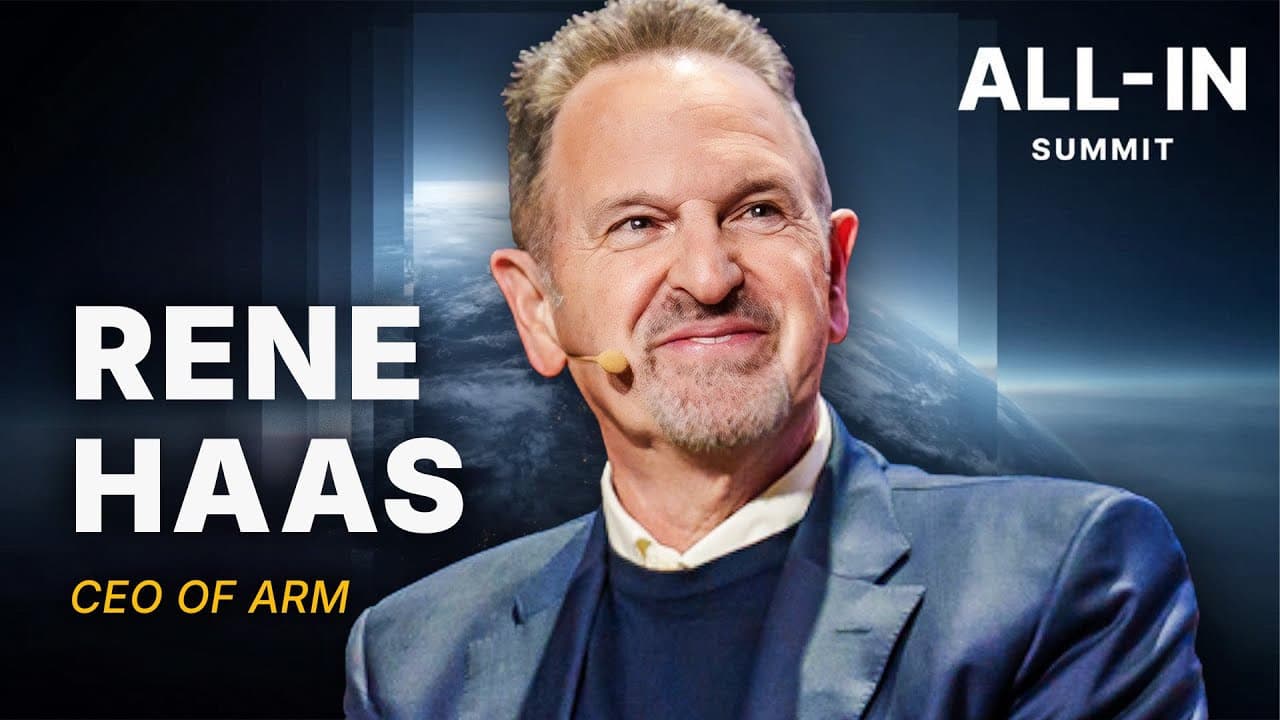
TL;DR
Rene Haas, Arm CEO, discusses the evolving role of AI in the semiconductor industry, highlighting Nvidia's dominance and the potential for Arm to influence AI hardware. He emphasizes the need for strategic investment in manufacturing and technology to maintain competitive advantages, especially in light of US-China tensions over chip exports.
Transcript
There's a company nearly every chipmaker relies on that doesn't actually make anything tangible. Yet, its Blockbuster IPO in September valued it above 54 billion. It's the largest public offering in over 2 years. The valuation of the company has tripled. If you have a smartphone in your pocket or in front of you, you have an ARM circuit somewhere i... Read More
Key Insights
- Arm is a crucial player in the semiconductor industry, providing essential CPU designs used in various devices.
- Nvidia's success in AI is attributed to its ability to pivot and innovate quickly, a lesson learned from its founder, Jensen Huang.
- AI workloads require both CPUs and GPUs, with Nvidia's Grace Blackwell chip featuring 72 Arm CPUs.
- The semiconductor industry benefits from a global, unregulated ecosystem, which fosters rapid innovation.
- Export controls on semiconductors could hinder the industry's growth by creating parallel ecosystems.
- The US needs to invest in manufacturing and education to regain its competitive edge in semiconductor production.
- China's AI ecosystem mirrors the global ecosystem, benefiting companies like Arm that provide foundational technology.
- Collaboration between the US and China in AI development is possible, with both countries recognizing the importance of safety and regulation.
Install to Summarize YouTube Videos and Get Transcripts
Explore YouTube Video Summarizer or Get YouTube Transcript Extractor
Questions & Answers
Q: How does Arm contribute to the semiconductor industry?
Arm is a key player in the semiconductor industry by providing essential CPU designs used in a wide range of devices, from smartphones to advanced AI processors. The company's architecture is integral to many of the world's leading technology companies, enabling them to build efficient and powerful hardware solutions.
Q: What lessons can be learned from Nvidia's success in AI?
Nvidia's success in AI is largely due to its ability to quickly pivot and innovate, driven by its founder Jensen Huang's vision and leadership. The company recognized the potential of GPUs for AI workloads early on and has strategically positioned itself as a leader in AI hardware, continually adapting to new technological demands.
Q: Why is a global, unregulated ecosystem important for semiconductors?
A global, unregulated ecosystem is crucial for the semiconductor industry as it allows for rapid innovation and the free flow of technology and ideas. This environment enables companies to collaborate and compete on a global scale, driving advancements in technology that benefit the entire industry and consumers worldwide.
Q: What are the potential consequences of export controls on semiconductors?
Export controls on semiconductors could lead to the creation of parallel ecosystems, where different regions develop their own technologies independently. This fragmentation could slow down innovation, increase costs, and ultimately hinder the global competitiveness of companies that rely on a unified technological landscape.
Q: How can the US regain its competitive edge in semiconductor manufacturing?
The US can regain its competitive edge in semiconductor manufacturing by investing in education and training to build a skilled workforce, as well as investing in advanced manufacturing facilities. Encouraging collaboration between universities, corporations, and government initiatives can also help create a robust ecosystem for innovation and production.
Q: What is the significance of AI workloads in the semiconductor industry?
AI workloads are significant in the semiconductor industry as they drive demand for both CPUs and GPUs, which are essential for processing complex AI tasks. Companies like Nvidia and Arm are at the forefront of developing hardware that can efficiently handle these workloads, shaping the future of AI technology and its applications.
Q: How does China's AI ecosystem compare to the global ecosystem?
China's AI ecosystem closely mirrors the global ecosystem, leveraging similar software and hardware technologies. This alignment allows companies like Arm to provide foundational technology that supports both domestic and international markets, fostering innovation and growth across borders.
Q: Is collaboration between the US and China in AI development possible?
Collaboration between the US and China in AI development is possible, as both countries recognize the importance of establishing safety and regulatory frameworks. Open dialogue and cooperation can lead to mutually beneficial advancements in AI technology, ensuring that both nations can contribute to and benefit from global innovations.
Summary & Key Takeaways
-
Arm CEO Rene Haas discusses the pivotal role of AI in shaping the semiconductor industry, highlighting Nvidia's strategic innovations and Arm's critical position in providing CPU designs. He emphasizes the importance of maintaining a global, unregulated ecosystem to foster innovation and warns against the potential pitfalls of export controls in creating parallel ecosystems.
-
Haas highlights the need for significant investment in US manufacturing and education to rebuild its semiconductor capabilities, drawing on lessons from Nvidia's success and the global semiconductor landscape. He also touches on the US-China relationship, suggesting that collaboration in AI development is feasible with mutual recognition of safety and regulatory needs.
-
The conversation covers the evolution of AI workloads, the role of CPUs and GPUs, and the potential for Arm to influence AI hardware development. Haas underscores the importance of strategic investment and collaboration in maintaining competitive advantages in the semiconductor industry, especially amid geopolitical tensions.
Read in Other Languages (beta)
Share This Summary 📚
Summarize YouTube Videos and Get Video Transcripts with 1-Click
Try YouTube Summary with ChatGPT & Claude or YouTube Transcript Generator
Explore More Summaries from All-In Podcast 📚






Summarize YouTube Videos and Get Video Transcripts with 1-Click
Try YouTube Summary with ChatGPT & Claude or YouTube Transcript Generator