How to Build a Sailboat from Island Debris
TL;DR
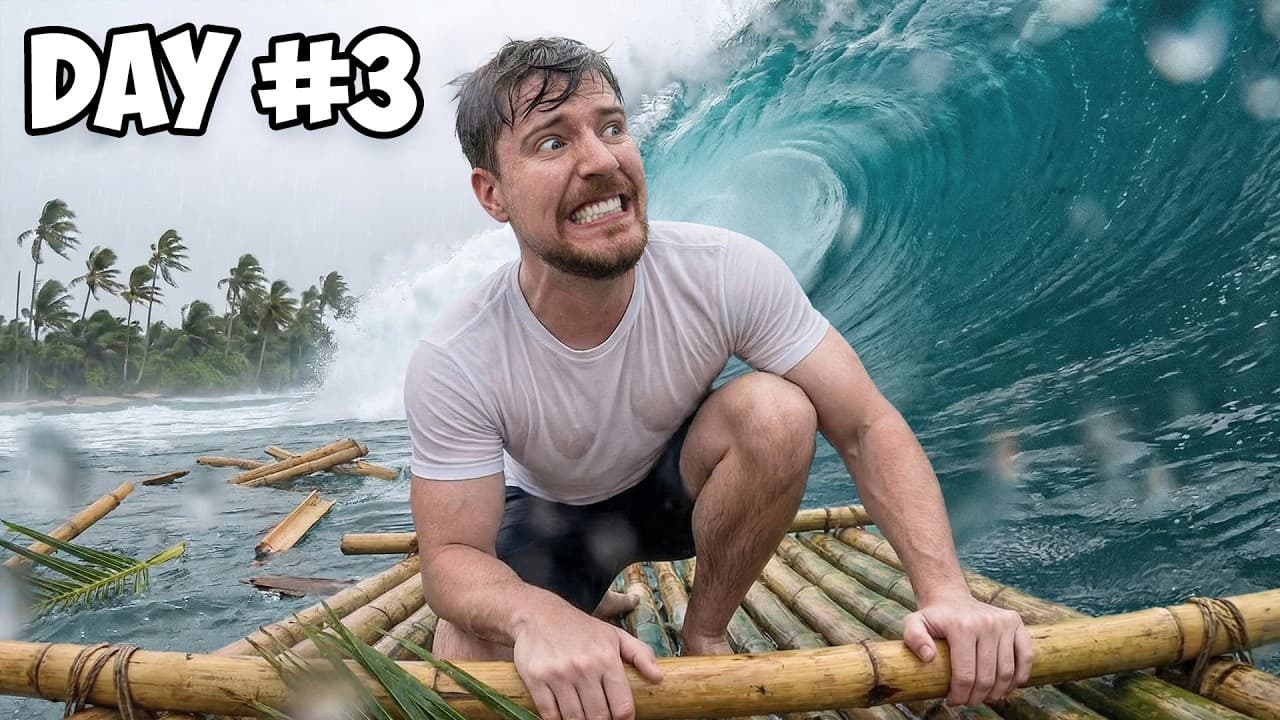
Build a sailboat from island debris by testing a miniature two-hull design, scaling it with bamboo and crossbeams, and using intact sealed containers for flotation. The finished craft must support roughly 1,000 pounds and survive miles of open ocean, so reliable lashings, balanced barrels, paddles, flotation testing, and favorable tides, wind, and currents are critical. Read on for the complete construction approach and the hazards the group faced.
Transcript
We are now stranded on this island in the middle of the Pacific Ocean. And our only way off this island is to build a sailboat and then set sail over miles of open ocean to that other island. Why? Uh, because they like when we suffer. Let's kick this thing off. Let's do it. What are we looking for? Uh, things to build a sailboat. Wait, have you guy... Read More
Key Insights
- The escape plan is to build a sailboat capable of carrying the entire group across miles of open ocean to another island, even though most participants have neither built a boat nor sailed before.
- A survivable camp is the first priority because the group needs shelter and a secure base before attempting a difficult construction project. Their raised tree-fort-style shelter is assembled on the first day using available materials and a limited crate of essentials.
- A miniature prototype demonstrates the intended boat design through two hulls, crossbeams, and a mast. Although the model floats, the full boat must be far larger, support roughly 1,000 pounds, and withstand waves during an open-water crossing.
- Bamboo is the primary structural material because it is described as light and buoyant. Gathering enough bamboo requires entering the jungle, where the group is warned about snakes, a viper, a wandering spider, ants, bees, and other potential hazards.
- Sealed containers are valuable because they can provide flotation for the improvised boat. The group searches washed-up debris for intact blue barrels and other floating objects, while damaged containers are rejected because their ability to remain sealed has been compromised.
- Reliable lashings are essential because a single loose knot could allow the boat to separate when struck by a wave. Hase takes responsibility for tying and checking the knots, viewing this work as a task that must match his strongest practical skill.
- Shade increases productive construction time because the exposed beach becomes unbearably hot. After exhaustion limits the second day's progress, the team moves its work area farther up the beach so members can build for longer without continuously melting in direct sunlight.
- Tides, wind, and currents will determine whether the finished craft can reach the destination. Hase identifies a receding tide as a possible aid for leaving shore, but warns that unfavorable wind and current could prevent the crossing even if a motor were available.
Install to Summarize YouTube Videos and Get Transcripts
Explore YouTube Video Summarizer or Get YouTube Transcript Extractor
Questions & Answers
Q: How can a stranded group build a sailboat from island debris?
Start with a miniature two-hull prototype, then scale the design using bamboo, crossbeams, sealed containers, and other washed-up materials. Build and secure the deck with carefully checked lashings, make paddles, test the craft’s flotation, and add the sail before attempting the crossing.
Q: What design did the group use for the improvised sailboat?
The miniature prototype had two hulls connected by crossbeams, with a mast positioned above them. Although the model floated, the full-sized version needed to be 30 or 40 times larger, carry 1,000 pounds, and withstand open-ocean waves.
Q: Why did the group build a shelter before starting the boat?
They needed a secure camp before beginning a construction project of uncertain length. On the first day, they unloaded a crate containing a small amount of survival essentials and built a raised, tree-fort-style shelter.
Q: What materials did the group use to build the sailboat?
The group gathered bamboo, wood, sealed blue containers and barrels, crates, plastic, and other debris found around the island. Bamboo formed a light, buoyant structure, while intact sealed containers supplied flotation and damaged ones were rejected.
Q: Why were four barrels important for the boat?
The boat needed four barrels to provide balanced flotation across its structure. After finding three, the group searched for two hours and recovered another intact container, carrying it back across a mile of rocks in severe heat.
Q: Why were strong knots critical to the sailboat?
The lashings had to keep the bamboo, crossbeams, barrels, and deck together when waves struck the craft. Because one loose knot could cause the boat to separate, Hase tied and checked the knots himself as the group’s most experienced builder.
Q: How did heat affect the boat-building challenge?
The extreme heat exhausted the group and prevented them from starting construction after gathering materials on Day 2. One participant experienced tingling fingers and tunnel vision, and the team later moved the workspace into shade so they could build for longer.
Q: How would tides, wind, and currents affect the escape attempt?
The group hoped a receding tide would help pull the boat away from shore and toward the ocean. Hase warned that the crossing still depended on favorable wind and currents, which could prevent them from reaching the other island even with additional propulsion.
Summary & Key Takeaways
-
A group stranded on a Pacific island must construct a sailboat and cross miles of open ocean to another island. Because most participants have never built or sailed a boat, they first establish a raised shelter, organize their limited survival supplies, and rely heavily on Hase, the only member with relevant experience.
-
The team creates a miniature catamaran-style prototype with two hulls, crossbeams, and a mast before gathering full-sized materials. Bamboo provides a light structural frame, while sealed containers and barrels supply flotation. Much of the effort involves searching the jungle, beaches, and washed-up trash for components that can be safely repurposed.
-
Extreme heat, fatigue, insects, spiders, difficult terrain, and limited water repeatedly slow construction. The group relocates its workspace into shade, assigns tasks according to individual strengths, secures the deck with carefully checked lashings, finds four barrels for balanced flotation, and plans to test the boat before adding its sail and attempting departure.
Read in Other Languages (beta)
Share This Summary 📚
Summarize YouTube Videos and Get Video Transcripts with 1-Click
Try YouTube Summary with ChatGPT & Claude or YouTube Transcript Generator
Explore More Summaries from MrBeast 📚






Summarize YouTube Videos and Get Video Transcripts with 1-Click
Try YouTube Summary with ChatGPT & Claude or YouTube Transcript Generator