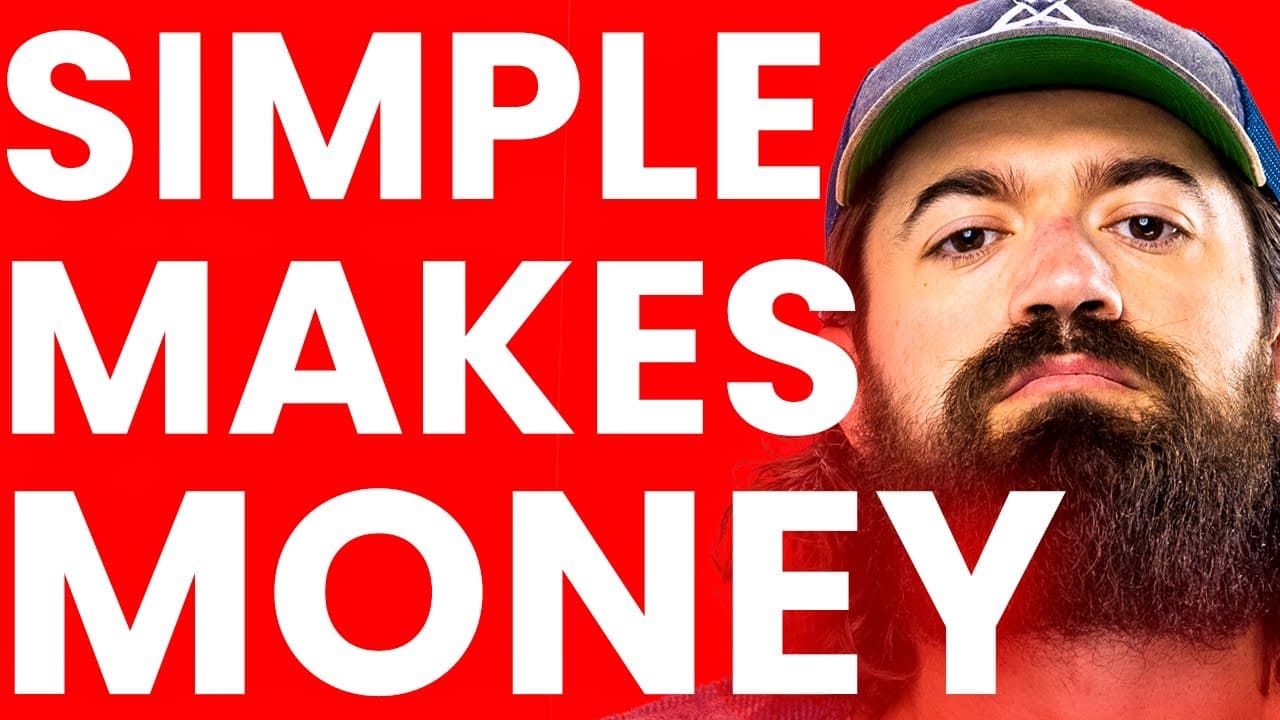
What Are the 12 Marketing Hacks Learned Over 14 Years? (35 Minutes)
TL;DR
The core marketing advice is to win attention with a powerful headline, support promises with proof only you can claim, and use specific persuasion techniques that build trust and prompt action. A headline that raises click-through rate from 1% to 3% triples the number of people entering the rest of the funnel. Read on for eight practical principles covering copy, positioning, credibility, urgency, and scarcity.
Transcript
I've been in business for 14 years. We spend tens of millions of dollars per year in paid advertising, and in this video I'm going to share something I've never shared before - which is that I have 12 internal hacks that we use whenever we write any piece of advertising or copy that goes out to sell stuff. And I'm going to give you all of them... Read More
Key Insights
- Headlines are crucial as they capture the audience's attention and significantly impact ad effectiveness.
- Unique selling propositions based on personal achievements or experiences build trust and credibility.
- Identifying and excluding non-target audiences can strengthen your message and attract the right customers.
- Using specific, relatable moments in copy makes it more engaging and persuasive.
- Providing a reason, even if trivial, can enhance persuasion by giving context to your offer.
- Damaging admissions, or owning flaws, can increase trust and credibility with your audience.
- Linking benefits to social status can enhance the appeal of your product or service.
- Legitimate urgency and scarcity drive action by creating a sense of immediacy and exclusivity.
Install to Summarize YouTube Videos and Get Transcripts
Explore YouTube Video Summarizer or Get YouTube Transcript Extractor
Questions & Answers
Q: Why are headlines so important in advertising?
Most people will see only the headline, so it has the greatest leverage over whether an advertisement performs well. Raising a click-through rate from 1% to 3% triples the number of people who see the rest of the funnel, and a strong headline can outperform a control by two, three, or sometimes five times.
Q: How can marketers create and test stronger headlines?
Prioritize curiosity, differentiation, questions, quotes, and emotionally desirable outcomes, and never run an ad without a deliberately written headline. To find promising ideas, examine what successful organic content and ads show and say during their first 3 seconds, then adapt effective patterns from other industries.
Q: What does “say what only you can say” mean in marketing?
Lead with remarkable achievements, experiences, or proof that competitors cannot honestly claim. Competitors can copy an offer, but they cannot copy proof that had to be earned, such as being the only triple black belt locally or serving a narrowly defined customer group.
Q: How can identifying non-target audiences improve marketing?
Clearly stating who an offer is not for helps refine the message and attract the intended customers. This polarizes the audience, strengthens positioning, and makes the marketing more relevant to people who are most likely to convert.
Q: Why should copywriting use specific, relatable moments?
Concrete situations and emotions make copy more vivid and persuasive. They help potential customers picture themselves experiencing the product or service, improving relatability and making conversion more likely.
Q: What are damaging admissions in marketing?
A damaging admission openly acknowledges a product’s flaw or imperfection. Owning that weakness can make the marketer appear more honest, increase trust, and make the product’s other promises more believable.
Q: How can giving a reason make an offer more persuasive?
Providing a reason gives the audience context for the offer, even when the reason is relatively minor. Reasons become more persuasive when connected to legitimate urgency or scarcity because they explain why someone should act promptly.
Q: What roles do urgency, scarcity, and social status play in marketing?
Urgency uses time constraints, while scarcity emphasizes limited availability; both can lower the threshold for taking action when they are legitimate. Connecting benefits to recognition or respect among peers, family, or colleagues can also make an offer more appealing.
Summary & Key Takeaways
-
Crafting a compelling headline is paramount, as it captures the audience's attention and determines the ad's success. Focus on creating curiosity-driven, unique headlines that stand out. Use strategies like damaging admissions and clear calls to action to build trust and drive conversions effectively.
-
Unique selling propositions based on personal achievements or experiences build trust and credibility. Identifying and excluding non-target audiences can strengthen your message, attracting the right customers. Using specific, relatable moments in copy makes it more engaging and persuasive, enhancing overall effectiveness.
-
Providing a reason, even if trivial, can enhance persuasion by giving context to your offer. Damaging admissions, or owning flaws, increase trust and credibility. Linking benefits to social status enhances product appeal, while legitimate urgency and scarcity create immediacy and exclusivity, driving action.
Read in Other Languages (beta)
Share This Summary 📚
Summarize YouTube Videos and Get Video Transcripts with 1-Click
Try YouTube Summary with ChatGPT & Claude or YouTube Transcript Generator
Explore More Summaries from Alex Hormozi 📚


Summarize YouTube Videos and Get Video Transcripts with 1-Click
Try YouTube Summary with ChatGPT & Claude or YouTube Transcript Generator