How to Get More Done and Waste Less Time With the Eisenhower Decision Matrix
TL;DR
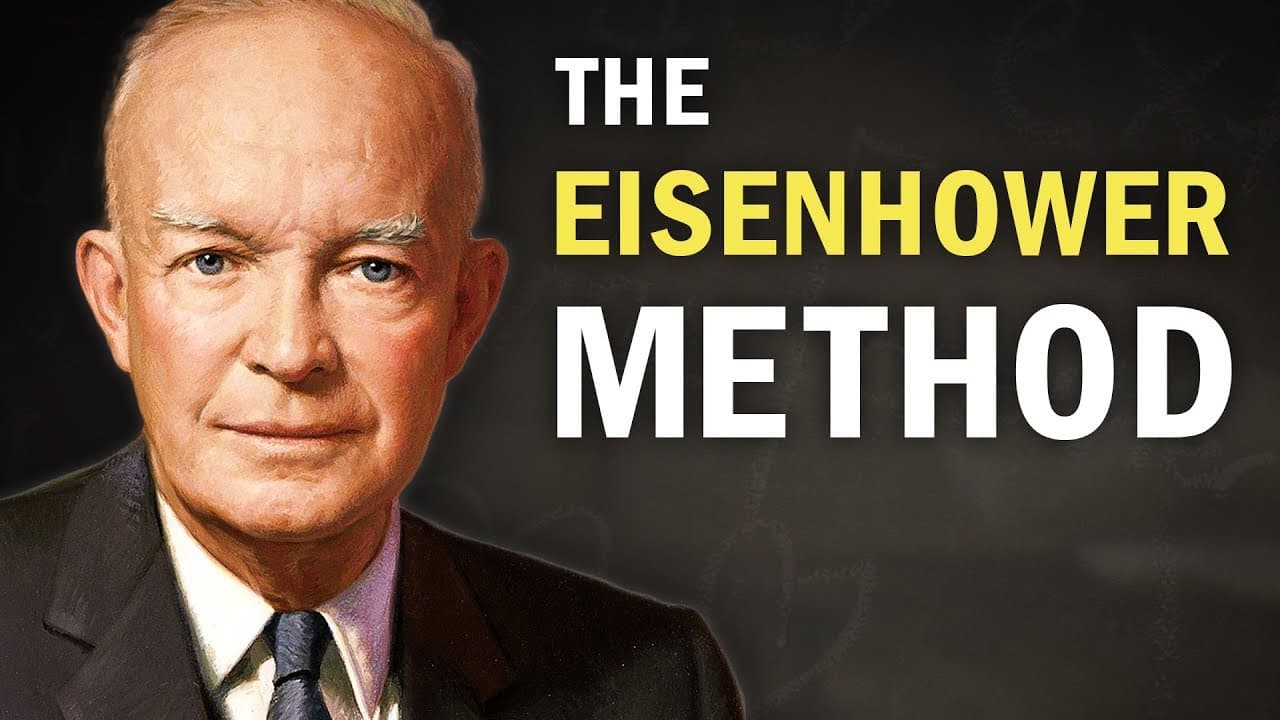
Use the Eisenhower Decision Matrix to sort tasks by urgency and importance, then do, schedule, delegate or automate, or delete them. Its four quadrants work for both a single day and longer periods such as an entire month. Examples include finishing an urgent video script, scheduling semester planning, and automating recurring payments. Read on to see how each quadrant turns an overwhelming task list into clear priorities.
Transcript
- So, here's a story that I bet you are intimately familiar with. I wake up in the morning, I go through my morning routine, and then I eventually sit down to work. And right when I sit down, I know what I need to do. I have a video script I need to finish and I need to send some feedback to a partner on a project we're working on. But then I remem... Read More
Key Insights
- ⚾ The Eisenhower Decision Matrix helps prioritize tasks based on urgency and importance.
- 🎚️ It can be used for both macro-level (e.g., monthly planning) and micro-level (e.g., daily task prioritization) planning.
- ⌛ Delegating or automating tasks that are urgent but not important can save time.
- ⌛ Questioning the justification for tasks helps in identifying time-wasters and focusing on more important tasks.
- 🔨 The matrix can be a valuable tool for improving productivity and prioritization skills.
- ⌛ Skillshare offers a course on time theming and productivity habits that can further enhance task prioritization skills.
- ❓ Skillshare also offers a variety of courses across different topics to enhance creativity, skills, and career prospects.
Install to Summarize YouTube Videos and Get Transcripts
Explore YouTube Video Summarizer or Get YouTube Transcript Extractor
Questions & Answers
Q: How can you get more done and waste less time?
Sort your tasks with the Eisenhower Decision Matrix according to whether they are urgent and whether they are important. Then do urgent-important tasks now, schedule important tasks that are not urgent, delegate or automate urgent tasks that are not important, and delete tasks that are neither.
Q: What is the Eisenhower Decision Matrix?
The Eisenhower Decision Matrix is a task-prioritization tool built around urgency and importance. It is a box divided into four quadrants that indicate whether to do, decide, delegate or automate, or delete each task.
Q: What are the four quadrants of the Eisenhower Decision Matrix?
The four quadrants combine two labels: urgent or not urgent, and important or not important. Urgent-important tasks go in “do,” important but not urgent tasks in “decide,” urgent but not important tasks in “delegate or automate,” and tasks with neither quality in “delete.”
Q: Which tasks should you do immediately?
Do a task immediately when it is both urgent and important. The transcript’s practical example is finishing a video script before leaving for VidCon so the footage can be given to an editor.
Q: What should you do with important tasks that are not urgent?
Decide when to handle them later or place them on your schedule. Planning a semester, studying for a math test, and buying groceries are examples that can wait while urgent-important work receives priority.
Q: Which tasks should be delegated or automated?
Delegate or automate tasks that need attention soon but are not important for you to perform personally. Examples include assigning email checking or video editing to someone else and setting up automatic credit-card payments or investments.
Q: Which tasks should be deleted?
Delete tasks that are neither important nor urgent. Removing them from your life prevents them from competing with work that belongs in the other three quadrants.
Q: Can the Eisenhower Decision Matrix be used for daily and monthly planning?
Yes, the matrix supports both micro-level and macro-level planning. You can use it to prioritize a single day or sort a full month of tasks from a task-management system such as Todoist.
Summary & Key Takeaways
-
The Eisenhower Decision Matrix is a tool to prioritize tasks effectively, based on urgency and importance.
-
The matrix consists of four quadrants: do, decide, delegate/automate, and delete.
-
It can be used for both macro-level planning (e.g., monthly tasks) and micro-level planning (e.g., daily tasks).
Read in Other Languages (beta)
Share This Summary 📚
Summarize YouTube Videos and Get Video Transcripts with 1-Click
Try YouTube Summary with ChatGPT & Claude or YouTube Transcript Generator
Explore More Summaries from Thomas Frank 📚






Summarize YouTube Videos and Get Video Transcripts with 1-Click
Try YouTube Summary with ChatGPT & Claude or YouTube Transcript Generator