What Happened Two Years After the Emergencies Act?
TL;DR
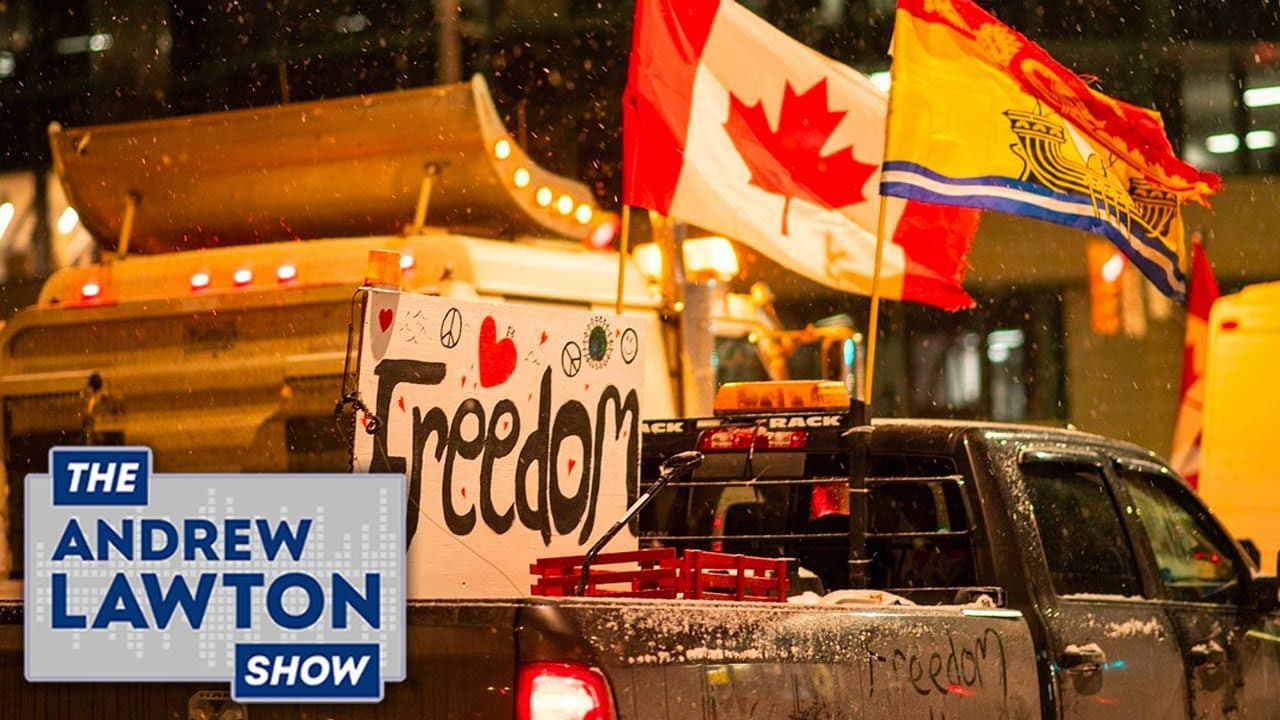
Two years after the Emergencies Act was invoked, a federal court ruling deemed its use unconstitutional, reigniting discussions about government authority and public freedoms. Critics argue that COVID restrictions were indicative of deeper authoritarian tendencies, while the Freedom Movement's rise highlights increasing political awareness and resistance among Canadians against perceived governmental overreach.
Transcript
you're tuned in to the Andrew lton show I mentioned at the outset of this program it is Valentine's Day and nothing puts me in the mood more than talking about constitutional law uh this is the two-year anniversary of the invocation of the emergencies act now normally this would be a bit more of a sour note but I should also point out that it's onl... Read More
Key Insights
- ✊ The two-year anniversary of the Emergency Act's invocation brings renewed scrutiny of governmental powers and their implications for civil liberties.
- 🇨🇫 Recent court rulings challenging the legality of the Emergency Act are reshaping public discourse and expectations regarding government authority.
- 🚨 The Freedom Convoy emerged as a significant movement, reflecting widespread dissatisfaction with government restrictions and a desire for individual freedoms.
- 🖤 The intelligence community's assessments were criticized for lacking depth, failing to recognize the broader context of governmental overreach as a catalyst for the Freedom Movement.
- 🥺 Political engagement among Canadians has increased, leading to greater resistance against perceived government tyranny and infringement on rights.
- ❓ The refusal of the government to acknowledge its missteps regarding the Emergency Act creates an atmosphere of distrust among citizens.
- 🫵 The conflation of critiques of communism and government control with extremism is viewed as an oversimplification of complex political sentiments.
Install to Summarize YouTube Videos and Get Transcripts
Explore YouTube Video Summarizer or Get YouTube Transcript Extractor
Questions & Answers
Q: What was the significance of the federal court ruling regarding the Emergency Act?
The federal court ruling declared the invocation of the Emergency Act illegal, which shifted the narrative surrounding government authority and control. This ruling not only affected the discussion about emergency powers but also reinvigorated public discourse on civil liberties, creating a stark contrast to the government's stance that the invocation was justified.
Q: How did the invocation of the Emergency Act relate to public sentiment during the Freedom Convoy?
The invocation stemmed from a desire to quell protests against COVID restrictions; however, it inadvertently highlighted the grievances many Canadians had against perceived governmental overreach. The Freedom Convoy grew into a movement advocating for individual freedoms, which many citizens felt were threatened by the actions of the government.
Q: What does Tom Marazzo identify as the main motivation behind the Freedom Convoy?
Marazzo emphasizes that the Freedom Convoy arose in response to a series of COVID restrictions viewed by many as authoritarian. He argues that the protest was rooted in a fight for constitutional rights and freedoms, reflecting a significant subset of Canadian citizens who felt their voices had been ignored by the government.
Q: Why does the conversation criticize intelligence assessments related to the Freedom Movement?
Critics argue that the intelligence community's understanding of the Freedom Movement was superficial and missed the underlying issues, suggesting that the movement's emergence was more about a broader discontent with government authority rather than simply a reaction to COVID measures. This perspective suggests a disconnect between governmental responses and citizens’ actual motivations.
Q: How has increased political awareness among Canadians influenced perception of government actions?
The recent surge in political awareness has led Canadians to become increasingly critical of government actions, viewing them as authoritarian rather than benign. The dialogue indicates that as citizens become more informed and engaged, they are less likely to accept governmental overreach, seeing resistance to such actions as a form of responsible citizenship.
Q: What criticisms are leveled against the portrayal of the Freedom Movement in mainstream media?
The conversation critiques mainstream media for perpetuating narratives that frame the Freedom Movement as extremist or ideologically motivated violence. Instead, it argues that these portrayals overlook the legitimate concerns of citizens and the movement's foundations in advocating for freedoms and civil rights.
Summary & Key Takeaways
-
The anniversary of the Emergency Act's invocation coincides with a federal court ruling deeming its use unconstitutional, sparking a renewed discussion about government authority and public freedoms.
-
The conversation highlights the perspective that COVID restrictions were symptomatic of deeper governmental control, with many citizens feeling disenfranchised by the government's response to the Freedom Convoy.
-
The dialogue criticizes how mainstream media and governmental reports categorize the Freedom Movement as extremist, arguing that political awareness and resistance to perceived tyranny do not equate to radicalism.
Read in Other Languages (beta)
Share This Summary 📚
Summarize YouTube Videos and Get Video Transcripts with 1-Click
Try YouTube Summary with ChatGPT & Claude or YouTube Transcript Generator
Explore More Summaries from True North 📚
Summarize YouTube Videos and Get Video Transcripts with 1-Click
Try YouTube Summary with ChatGPT & Claude or YouTube Transcript Generator