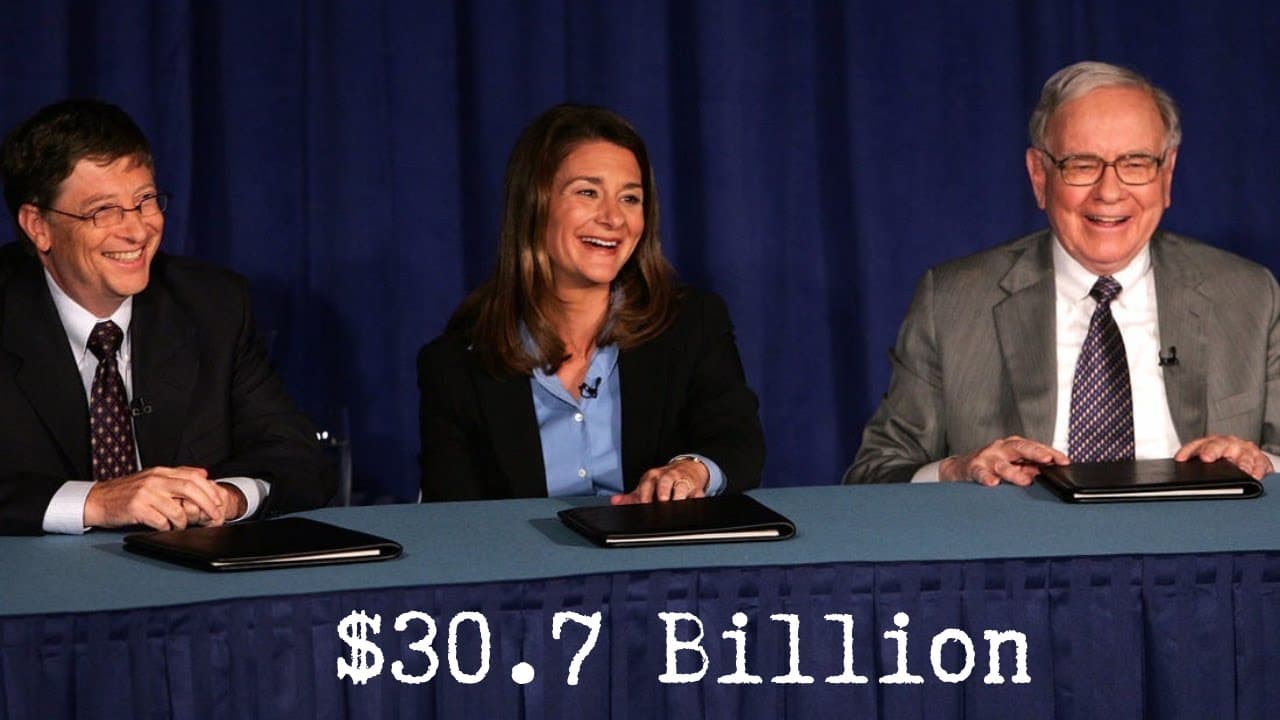
Warren Buffett Pledges $30.7 Billion To The Bill & Melinda Gates Foundation | June 26, 2006
TL;DR
Warren Buffett pledged Berkshire Hathaway shares valued at $30.7 billion to the Bill & Melinda Gates Foundation because he believed its leaders could distribute the wealth more effectively than he could. The gifts would be transferred annually, while the foundation planned to deepen its existing work in global health, education, poverty, and opportunity rather than expand broadly into unrelated fields.
Transcript
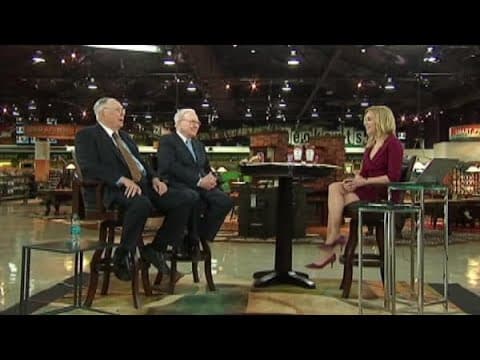
next investment advisor warren buffett discusses his plans to give the majority of his assets in the company he founded to the bill and melinda gates foundation and other charities the three spoke at a 45-minute news conference in new york then a briefing on u.s trade with canada and mexico that's with the board of trade alliance ladies and gentlem... Read More
Key Insights
- Buffett's central philanthropic principle is that accumulated wealth should return to society. He and his wife reached that agreement about 50 years before the announcement, although their initial expectation was that she would administer the giving after surviving him.
- The pledge is structured as annual transfers of Berkshire Hathaway Class B shares. Buffett said the shares would remain earmarked and held by him, with a million shares going to the Gates Foundation every July throughout his lifetime under the stated condition.
- Five foundations are designated to receive Buffett's shares. Besides the Gates Foundation, the recipients include the Susan Thompson Buffett Foundation and three foundations headed by his children, Susan, Howard, and Peter, each selected for its own strengths.
- The Gates Foundation's strategy is to deepen existing programs rather than broaden into many unrelated areas. Melinda Gates identified global health and education as the main commitments, while Bill Gates also connected the work to poverty, opportunity, scholarships, and libraries.
- Global health funding is focused on diseases with the greatest effects on human lives. Existing priorities included HIV/AIDS, tuberculosis, and malaria, while newer work addressed rotavirus and other infectious diseases for which medications could already produce meaningful benefits.
- The foundation's distinctive role is to support solutions where normal markets are unlikely to act. Bill Gates said this primarily means diseases concentrated in developing countries rather than rich countries, a category dominated by infectious diseases.
- Effective philanthropy depends on capable people, long-term thinking, partners, and governments. Bill Gates compared foundation work with business because both require selecting strong people and maintaining optimism, while emphasizing that enormous problems cannot be addressed by the foundation alone.
- The planned donations were not expected to harm Berkshire Hathaway's share value. Buffett said the stock traded less frequently than most large-cap stocks and estimated that annual sales of all donated shares would raise turnover from about 15 percent to 17 percent.
Install to Summarize YouTube Videos and Get Transcripts
Explore YouTube Video Summarizer or Get YouTube Transcript Extractor
Questions & Answers
Q: Why did Warren Buffett decide to give away his wealth during his lifetime?
Warren Buffett initially planned to accumulate wealth throughout his life and expected his wife to survive him and implement their shared decision to return it to society. After she died first, he had to choose between waiting until his own death or acting immediately. He began giving because he believed he had found five capable foundations that could distribute the wealth better than he could.
Q: How was Warren Buffett's charitable pledge structured?
Warren Buffett described the pledge in terms of Berkshire Hathaway Class B shares because Class A shares could be converted into 30 Class B shares. He committed 10 million Class B shares to the Bill & Melinda Gates Foundation, one million to the Susan Thompson Buffett Foundation, and 350,000 to each foundation headed by his three children. Transfers were planned annually during his lifetime.
Q: What condition applied to Buffett's annual gifts to the Gates Foundation?
The annual gifts were subject to at least one of Bill or Melinda Gates remaining active in the foundation. Buffett said the pledged shares would be earmarked but held by him, with one million shares transferred to the Gates Foundation every July. He also intended to arrange through his will for one of several possible methods to continue accomplishing his philanthropic objectives after his death.
Q: How did the Gates Foundation plan to use Buffett's gift?
Bill and Melinda Gates planned to deepen the foundation's existing work rather than expand broadly into many new areas. They identified global health and education as the principal commitments, including scholarships and libraries in the United States. Bill Gates also mentioned work connected to poverty and opportunity, partnerships with other organizations, and cooperation with governments to increase the foundation's overall impact.
Q: Which global health problems did the Gates Foundation prioritize?
The foundation's major global health priorities were HIV/AIDS, tuberculosis, and malaria. Melinda Gates also described work involving rotavirus and plans to move further down the list of infectious diseases. The selection process considered which diseases had the greatest effect on lives and where available medication could save the most lives, especially in developing countries underserved by commercial markets.
Q: Why did the foundation focus on infectious diseases in developing countries?
Bill Gates said the foundation's key role was to support solutions where the market was unlikely to provide them. That meant concentrating on diseases found mainly in developing countries rather than rich countries. He stated that this list was overwhelmingly composed of infectious diseases and that the foundation had activities addressing all of the top 20, scaled according to each problem's size.
Q: How did Buffett compare choosing a charity with choosing an investment manager?
Buffett said people who want their money managed effectively often transfer it to an investment manager they believe can make better decisions. He applied the same reasoning to philanthropy, selecting people and foundations that he believed could give money away more effectively than he could. His decision therefore reflected confidence in the recipients' ability to administer charitable resources, not simply a desire to relinquish ownership.
Q: Would the charitable share transfers hurt Berkshire Hathaway stock?
Warren Buffett said he would not have made the pledge if he expected it to have a negative impact. He noted that Berkshire Hathaway traded less frequently than most large-cap stocks and might have had the lowest turnover on the New York Stock Exchange as a percentage of outstanding shares. He estimated that selling every donated share annually would increase turnover from about 15 percent to 17 percent.
Summary
In this video, investment advisor Warren Buffett discusses his plans to donate the majority of his assets to the Bill and Melinda Gates Foundation and other charities. He explains the mechanics of the donation and how it will be implemented throughout his lifetime and after his death. Bill and Melinda Gates express their gratitude for the donation and discuss their plans to deepen their work in global health and education. They also touch on the importance of taking risks in philanthropy and the potential trend of wealthy individuals banding together for greater impact. Buffett addresses concerns about the concentration of wealth in philanthropy and the potential impact on Berkshire Hathaway's stock value. The Gates Foundation trustees discuss the challenges and opportunities of scaling up their philanthropic efforts. Buffett also explains his philosophy of not leaving massive inheritances to his children and the importance of equality of opportunity.
Questions & Answers
Q: Can you explain the mechanics of your donation to the Bill and Melinda Gates Foundation and other charities?
Buffett has committed 12 million and 50,000 shares of Berkshire Hathaway stock to the Bill and Melinda Gates Foundation, with a plan to give a million shares to the foundation every July. He has also earmarked shares for the Susan Thompson Buffett Foundation and three other foundations headed by his children. The remaining shares will go to philanthropy either during his lifetime or upon his death.
Q: How do Bill and Melinda Gates feel about receiving such a large donation?
They are honored and humbled by Warren Buffett's gift, recognizing its unprecedented potential to do good in the world. They feel a great responsibility and are excited to work with Buffett as a trustee of the foundation.
Q: What areas will the Gates Foundation focus on with the increased funding?
The foundation currently focuses on HIV/AIDS, tuberculosis, and malaria, but they plan to deepen their work in global health and education. They may also expand into areas such as rotavirus and other infectious diseases that have a significant impact on lives.
Q: Are there any concerns about the impact of the donation on Berkshire Hathaway's stock value?
Buffett does not believe there will be a negative impact on Berkshire Hathaway's stock value. The turnover of Berkshire stock is already relatively low, and the donation is not expected to significantly change that. He sees no downside and believes the donation may even make it more likely for Berkshire Hathaway to be included in the S&P 500.
Q: What message does Buffett have for countries that are less focused on philanthropy and more on inheritance?
Buffett believes that leaving massive inheritances goes against the principles of a meritocratic society that values equality of opportunity. He sees philanthropy as a way to address societal needs and create a more equitable society. He hopes his example will inspire others to consider giving back and participate in philanthropy.
Q: How will the Gates Foundation manage the increased funds and ensure efficient and effective giving?
The foundation is already planning for the increased funds and will focus on deepening their work in areas such as micro-lending, agriculture, and vaccines. They will work with outside advisors and specialists to ensure they make the best decisions and have the greatest impact. They are committed to scaling up their efforts and learning from both successes and failures.
Q: Is there a concern about the concentration of wealth in philanthropy with the increase in funding for the Gates Foundation?
The size of the donation will make the Gates Foundation the largest foundation in the world, but Buffett and the Gates Foundation trustees are confident in their ability to effectively and efficiently deploy the funds. They believe the increased resources will allow them to have an even greater impact on pressing global issues.
Q: Are there any plans for other wealthy individuals to join the Gates Foundation as trustees?
While there have been no recent conversations with other potential trustees, the Gates Foundation already collaborates and partners with other foundations and individuals in their work. They believe in the power of collaboration and encourage others to also contribute to philanthropy in their own ways.
Q: What value does Buffett see in taking risks in philanthropy?
Buffett acknowledges that philanthropy involves tackling problems that have resisted previous efforts and requires taking risks. He believes that even failures can be valuable if they contribute to learning and preventing the repetition of mistakes. He sees philanthropy as an opportunity to solve important problems and make a meaningful impact.
Q: Do Buffett's children have any concerns about not receiving a significant inheritance?
Buffett's children were elated and understanding when he explained his philosophy of not creating dynastic wealth. They recognize the opportunities they have had and are proud to have the resources to make a difference through their own philanthropic endeavors. Buffett believes they will do a terrific job managing the significant assets they already have and using them for philanthropic purposes.
Takeaways
Warren Buffett's decision to donate the majority of his assets to the Bill and Melinda Gates Foundation and other charities has significant implications for the field of philanthropy. The donation will greatly increase the resources available for tackling pressing global issues such as global health and education. The Gates Foundation plans to deepen their work in their current areas of focus and explore new avenues for impact. Collaboration and partnerships among wealthy individuals and foundations are encouraged to address these complex challenges. Taking risks and learning from both successes and failures is seen as essential in the field of philanthropy. The concentration of wealth in philanthropy is a concern, but the Gates Foundation and Buffett are confident in their ability to maximize the positive impact of their investments. Overall, the donation serves as an example for others to consider giving back and working together to create a more equitable and opportunity-rich society.
Summary & Key Takeaways
-
Warren Buffett committed 10 million Berkshire Hathaway Class B shares to the Bill & Melinda Gates Foundation, plus additional shares to the Susan Thompson Buffett Foundation and three foundations headed by his children. Annual transfers would continue during his lifetime, subject to at least one of Bill or Melinda Gates remaining active in their foundation.
-
Buffett said he and his wife had agreed about 50 years earlier that their accumulated wealth should eventually return to society. After his wife died before him, he chose to begin giving during his lifetime because he had found five foundations whose leaders and strengths offered an effective way to distribute the money.
-
Bill and Melinda Gates described the gift as an exceptional responsibility and planned to deepen existing commitments rather than enter many new fields. Their priorities included global health, education, scholarships, libraries, poverty, and opportunity, with particular attention to infectious diseases that primarily affect developing countries and receive insufficient market-driven investment.
Read in Other Languages (beta)
Share This Summary 📚
Summarize YouTube Videos and Get Video Transcripts with 1-Click
Try YouTube Summary with ChatGPT & Claude or YouTube Transcript Generator
Explore More Summaries from Investor Archive 📚

Summarize YouTube Videos and Get Video Transcripts with 1-Click
Try YouTube Summary with ChatGPT & Claude or YouTube Transcript Generator