How to Personalize Nutrition for Longevity and Health
TL;DR
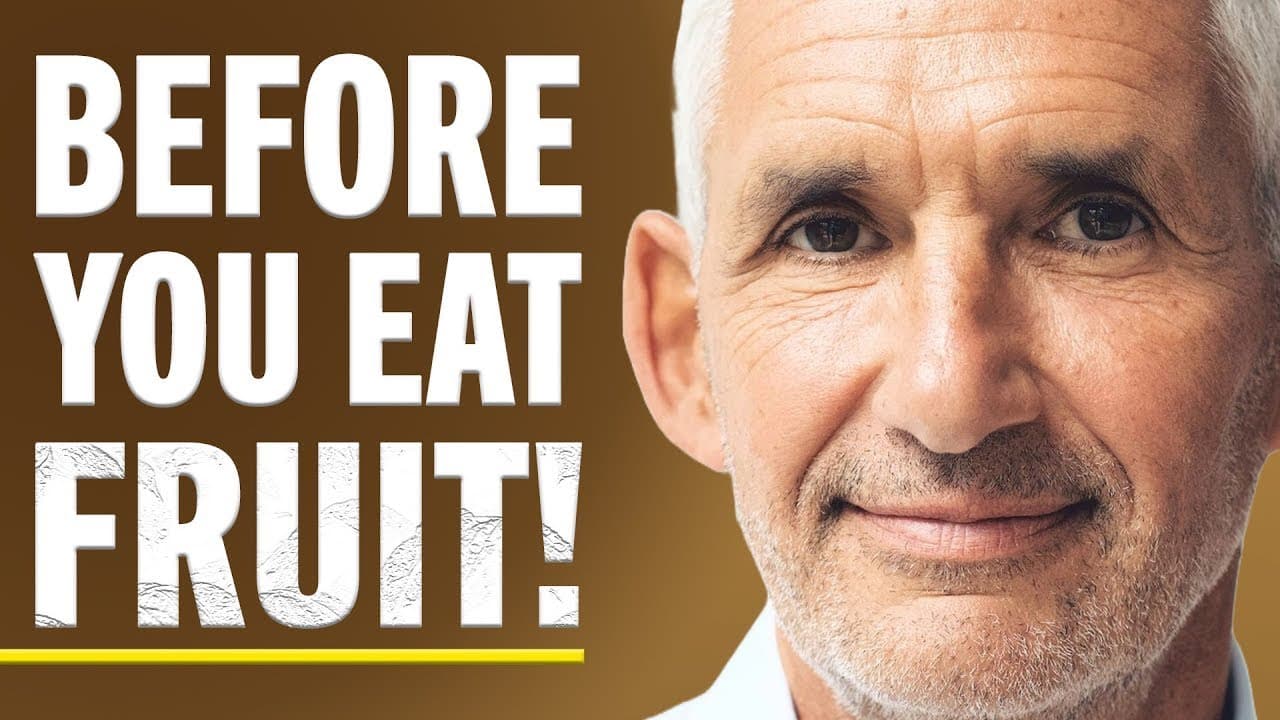
Personalize your diet rather than relying on general rules, as individual responses to foods vary greatly. Bananas were once a staple for Tim, but his own data showed they spike his sugar and aren’t ideal daily, illustrating the power of personalized testing like Zoe scores and CGMs to guide choices. Emphasize variety and holistic eating over single-food dogma while staying curious as nutrition science evolves.
Transcript
Tim you've been researching exploring studying writing about nutrition to me at least for a good decade now and I thought would be interesting is to start by talking about where you've changed your minds perhaps some foods that you previously thought were healthy and we're going to help you with your short summon your long-term health but you've no... Read More
Key Insights
- Nutrition is not one size fits all; individual responses to foods can differ dramatically, which is why personalized eating plans are more effective than generic guidelines.
- Epidemiological studies show associations at the population level but do not reveal how a single person will react to a specific food in real life, underscoring the need for individualized data.
- Bananas are an example where a food commonly viewed as healthy may not be ideal for everyone due to sugar spikes and gut-microbiome considerations.
- Personal testing tools like the Zoe score and CGMs help reveal how foods affect you personally, enabling more informed dietary choices.
- Food choices should be contextual and holistic rather than fixated on single foods; a balanced approach considers overall diet quality, fiber intake, and personal energy needs.
- Monocultures in agriculture can reduce diversity and resilience; diversifying fruit choices (e.g., apples and pears) can offer different nutrient profiles and better personalization outcomes.
- Early career epidemiology focused on risk factors in populations, but later personal experience and data highlighted that individual variation is the key to optimizing long-term health.
- Science in nutrition is dynamic; staying curious and treating nutrition like a science rather than a fixed religion helps accommodate new evidence and personalized strategies.
Install to Summarize YouTube Videos and Get Transcripts
Explore YouTube Video Summarizer or Get YouTube Transcript Extractor
Questions & Answers
Q: A real search query question about the video (e.g. 'How to...', 'What is...', 'Why does...', 'When should...'). Question 1
Personalized nutrition is about tailoring diet to the individual rather than following broad population-level guidelines. By using self-data from tests like the Zoe score and continuous glucose monitors, you can identify how specific foods affect your own blood sugar, energy, and gut health. This approach helps you choose foods that support your long-term health based on your unique biology.
Q: What is the role of bananas in Tim Spector's current diet
Tim explains that bananas were a go-to snack but are no longer eaten daily. He found that bananas can cause moderate sugar spikes in his personal data, so he now prefers other fruits like apples and pears that score higher for him on the Zoe test. The emphasis is on personalization over universal rules.
Q: Why does Tim advocate for viewing nutrition as a science rather than a religion
Tim emphasizes that nutrition evidence is constantly evolving, with new findings changing our understanding. Treating nutrition as a science encourages flexibility, ongoing learning, and updating dietary choices as new data emerges. This mindset helps avoid dogmatic adherence to old ideas and supports individual optimization.
Q: How does a CGM help someone understand their food responses
A CGM measures how different foods affect your glucose levels in real time, which can reveal sugar spikes and crashes after meals. By observing these patterns, you can adjust your diet to minimize peaks and maintain steady energy, a key step toward personalizing nutrition for better long-term health.
Q: What does the Zoe predict study demonstrate about dietary responses
The Zoe predict study shows that given the same food, different people can have 10 to 20 fold differences in sugar and fat peaks. This finding illustrates why population-level recommendations may not reflect an individual’s true response and why personalized nutrition is necessary for effective health outcomes.
Q: Why might it be problematic to overemphasize a single food as universally healthy
Overemphasizing one food ignores individual variation; what works for one person may harm another. Tim points out that even a nutritious food can cause adverse responses in some individuals, so a flexible, diversified approach tailored to your own data is more reliable than dogmatic rules.
Q: What lifestyle approach does Tim recommend beyond single foods
Tim recommends a holistic view of eating that includes a variety of fruits and other foods, paying attention to fiber and gut health, and not fixating on one item. Personal data should guide choices, but still fit within a broader pattern of balanced, sustainable eating.
Q: What role does agriculture diversity play in personalized nutrition
Tim notes that monocultures reduce diversity and resilience, illustrating the value of consuming a variety of fruits and foods. Diverse food options provide a broader range of nutrients and fibers, supporting more personalized nutrition strategies and potentially better microbiome health.
Summary & Key Takeaways
-
Personalization shifts the focus from population-level guidelines to individual responses, highlighting that what works for many may not work for an individual. This approach requires self-testing and data interpretation to tailor dietary choices.
-
Fruits are not universally “healthy” for everyone; timing and personal glucose responses matter, so substitutes with stronger fiber or different sugar profiles can suit some people better.
-
A science mindset is essential in nutrition since new evidence continually emerges, moving away from food as religion toward nutrition as an evolving field that benefits from ongoing data and personal experimentation.
Read in Other Languages (beta)
Share This Summary 📚
Summarize YouTube Videos and Get Video Transcripts with 1-Click
Try YouTube Summary with ChatGPT & Claude or YouTube Transcript Generator
Explore More Summaries from Dr Rangan Chatterjee 📚


Summarize YouTube Videos and Get Video Transcripts with 1-Click
Try YouTube Summary with ChatGPT & Claude or YouTube Transcript Generator