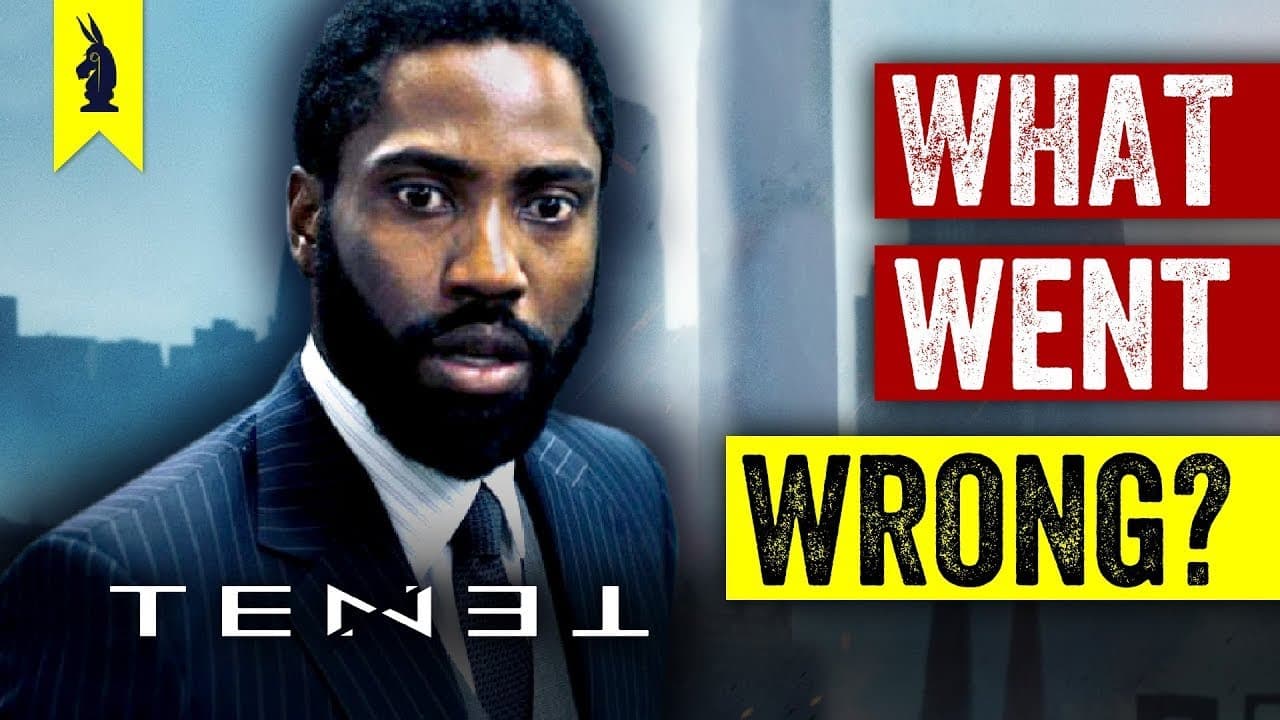
What Went Wrong with Christopher Nolan's Tenet?
TL;DR
Tenet falters due to its poorly constructed first act, which fails to establish character development and clearly explain the plot's stakes. This lack of clarity and vague motivations leave viewers disengaged, ultimately resulting in a disjointed storytelling experience that overshadows its intriguing complexity.
Transcript
this video is brought to you by world of tanks what's up wisecrack michael here to talk about the single cinematic bright spot of 2020 christopher nolan's blockbuster film tenet now tenet has everything we've come to love in a nolan film deep characterization i'm the protagonist check riveting action scenes i think that looks vegetarian i think the... Read More
Key Insights
- 🫵 Tenet struggles with character development, making it hard for viewers to connect or empathize with the protagonist.
- 🧑🏭 The first act fails to establish clear stakes or a coherent world, which creates confusion throughout the film.
- 💦 Unlike Nolan's previous works, Tenet's complexity seems to overshadow emotional engagement and human connection.
- 🎑 Action scenes in Tenet do not contribute to character arcs, resulting in a lack of dramatic tension and viewer investment.
- 🦾 The conceptual mechanics of time inversion are introduced too vaguely, leaving the audience in the dark about crucial plot elements.
- 💦 A causal loop narrative can work if foundational character development is solid; Tenet does not achieve this balance.
- 📏 The analysis suggests that understanding a story's rules early on fosters better audience engagement and emotional investment.
Install to Summarize YouTube Videos and Get Transcripts
Explore YouTube Video Summarizer or Get YouTube Transcript Extractor
Questions & Answers
Q: What are the main structural problems identified in Tenet?
The video highlights that Tenet suffers from an ineffective first act, which fails to properly establish the main character, their motivations, and the rules of its complex world. It argues that without a clear character framework and context, the film's complex mechanics become meaningless, causing the audience to disengage.
Q: How does Tenet's character development compare to Nolan's other films?
Unlike films like Inception and The Prestige, which successfully introduce their protagonists in compelling ways, Tenet's protagonist is portrayed as a blank slate. The analysis points out that there is a lack of depth and relatable flaws in his character, making it difficult for viewers to care about his journey.
Q: Why is the film's world-building considered poor?
The video criticizes Tenet for its vague exposition. Key concepts such as the nature of inverted time and the protagonist's goals are not clearly presented until later in the film, leading to confusion rather than intrigue. This lack of clarity undermines the viewer's ability to connect with the narrative.
Q: What lessons can be drawn from the analysis regarding writing complex narratives?
A key takeaway is the importance of establishing clear character goals and motivations from the start. The analysis suggests that even complex narratives benefit from a solid foundation built in the first act. Without it, intricate plots can fall flat, making it hard for the audience to engage meaningfully with the story.
Q: How does the failure of action scenes impact the film?
The video asserts that successful action sequences should advance character development, but Tenet's action scenes lack this depth. As a result, the spectacular visuals do not elicit emotional connections, failing to make the stakes feel real or invested, which is crucial in an action-packed narrative.
Q: What is the significance of the causal loop in Tenet's storytelling?
The analysis points out that while a causal loop can create mind-bending narratives, in Tenet, it seems to exist at the expense of character and plot clarity. By prioritizing the cleverness of the loop over character engagement, the film ultimately feels unsatisfying, as the audience struggles to care about the outcome.
Q: How can films succeed while deviating from standard narrative structures?
The video suggests that successful deviations from traditional three-act structures can still work if they maintain a clear set of rules and compelling character arcs. Tenet attempts to innovate but stumbles due to its lack of foundational clarity, indicating that strength in character and world-building is paramount, even in complex stories.
Q: What does the analysis say about audience reception of Tenet?
The discussion indicates that while some viewers might find Tenet intriguing for its complexity, many may feel lost or disconnected due to its unclear character motivations and messy plot structure. This divide highlights the challenge in crafting a narrative that balances intricate concepts with audience empathy and engagement.
Summary & Key Takeaways
-
The analysis critiques Christopher Nolan's Tenet, particularly pointing out its structural issues that hinder effective storytelling and character engagement.
-
It explains that the film's first act is poorly constructed, lacking proper character development and a clear explanation of the plot's stakes and rules.
-
The video concludes that while Tenet's complexity is intriguing, it ultimately results in a disjointed viewing experience with uninterested characters and vague motivations.
Read in Other Languages (beta)
Share This Summary 📚
Summarize YouTube Videos and Get Video Transcripts with 1-Click
Try YouTube Summary with ChatGPT & Claude or YouTube Transcript Generator
Explore More Summaries from Wisecrack 📚

Summarize YouTube Videos and Get Video Transcripts with 1-Click
Try YouTube Summary with ChatGPT & Claude or YouTube Transcript Generator