Timothy Snyder: The Making of Modern Ukraine. Class 6: The Grand Duchy of Lithuania
TL;DR
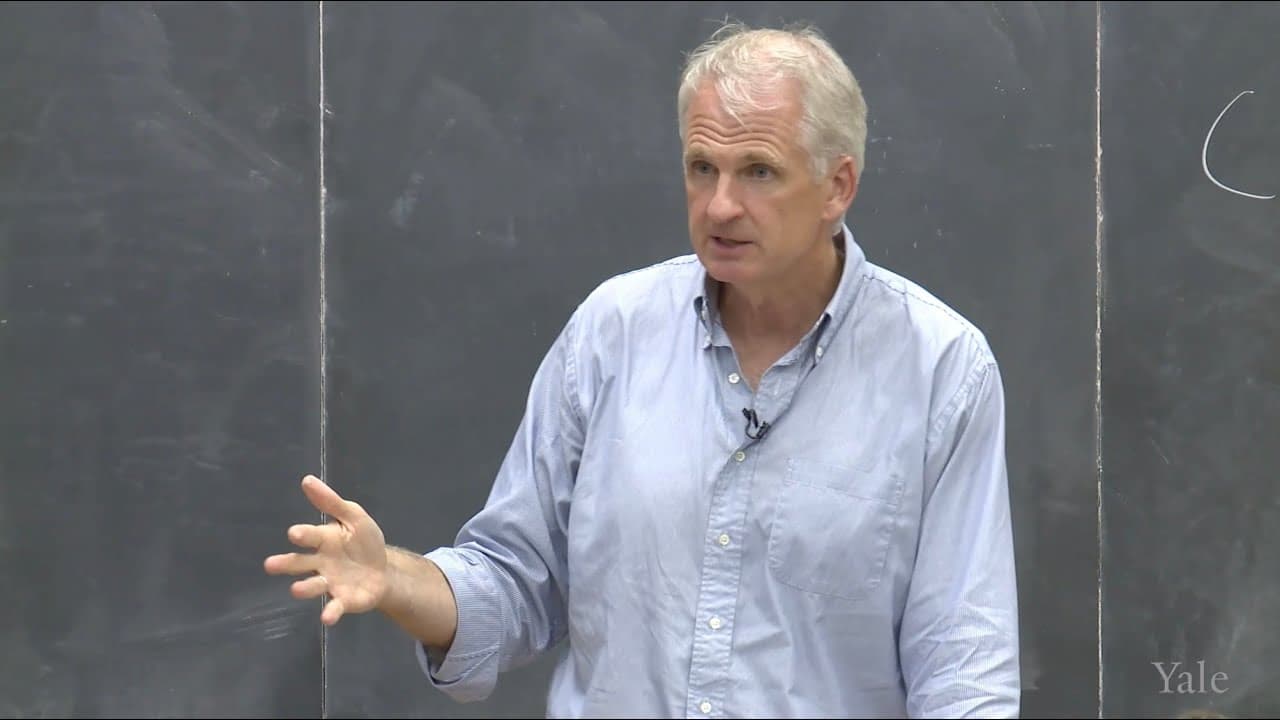
The lecture explores the complex history of Ukraine and its neighboring countries, focusing on the formation of the Russian state and the influence of Lithuania.
Transcript
(ethereal chime plays) - As we try to figure out what Ukraine is, we're also trying to figure out what the countries around Ukraine are. And so over the course of this semester, you'll have occasion to think about what Russia is. That's not our main subject, but I assume it's come to mind already that Russia is also not simple, and that the history... Read More
Key Insights
- 🇷🇺 The war between Russia and Ukraine may stem from uncertainty about both countries' identities, with Russia's identity as an Asian state being a contributing factor.
- 👻 Language is a crucial element in politics, particularly in non-modern politics, as it allows individuals to navigate different contexts and influences political dynamics.
- 💁 The formation of the Russian state was shaped by regional conflicts, succession issues, and the absorption of the civilizational package of Kyivan Rus'.
Install to Summarize YouTube Videos and Get Transcripts
Explore YouTube Video Summarizer or Get YouTube Transcript Extractor
Questions & Answers
Q: How does the lecture explain the current war between Russia and Ukraine?
The lecture suggests that the war may be more driven by uncertainty about Russia's identity than about Ukraine's. It points out that Russia's mobilization for war includes regions with high poverty rates and diverse ethnic backgrounds, suggesting that Russia's identity as an Asian state plays a role in the conflict.
Q: How does language play a role in politics, especially non-modern politics?
The lecture highlights the importance of language in politics, particularly in non-modern politics. It argues that the capacity for humans to move between languages is significant in politics, as it allows individuals to navigate different cultural and political contexts. This flexibility is especially relevant in non-modern political systems.
Q: What is the significance of regional conflicts and succession in the formation of the Russian state?
The lecture emphasizes the challenges posed by regional conflicts and succession in establishing and maintaining a state. It points out that the issue of succession has historically been a key problem in political theory and practice, as it determines the continuity of a state. In the case of Russia, the lecture highlights the complexity of succession and its impact on the country's development.
Q: How does Lithuania factor into the formation of the Russian state?
Lithuania plays a significant role in the formation of the Russian state. The lecture explains that the Lithuanians absorbed the civilizational package of Kyivan Rus', including its language and legal traditions. The Lithuanian rulers also asserted themselves as the rulers of Rus'. Additionally, the lecture mentions a personal union between the Lithuanian Grand Dukes and Polish Kings, which further influenced the development of the Russian state.
Summary & Key Takeaways
-
The lecture discusses the history of Ukraine and its neighboring countries, including Russia and Lithuania.
-
It explores the relationship between Russia and Ukraine, highlighting the role of uncertainty about both countries' identities in the current war.
-
The lecture delves into the early modern history of Russia, focusing on the formation of the Russian state and the role of figures like Volodymyr and Yaroslav.
-
It also touches on the importance of language, religion, and succession in shaping the Russian state.
Read in Other Languages (beta)
Share This Summary 📚
Summarize YouTube Videos and Get Video Transcripts with 1-Click
Try YouTube Summary with ChatGPT & Claude or YouTube Transcript Generator
Explore More Summaries from YaleCourses 📚
Summarize YouTube Videos and Get Video Transcripts with 1-Click
Try YouTube Summary with ChatGPT & Claude or YouTube Transcript Generator