Why Are Republicans Losing Ground in Midterms, Cook
TL;DR
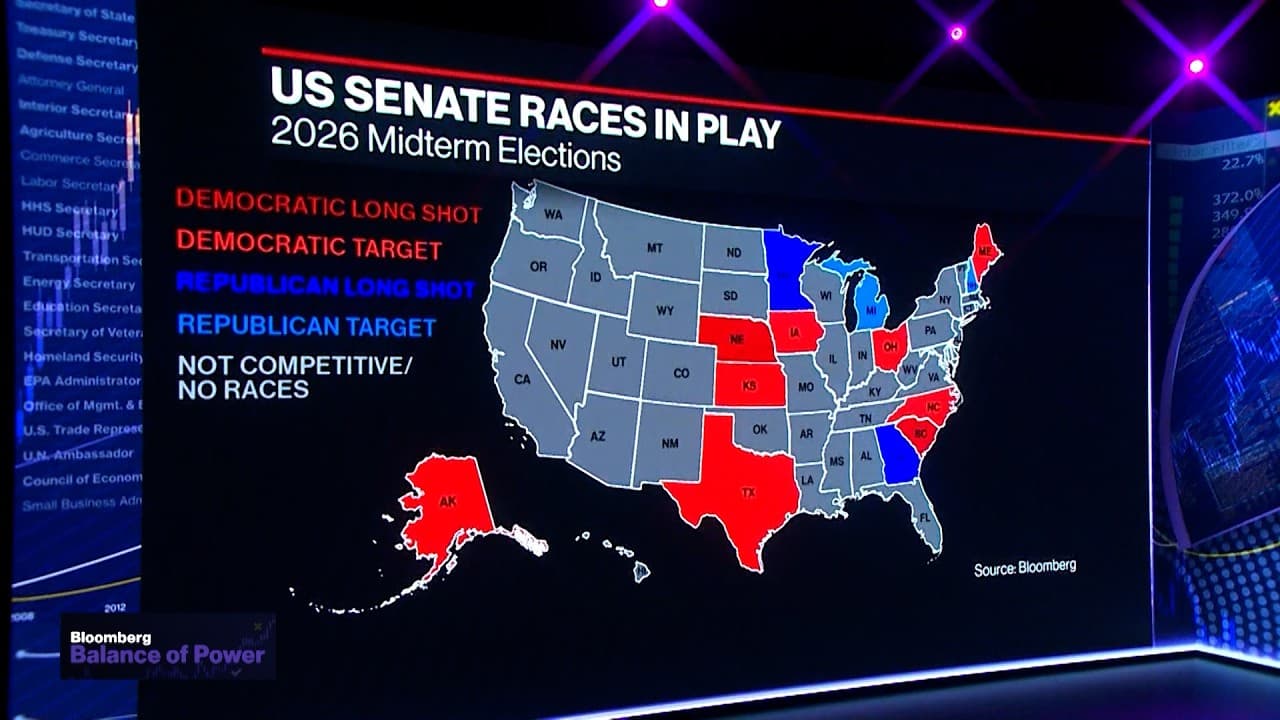
The midterm outlook has worsened for Republicans as independent voters focus on energy costs, affordability, and Trump’s influence. The Cook Report suggests the Democratic brand remains weak, and Republicans may lose more seats than expected, with independents leaning against the GOP even as some districts stay competitive. Money helps but rarely reverses momentum in a tough environment.
Transcript
I'd like to begin with the suggestion from President Trump that the polls simply are wrong. He doesn't believe them. Do you? Um, you know, I think with a lot of politicians, if they have good news, they're right. And if they have bad news, they're wrong. So, um, but, uh, uh, you know, the thing is, we're not getting a lot of pushback from Republica... Read More
Key Insights
- Independent voters are focusing on three weather fronts: energy prices, general affordability, and tariffs, all hitting as September starts.
- Money can help a campaign but does not typically reverse a bad political situation for a party that is broadly unpopular with independents.
- The Democratic brand is described as terrible, driving voters to reject Republicans rather than vote for Democrats, according to Cook.
- There is a belief that Republicans may lose more seats than historically expected due to the current political climate and independent voter shift.
- Democrats are quietly considering Texas as a potential pickup, indicating geographic dynamics beyond traditional battlegrounds.
- President Trump on the trail is seen as a mixed factor; some Republicans welcome his presence in certain races while others prefer he stay away from tight contests.
- The overall forecast suggests a red undertow rather than a blue wave, with independents and moderation playing a decisive role in many districts.
- Diesel and energy concerns are cited as specific issues hitting red America hardest, influencing vote choice and turnout.
Install to Summarize YouTube Videos and Get Transcripts
Explore YouTube Video Summarizer or Get YouTube Transcript Extractor
Questions & Answers
Q: What is the main reason Cook cites for the deteriorating midterm outlook for Republicans
Cook attributes the worsening midterm prospects to independent voters focusing on energy costs, affordability, and tariffs while also noting that the Democratic brand remains extremely weak. He argues that voters are voting against Republicans due to President Trump and perceived shifts in his agenda, rather than voting for Democrats. This combination creates a challenging environment for Republicans across key districts.
Q: How does Cook describe the effect of money in tight races
Cook says money helps in campaigns but notes that when a party is in deep trouble with independents, money does not usually dig them out of it. The implication is that financial advantage cannot fully compensate for negative perceptions and unfavorable dynamics in the electorate, especially in districts where independent voters are decisive.
Q: What does the term red undertow imply in Cook's analysis
The red undertow is Cook’s way of describing a subtle but persistent drag on Republican performance in this cycle. It suggests that while there is no clear blue wave, there is a rough movement of voters away from Republicans, driven by brand damage and national sentiment, that could pull seats toward Democrats in several races.
Q: Why might Texas be considered a potential pickup for Democrats
Cook mentions Democrats are reluctantly looking at Texas as a potential pickup, which signals that the political dynamics are shifting beyond traditional battlegrounds. This suggests that in states previously viewed as unfriendly to Democrats, demographic and turnout changes could create opportunities for gains.
Q: How do energy concerns affect voters in red America according to the transcript
Energy concerns, such as high diesel and heating oil costs, are cited as factors hitting red America particularly hard. These issues influence daily costs and can depress turnout or shift preferences in key rural and small town districts where voters feel the impact most acutely.
Q: What role does President Trump play in the race, based on Cook's view
According to Cook, Trump’s involvement is mixed: some Republicans want him to stay away from tight races, while others view his presence as beneficial in certain areas where Republicans can afford to have the president on the ground. The overall effect depends on the district and the specific dynamics of the race.
Q: What does Cook say about the overall shape of the election—wave or undertow
Cook argues it is not a blue wave but rather a red undertow. He emphasizes that Republicans are facing structural protections washing away and that independent voters are shifting away. This combination creates a challenging environment that could lead to a notable Democratic seat gain without producing a sweeping wave.
Q: How does the transcript describe the impact of tariffs and affordability on voters
The transcript links tariffs and affordability to the erosion of Republican support by September, noting that these factors, combined with energy prices and general cost of living, align to depress Republican performance among independents and to boost Democratic chances in several races.
Summary & Key Takeaways
-
The video explains that independent voters are turning away from Republicans due to economic concerns and Trump era dynamics, while Democratic branding remains damaged.
-
Cook believes the midterm would likely see a net Democratic gain, potentially north of twenty seats, though some structural protections have faded.
-
The discussion includes how energy policy, tariffs, and anti Trump sentiment are shaping voter behavior, with strategic campaigning and turnout playing a crucial role.
Read in Other Languages (beta)
Share This Summary 📚
Summarize YouTube Videos and Get Video Transcripts with 1-Click
Try YouTube Summary with ChatGPT & Claude or YouTube Transcript Generator
Explore More Summaries from Bloomberg Television 📚

Summarize YouTube Videos and Get Video Transcripts with 1-Click
Try YouTube Summary with ChatGPT & Claude or YouTube Transcript Generator