How Does a One-Dollar Store Sell Expensive Items?
TL;DR
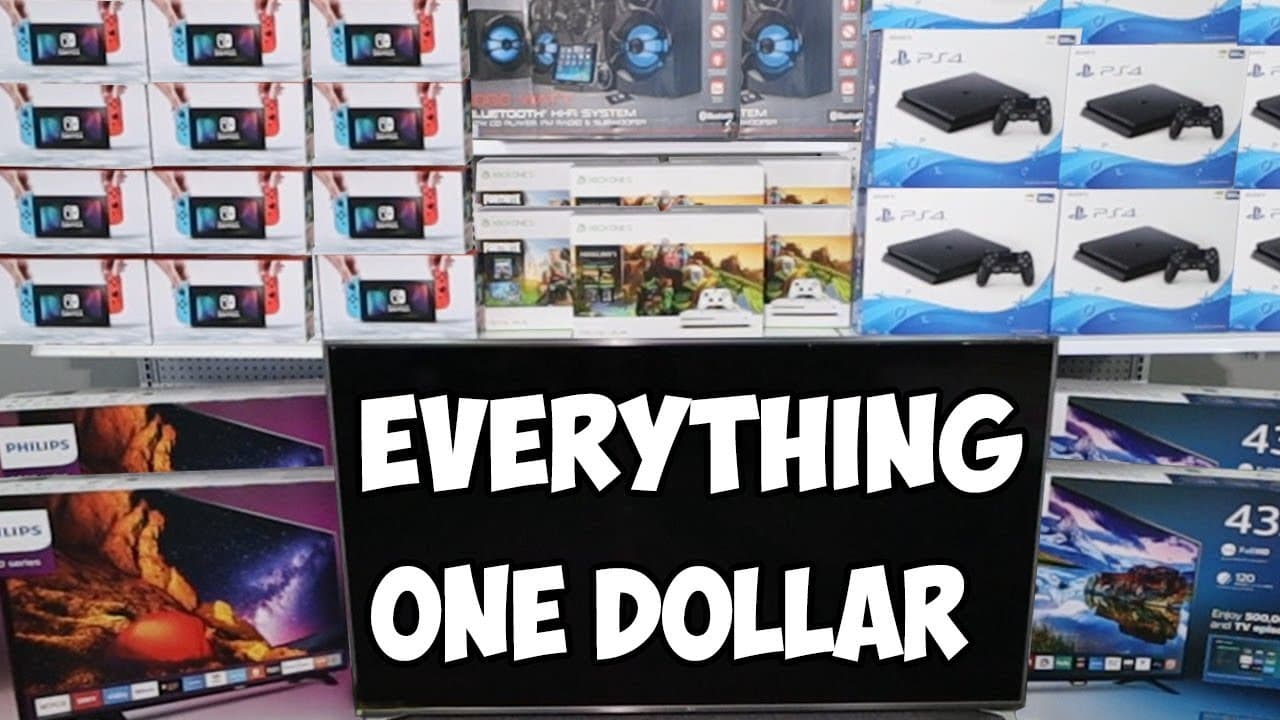
Expensive products such as TVs, PlayStation 4 consoles, Nintendo Switches, and gift cards were sold for one dollar each, with every customer limited to one item and one minute to choose. The store earned 81 dollars after spending 25,000 dollars, then restocked with another 10,000 dollars in funding and briefly reduced every price to one penny.
Transcript
- I'm opening a real store that sells expensive products for only one dollar. You have to spend money to make money. So I'm gonna give that theory a try. My store will be selling PlayStation fours, TVs, and so much more for only one dollar. This might become one of the most profitable businesses ever. - I'm gonna get more people in the store than w... Read More
Key Insights
- The store sold expensive products for one dollar, including PlayStation 4 consoles, Nintendo Switches, TVs, 25-dollar gift cards, Beats, Keurigs, kitchen supplies, lava lamps, and a car. The unusually low price was the central premise of the temporary retail experiment.
- Customers were generally limited to one item and one minute of shopping. The restriction prevented each visitor from taking several heavily discounted products and created urgency as shoppers decided whether to choose a TV, gaming console, laptop, headphones, or another available item.
- The store generated 81 dollars in revenue after spending 25,000 dollars on the building, inventory, and operation. According to the figures announced after closing, the project lost more than 24,000 dollars despite successfully selling many products during its first day.
- The store received another 10,000 dollars in funding after its first-day loss. The additional money was used to restock products such as blenders, Nintendo Switches, PlayStation 4 consoles, mini arcade machines, Pac-Man merchandise, and other items for the second opening.
- The second-day pricing strategy reduced every product from one dollar to one penny. Customers purchased items using pennies, including coins they said they found on the ground, but the team concluded that the penny promotion had not spread effectively and discussed restoring the one-dollar price.
- The sales process used receipts to confirm that customers had legally purchased expensive products at extreme discounts. When police reportedly questioned a customer leaving with a TV, the customer showed the receipt, which demonstrated that the television had been bought rather than stolen.
- The store assigned distinct duties to its workers, including cashier, customer greeter, and outdoor security. Chandler operated the register, Chris greeted shoppers, and Jake stood outside as security, while Garrett received the deliberately unproductive assignment of shredding pictures of T Series.
- The business model prioritized entertainment and customer giveaways rather than profitability. Products worth far more than their sale prices were intentionally offered for one dollar or one penny, making financial losses predictable even while the store attracted surprised shoppers and completed numerous sales.
Install to Summarize YouTube Videos and Get Transcripts
Explore YouTube Video Summarizer or Get YouTube Transcript Extractor
Questions & Answers
Q: How did the one-dollar store work?
The store stocked expensive merchandise but charged only one dollar for each product. Customers were generally allowed to purchase one item and received one minute, or 60 seconds, to choose it. Available products included TVs, PlayStation 4 consoles, Nintendo Switches, gift cards, kitchen supplies, lava lamps, headphones, and other goods. Purchases were processed at a cashier, and customers could receive receipts.
Q: What products were sold for one dollar?
The one-dollar inventory included PlayStation 4 consoles, Nintendo Switches, TVs, 25-dollar gift cards, Beats, Keurigs, kitchen supplies, lava lamps, beads, mini arcade machines, and a car. The store also displayed kayaks and a dancing pole, which one customer selected. Inventory changed as products sold out and the team purchased more items for the second opening.
Q: How much money did the store make and spend?
The team announced that the store produced 81 dollars in revenue after its first day. They also stated that 25,000 dollars had been spent to create and stock the operation. Based on those figures, the store lost more than 24,000 dollars. The investors were described as unhappy with the result, so the business needed to change before reopening.
Q: Why did the store reduce prices to one penny?
After spending 25,000 dollars and earning only 81 dollars, the team said the investors wanted something to change. Their deliberately illogical response was to make every product even cheaper, reducing the price from one dollar to one penny. They then restocked with additional inventory and reopened, hoping the altered promotion would attract more customers despite producing even less revenue per sale.
Q: What rules did customers have to follow in the store?
Customers were generally told that they could select only one item and had one minute, or 60 seconds, to make their choice. They then brought the selected product to the cashier and paid the advertised price. On the first day, that price was one dollar. During the second opening, customers were told to pay one penny, and the register accepted pennies.
Q: Why were police interested in a customer carrying a TV?
A customer said police saw him running out with a TV and apparently suspected that he had stolen it. He showed them the store receipt, demonstrating that the television had been purchased under the one-dollar promotion. The team emphasized that customers should keep or show their receipts because the extremely low price made expensive purchases look suspicious to people who did not know about the store.
Q: How was the store operated by the employees?
The employees received specific roles before opening. Chandler was placed in charge of the cashier, Chris was assigned to greet customers, and Jake stood outside as security. Garrett was instructed to shred pictures of T Series throughout the operation. Staff members announced the shopping rules, directed customers toward checkout, processed payments, issued receipts, promoted products, and held repeated employee meetings.
Q: What happened after the store lost more than 24,000 dollars?
The team said it secured another 10,000 dollars in funding, although the investors required a change. The store was restocked with products that included blenders, Nintendo Switches, PlayStation 4 consoles, mini arcade machines, and other goods. It reopened with every item priced at one penny. When the promotion did not appear to attract enough attention, the team discussed returning the price to one dollar.
Summary & Key Takeaways
-
A temporary store was stocked with expensive products, including gaming consoles, TVs, gift cards, kitchen supplies, lava lamps, beads, and a car. Every product initially cost one dollar. Customers were generally limited to one item and given 60 seconds to select it before paying at the cashier.
-
Employees handled customer greetings, security, checkout, and other comedic assignments while shoppers reacted with surprise to the prices. Some customers questioned whether the sales were legitimate, and police reportedly questioned a shopper carrying a TV until the shopper showed a receipt proving that the item had been purchased.
-
The first day produced 81 dollars in revenue after 25,000 dollars had been spent, creating a loss of more than 24,000 dollars. Another 10,000 dollars in funding was used to restock the store. Prices then fell to one penny, but the team considered returning them to one dollar.
Read in Other Languages (beta)
Share This Summary 📚
Summarize YouTube Videos and Get Video Transcripts with 1-Click
Try YouTube Summary with ChatGPT & Claude or YouTube Transcript Generator
Explore More Summaries from MrBeast 📚





Summarize YouTube Videos and Get Video Transcripts with 1-Click
Try YouTube Summary with ChatGPT & Claude or YouTube Transcript Generator