How Can Founders Build for Law Enforcement and First Responders? | The a16z Show
TL;DR
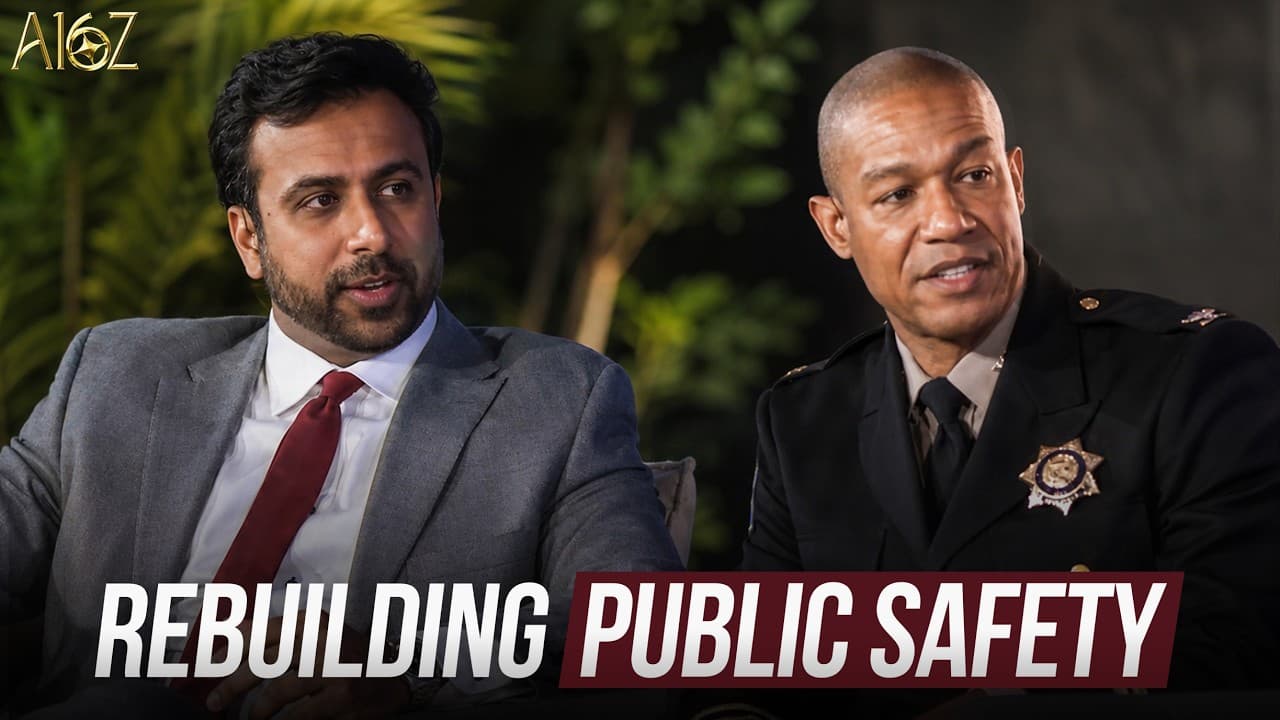
Founders can build useful public-safety technology by engaging directly with law enforcement, conducting ride-alongs, and solving specific operational or officer-well-being problems. Examples include Flock Safety sensors and drones, body-camera analytics that flag burnout, and drone responses to gunshots or Amber Alert vehicles, capabilities that would otherwise require keeping five helicopters airborne 24/7. Read on for concrete applications and adoption considerations.
Transcript
There's two things cops hate. For things to change and for things to stay the same. >> Most of the cops in the field are going to have to change the way their skill set is shaped because it's going to be a little bit more investigative. It's going to be a little bit more nuanced. It's not going to look the same anymore. >> Are people just going to ... Read More
Key Insights
- Drones are increasingly used in public safety for tasks like monitoring and pursuing vehicles, offering an efficient alternative to helicopters.
- AI and robotics are transforming industries, including law enforcement, by automating and enhancing various operational tasks.
- Body cameras with analytics can help assess officer-public interactions and flag potential issues, aiding in officer well-being and performance.
- Collaborative intelligence sharing among fusion centers helps law enforcement agencies tackle global threats with localized responses.
- Technology is reshaping law enforcement roles, requiring officers to adapt to more investigative and nuanced skill sets.
- Founders should engage directly with law enforcement to understand their needs and develop relevant technological solutions.
- Public sentiment towards technologies like body cameras has evolved, recognizing their role in protecting officers and providing valuable insights.
- International partnerships and intelligence sharing are crucial for addressing transnational crime and enhancing public safety.
Install to Summarize YouTube Videos and Get Transcripts
Explore YouTube Video Summarizer or Get YouTube Transcript Extractor
Questions & Answers
Q: How can founders build technology for law enforcement and first responders?
Founders should engage directly with law enforcement personnel, including through ride-alongs, to understand the problems officers face. They can then build tools that improve situational awareness, operational effectiveness, de-escalation, or officer well-being.
Q: How are drones used in law enforcement and public safety?
Drones can respond to incidents, provide situational awareness, identify vehicles, and follow suspects or Amber Alert vehicles. Police and fire departments are also using them to respond to fire calls and other public-safety events.
Q: How can drones help de-escalate police responses?
A drone can show officers what is actually happening before they arrive or take action. In one example, a reported man with a shotgun in an alley was revealed by a drone to be a janitor holding a broom, which de-escalated the situation.
Q: Why can drones be more sustainable than helicopters for persistent monitoring?
The discussion says comparable continuous coverage would require keeping five helicopters airborne 24/7. That approach is described as unsustainable, while drones can provide persistent response and tracking capabilities.
Q: How do sensors, gunshot detection, and drones work together?
Flock Safety combines multiple community sensors with gunshot-detection capabilities and drones. The data can identify an Amber Alert vehicle or detect a gunshot, after which a drone can take off, locate a vehicle, and pursue it, including on highways with DPS.
Q: How can body-camera analytics support officers?
Analytics running behind body-worn cameras can assess an officer’s behavior and interactions with the public. They can also flag situations for supervisors and identify possible burnout, helping agencies decide whether an officer should be pulled from the field or supported differently.
Q: What technologies are being used to address officer mental health and burnout?
Colonel Glover describes using vitania Heal the Heroes for a start-of-day brain scan or temperature check, alongside body-camera analytics. The agency also introduced wellness checks and sabbaticals for personnel at the 15- and 25-year marks.
Q: How will technology change the skills police officers need?
Many officers will need to reshape their skills as technology changes field operations. Their work is expected to become more investigative and nuanced rather than looking the same as it does today.
Summary & Key Takeaways
-
Drones are becoming a vital tool in public safety, providing capabilities like real-time monitoring and vehicle pursuit, which are not feasible with helicopters. This shift is part of a broader trend towards incorporating AI and robotics in law enforcement.
-
Body cameras equipped with advanced analytics offer insights into officer-public interactions, helping improve officer well-being and performance. These technologies also aid in identifying burnout and ensuring officers receive necessary support.
-
Collaboration among fusion centers and international partnerships enhances intelligence sharing, allowing law enforcement to address global threats effectively. As technology reshapes roles, officers need to adapt to more investigative and nuanced skill sets.
Read in Other Languages (beta)
Share This Summary 📚
Summarize YouTube Videos and Get Video Transcripts with 1-Click
Try YouTube Summary with ChatGPT & Claude or YouTube Transcript Generator
Explore More Summaries from a16z 📚






Summarize YouTube Videos and Get Video Transcripts with 1-Click
Try YouTube Summary with ChatGPT & Claude or YouTube Transcript Generator