Reid Hoffman & Aza Raskin on translating animal speech with AI | Masters of Scale
TL;DR
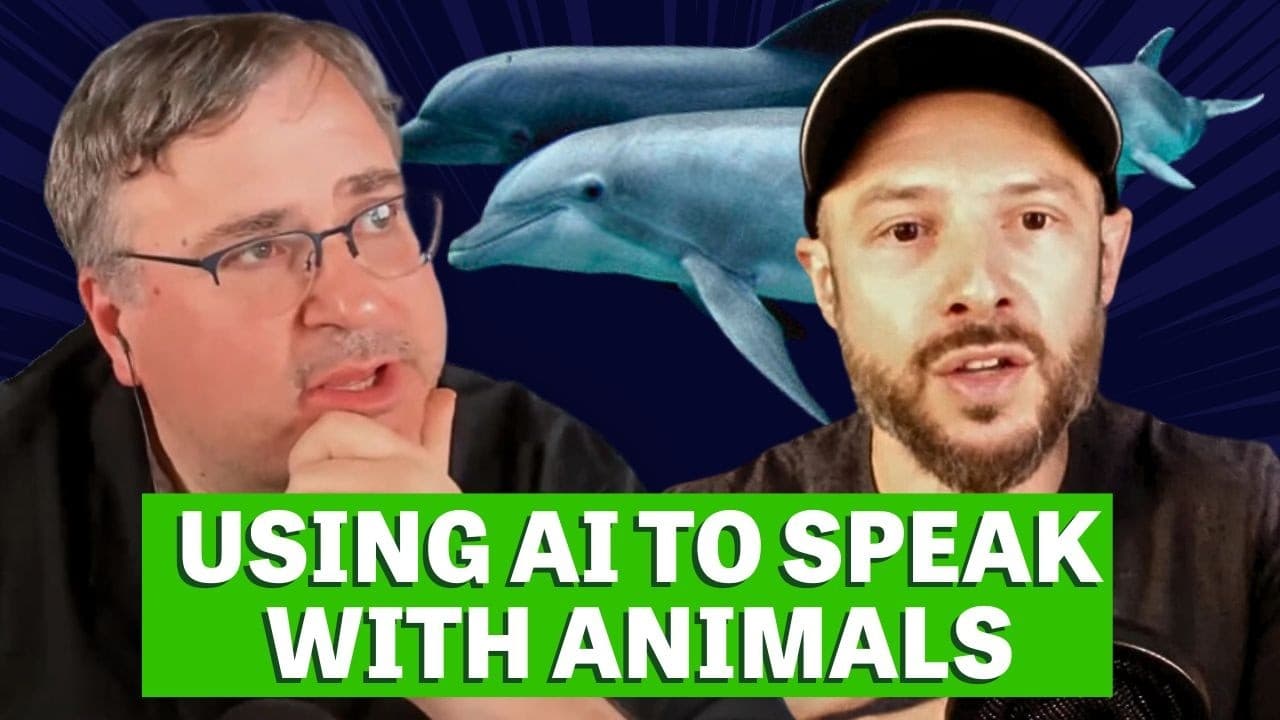
AI is used to decode animal communication, transforming human-animal relationships.
Transcript
for our special fireside chat Reed and his guests will be doing a deep dive on how AI is used to help understand animal communication and discussing ways this technology will impact the way we all communicate in the upcoming years please join me in welcoming our special guest for the evening he is the co-founder and president of Earth species proje... Read More
Key Insights
- The Earth Species Project aims to translate animal communication using AI, collaborating with over 40 universities and biologists globally.
- Whales have been passing down culture vocally for millions of years, highlighting the depth of animal communication.
- AI can translate between human languages without examples, suggesting potential for translating animal languages.
- Generative AI models are being explored to translate dialects of dolphins and whales, showcasing AI's potential in language translation.
- AI can help reduce perception gaps, fostering better understanding and reducing misinformation in human communication.
- AI could evolve new languages for human coordination, potentially transforming collaboration and problem-solving.
- Investing in AI governance is crucial for navigating 21st-century challenges, ensuring technology aligns with democratic values.
- Technological solutions, like geoengineering, should be considered in addressing climate change, emphasizing innovation's role in problem-solving.
Install to Summarize YouTube Videos and Get Transcripts
Explore YouTube Video Summarizer or Get YouTube Transcript Extractor
Questions & Answers
Q: What is the Earth Species Project?
The Earth Species Project is an international nonprofit organization dedicated to using artificial intelligence to decode animal communication. By collaborating with over 40 universities and biologists, the project aims to translate animal languages, such as those of whales and dolphins, to transform how humans relate to the rest of nature.
Q: How does AI translate languages without examples?
AI can translate languages without examples by creating a shape that represents each language, where words with similar meanings are near each other. By rotating these shapes to align them, AI can translate between languages, even if some words don't exist in both languages, revealing a universal structure of meaning.
Q: What role does AI play in improving human communication?
AI can improve human communication by reducing perception gaps, which occur when people misjudge others' beliefs. By analyzing media that influences perception, AI can amplify content that fosters accurate understanding, reducing misinformation and promoting better listening and communication across societal divides.
Q: How can AI help address climate change?
AI can play a significant role in addressing climate change by supporting technological innovations like geoengineering and clean energy solutions. By investing in technology that buys time for sustainable practices to take effect, AI can help mitigate climate impacts while ensuring that solutions align with democratic values and global cooperation.
Q: What is the significance of whales' cultural communication?
Whales have been passing down culture vocally for millions of years, demonstrating the complexity and depth of animal communication. Understanding these cultural transmissions through AI translation can offer profound insights into animal consciousness and challenge human-centric views of communication and culture.
Q: Why is investing in AI governance important?
Investing in AI governance is crucial for ensuring that technological advancements align with democratic values and address societal challenges. By dedicating resources to upgrading governance frameworks, societies can navigate the complexities of AI responsibly, balancing innovation with ethical considerations and public trust.
Q: What potential does AI have in evolving new languages?
AI has the potential to evolve new languages specifically designed for human coordination and collaboration. By facilitating better communication in solving complex, multi-polar problems, such as climate change and inequality, AI can transform how societies work together, enhancing collective problem-solving capabilities.
Q: How does the Earth Species Project impact human-animal relationships?
By translating animal communication, the Earth Species Project aims to transform human-animal relationships, fostering a deeper understanding of animal consciousness and culture. This shift challenges human-centric perspectives and promotes a more inclusive view of nature, potentially altering how humans interact with and protect animal species.
Summary & Key Takeaways
-
Reid Hoffman and Aza Raskin discuss the Earth Species Project's use of AI to decode animal communication, aiming to transform human-animal relationships. The project collaborates with numerous universities and biologists to advance understanding of animal languages, such as those of whales and dolphins.
-
AI's ability to translate between human languages without examples inspires its application in animal communication. By creating universal meaning shapes, AI can potentially translate animal languages, revealing hidden structures in communication and offering insights into animal consciousness.
-
AI's role in improving human communication includes reducing perception gaps and evolving languages for better coordination. Investing in AI governance is crucial for navigating technological advancements, ensuring that innovation aligns with democratic values and addresses global challenges like climate change.
Read in Other Languages (beta)
Share This Summary 📚
Summarize YouTube Videos and Get Video Transcripts with 1-Click
Try YouTube Summary with ChatGPT & Claude or YouTube Transcript Generator