What Are the Key Stoic Practices for Modern Life?
TL;DR
Key Stoic practices for thriving in modern life include focusing on what is within your control, managing time wisely, and embracing self-reflection. The philosophy encourages independence from societal opinions and proactive preparation for challenges, helping individuals achieve inner peace and resilience amidst chaos.
Transcript
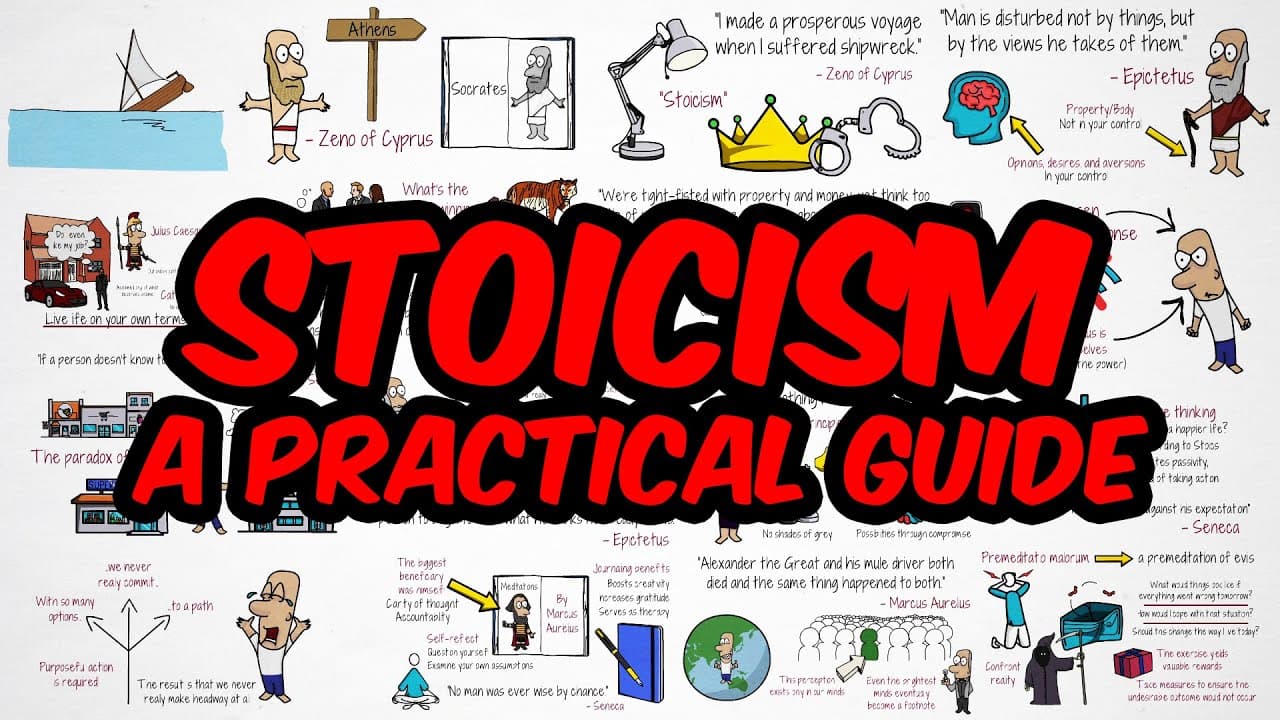
When Zeno of Cyprus was shipwrecked and stranded in Athens, he wasn’t expecting any good to happen. Having lost everything and with not much else to do, Zeno wandered into a bookshop and was quickly absorbed by the teachings of Socrates. After studying with the great philosophers of his time, he decided to impart his wisdom to anyone who would care... Read More
Key Insights
- 💅 Stoicism originated from a shipwrecked man finding solace in philosophy and teachings of Socrates.
- 🎮 Stoicism teaches control over perceptions and reactions, emphasizing focusing on what is within our control.
- 🤳 The philosophy advocates for self-reflection, time management, and independence from societal opinions.
- 🫵 Stoics view time as a valuable asset and emphasize intentional actions to avoid wasting it.
- ✌️ Rejecting societal pressures, Stoics like Marcus Aurelius and Cato promote living by one's own standards for inner peace.
- 🦡 Stoics conduct premeditatio malorum, preparing for worst-case scenarios to confront reality and better prepare.
- 🧑🏫 The philosophy teaches that achievements and legacies are temporary, emphasizing living life on one's terms.
Install to Summarize YouTube Videos and Get Transcripts
Explore YouTube Video Summarizer or Get YouTube Transcript Extractor
Questions & Answers
Q: How did Zeno of Cyprus come to found Stoicism?
Zeno found solace in philosophy after being shipwrecked in Athens and studying under Socrates, leading him to create Stoicism.
Q: What is the key belief of Stoicism?
Stoicism emphasizes focusing on what is within our control, such as our internal responses and perceptions rather than external events.
Q: How do Stoics value time?
Stoics view time as a valuable asset not to be wasted, emphasizing the importance of intentional actions and avoiding procrastination.
Q: How does Stoicism advocate for independence from others' opinions?
Stoics like Cato and Marcus Aurelius exemplify rejecting societal pressures and living by their own standards, promoting self-reliance and inner peace.
Summary & Key Takeaways
-
Zeno of Cyprus founded Stoicism after studying under philosophers in Athens.
-
Stoicism focuses on controlling internal responses rather than external events.
-
The philosophy emphasizes self-reflection, time management, and independence from others' opinions.
Read in Other Languages (beta)
Share This Summary 📚
Summarize YouTube Videos and Get Video Transcripts with 1-Click
Try YouTube Summary with ChatGPT & Claude or YouTube Transcript Generator
Explore More Summaries from The Art of Improvement 📚





Summarize YouTube Videos and Get Video Transcripts with 1-Click
Try YouTube Summary with ChatGPT & Claude or YouTube Transcript Generator