Randy Hetrick: From Navy SEAL to Fitness Entrepreneur
TL;DR
TRX began as a practical solution for maintaining elite physical conditioning in places without gyms. Randy Hetrick transformed an improvised bodyweight training harness into a consumer product by prototyping it, studying its business potential at Stanford, testing it with professional coaches, listening to market feedback, and persisting through skepticism and limited capital.
Transcript
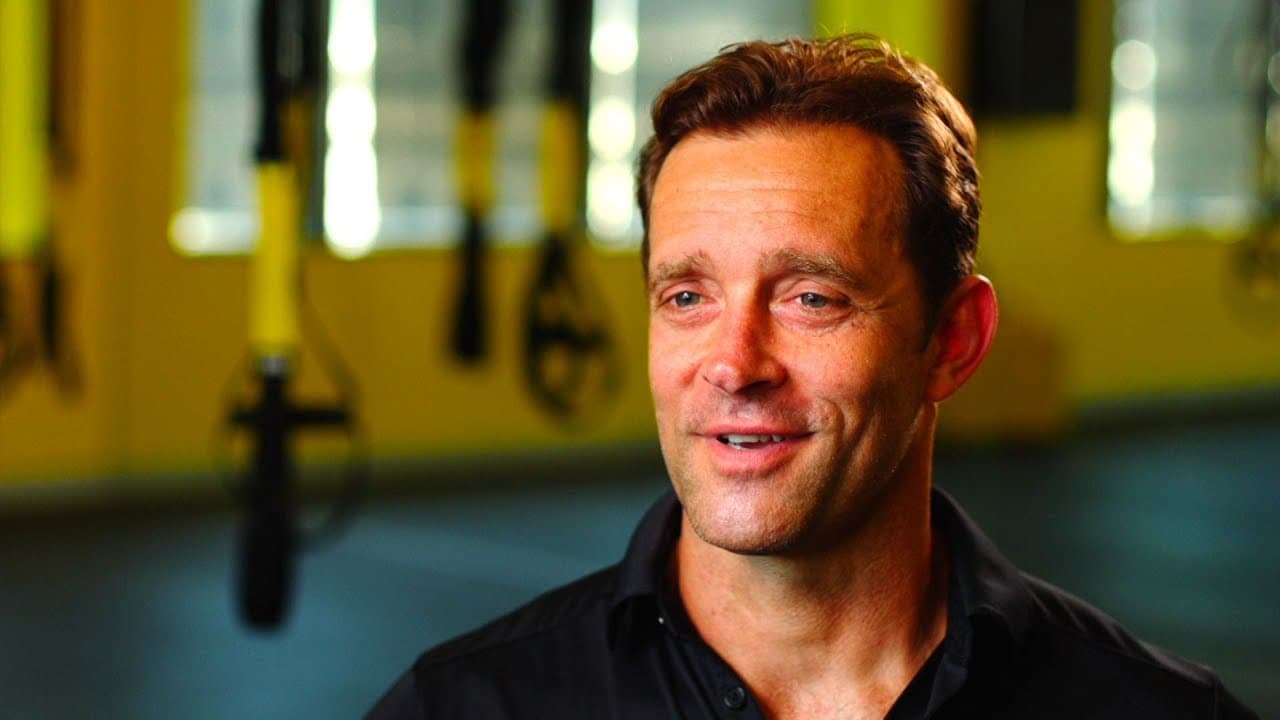
you got it keep breathing eyes up chest up my name is Randy hetrick and I'm the CEO and the founder of TRX the TRX suspension trainer is an inelastic nylon harness for lack of a more elegant way to describe it it allows you to use your own body weight working against gravity and integrating instability across hundreds of common exercise movements a... Read More
Key Insights
- TRX is an inelastic nylon harness that uses body weight, gravity, and instability across hundreds of common exercise movements. Hetrick describes it as a gym in a bag because the straps enable users to perform familiar gym movements in many locations.
- Suspension training treats the body as an integrated system rather than dividing exercise into isolated body parts. This functional approach lets instability become part of familiar movements while allowing the user’s own body weight and gravity to provide resistance.
- The original TRX was an invention of necessity created for Navy SEAL deployments where high-level physical conditioning had to continue without access to gyms. A Jiu-Jitsu belt accidentally packed in Hetrick’s deployment kit became the starting material for his experimentation.
- Product adoption began when other Navy SEALs saw Hetrick using the system and asked to try it. Their interest, combined with the tool consistently exceeding expectations, gave him early evidence that the invention solved a genuine training problem for elite users.
- Stanford became a transition point from military service to entrepreneurship for Hetrick. He used his second year of business school to answer questions about the product and business plan, making his coursework directly relevant to the company he intended to launch.
- Consumer-focused prototyping required Hetrick to transform what he called a rough tool from the SEAL teams into something ordinary customers might purchase. He bought a sewing machine and spent the summer between his first and second years at Stanford developing improved versions.
- Entrepreneurial judgment requires balancing personal conviction with constructive criticism. Hetrick listened to doubts about mainstream demand, including strong opposition from a mentor, but continued because the system had already resonated with elite athletes, commandos, and professional conditioning coaches.
- Market feedback can redefine a product’s audience in unexpected ways. Hetrick sold all his inventory on the first day of a trainer trade show, and TRX later became popular among seniors for wellness and fall prevention, an application he had not anticipated.
Install to Summarize YouTube Videos and Get Transcripts
Explore YouTube Video Summarizer or Get YouTube Transcript Extractor
Questions & Answers
Q: How did Randy Hetrick invent the TRX suspension trainer?
Randy Hetrick invented the earliest TRX system during a Navy SEAL deployment when he needed a way to maintain elite physical conditioning without a gym. After discovering that a Jiu-Jitsu blue belt had accidentally been packed in his deployment kit, he experimented with it as training equipment. He used sewing skills learned for modifying SEAL gear to refine the design over time.
Q: What is the TRX suspension trainer and how does it work?
The TRX suspension trainer is an inelastic nylon harness that allows a person to exercise using body weight against gravity while adding instability to common movements. Hetrick says the straps support hundreds of exercises and can reproduce movements performed in a gym. Its functional training approach engages the body as an integrated system instead of treating it as a collection of separate parts.
Q: Why was portable exercise equipment useful to Navy SEALs?
Portable exercise equipment was useful because Navy SEALs deployed into environments around the world where gyms were unavailable, yet they still needed to maintain conditioning comparable to professional athletes. The suspension system addressed that constraint by offering a compact way to perform bodyweight exercises. Hetrick characterized its portability and versatility by describing it as a gym in a bag.
Q: How did Stanford business school help Hetrick develop TRX?
Stanford provided Hetrick with a natural transition from his 14-year Navy SEAL career into business. After deciding to explore TRX commercially, he shaped his second year around the venture. His classes helped answer questions concerning the business plan, product, and launch. Access to an athlete training center also exposed the straps to strength and conditioning coaches who showed strong interest.
Q: How did professional coaches respond to the early TRX system?
Strength and conditioning coaches initially approached Hetrick because they were curious why he was using straps inside a world-class training facility. After seeing or trying the system, they regularly asked to use it themselves. Their response strengthened his belief that the product had practical value beyond Navy SEAL teams, particularly among elite athletes and professional fitness specialists.
Q: How did Hetrick adapt TRX for regular consumers?
Hetrick recognized that the rough tool he had brought from the Navy SEAL teams needed further development before ordinary consumers might buy it. During the summer between his first and second years at Stanford, he purchased a sewing machine and created new prototypes. This process focused on turning a field-made training device into a product suitable for a broader commercial market.
Q: How did market feedback shape the TRX business?
Market feedback helped Hetrick identify audiences and uses he had not fully anticipated. At a trainer trade show, he invested nearly all his remaining money and sold all available inventory on the first day. That response suggested the professional training market was especially promising. Later, the system also became popular with seniors for wellness and fall prevention, which surprised him.
Q: What entrepreneurial lessons does Hetrick draw from building TRX?
Hetrick argues that entrepreneurs must combine persistence with openness to alternative perspectives. Founders should consider criticism, including claims that an idea may be unworkable, while recognizing evidence that supports continued effort. He also describes bootstrapped entrepreneurship as a prolonged struggle shaped by limited capital. His central principle is to recover repeatedly from setbacks and keep moving forward.
Summary:
In this video, Randy Hetrick, the CEO and founder of TRX, discusses the TRX Suspension Trainer, an elastic nylon harness that allows users to use their own body weight to perform exercises. He talks about how the TRX is a versatile and portable gym in a bag, and how it is designed to train the body as an integrated system. Hetrick shares how his experience as a Navy SEAL inspired him to create the TRX, and how it evolved from a fortunate accident to a successful business. He also discusses the challenges of entrepreneurship and the importance of perseverance in pursuing one's goals.
Questions & Answers:
Q: What is the TRX Suspension Trainer?
The TRX Suspension Trainer is an elastic nylon harness that enables users to use their own body weight to perform exercises. It integrates instability and can be used for hundreds of common exercise movements. It is like a gym in a bag, offering a versatile and portable training option.
Q: What is the benefit of using the TRX Suspension Trainer?
The TRX Suspension Trainer allows users to treat the body as an integrated system rather than focusing on isolated body parts. This functional training approach contributes to improved overall strength and stability. Additionally, the TRX can be used anywhere, making it a convenient option for training on the go.
Q: How did Randy Hetrick come up with the idea for the TRX?
Randy Hetrick, who spent 14 years as a Navy SEAL, came up with the idea for the TRX out of necessity. While deployed on an operation, he had his jujitsu blue belt accidentally stuffed into his deployment kit and realized it could be used for training. This sparked the idea to create a versatile training tool using straps.
Q: How did the TRX evolve from an initial concept to a successful product?
Hetrick, being a Navy SEAL, had to learn how to sew and modify his gear to suit the needs of the SEALs. He continued to refine the design of the TRX, making improvements based on his own experience and feedback from others. The TRX always exceeded expectations and delivered results, which contributed to its success.
Q: Why did Randy Hetrick decide to pursue the TRX as a business?
After being accepted into business schools, Hetrick wanted to explore the feasibility of turning the TRX into a business. He trained at an athlete training center where strength and conditioning coaches became interested in the TRX. This positive response and potential market demand motivated Hetrick to further develop the TRX as a product for regular consumers.
Q: What did Randy Hetrick learn during his time in business school?
Hetrick made the second year of business school relevant to his plan for the TRX. He designed everything he did to answer questions around the business plan and product. Each class taught him something valuable that informed his approach to pursuing the business.
Q: How did people initially react to the TRX?
Initially, people thought it was cool that Hetrick, a former Navy SEAL, had created the TRX and recognized its effectiveness. However, there were doubts about its appeal to regular individuals. Some questioned whether regular folks would understand and embrace the difference between pushing forward and receiving constructive feedback.
Q: How did Randy Hetrick address the challenge of skepticism and alternative perspectives?
Hetrick's mentor believed the idea of the TRX was crazy and tried to convince him not to pursue it. However, Hetrick knew that the TRX was resonating with elite athletes and commandos. He understood the importance of being open to alternative perspectives, even if they labeled the idea as a dumb one. The enthusiastic response from the elite set of athletes and commandos motivated Hetrick to continue his pursuit.
Q: How did the TRX gain market acceptance?
On a whim, Hetrick decided to attend a trainer trade show and used the remaining money he had. To his surprise, on the first day at the trade show, they sold out of all the TRX Suspension Trainers they had. This was a defining moment for Hetrick, as it indicated that the market saw the TRX as a valuable and desirable product.
Q: What is one of the unexpected user groups that embraced the TRX?
Senior individuals have embraced the TRX as a tool for senior wellness and fall prevention. Hetrick never anticipated this market segment, but it has become popular among seniors. This unexpected adoption of the TRX highlights its versatility and broad appeal.
Takeaways:
Entrepreneurship, especially when bootstrapping a startup, requires resilience and a willingness to face challenges head-on. Randy Hetrick's journey with the TRX exemplifies the importance of perseverance and the ability to overcome skepticism. The TRX's success shows the value of creating a product that resonates with a specific audience and expands to unexpected markets. Embracing alternative perspectives and navigating the balance between constructive feedback and pushing forward is crucial for entrepreneurial success. Overall, entrepreneurship offers unique opportunities for personal and professional growth, but it requires a tenacity and determination to overcome obstacles.
Summary & Key Takeaways
-
Randy Hetrick created the earliest TRX system while serving as a Navy SEAL and needing to maintain physical conditioning during deployments without gyms. A Jiu-Jitsu belt accidentally packed in his deployment kit inspired him to experiment with a bodyweight training harness, which he refined using sewing skills learned for modifying military equipment.
-
After serving as a Navy SEAL for 14 years, Hetrick attended Stanford business school and investigated whether his training system could become a viable business. Interest from strength and conditioning coaches encouraged him, while relevant classes helped him examine product development, business planning, and the practical questions surrounding a commercial launch.
-
Hetrick converted his rough military tool into a consumer product by purchasing a sewing machine and creating prototypes. Although mentors and potential customers initially questioned its broader appeal, a trainer trade show provided decisive validation when his inventory sold out on the first day and revealed a promising professional fitness market.
-
Key Insights about TRX and Entrepreneurship: Randy Hetrick's Story
-
Q_and_A Final Answers and Insights
-
Key Insights and Q&A Summary
-
Key Insights and Q&A
-
Key Insights and Questions Answered
-
Final Key Insights and Q&A
-
Key Insights and Answers
-
Key Insights and Q&A Summary
-
Final Summary and Q&A
Read in Other Languages (beta)
Share This Summary 📚
Summarize YouTube Videos and Get Video Transcripts with 1-Click
Try YouTube Summary with ChatGPT & Claude or YouTube Transcript Generator
Explore More Summaries from Stanford Graduate School of Business 📚






Summarize YouTube Videos and Get Video Transcripts with 1-Click
Try YouTube Summary with ChatGPT & Claude or YouTube Transcript Generator