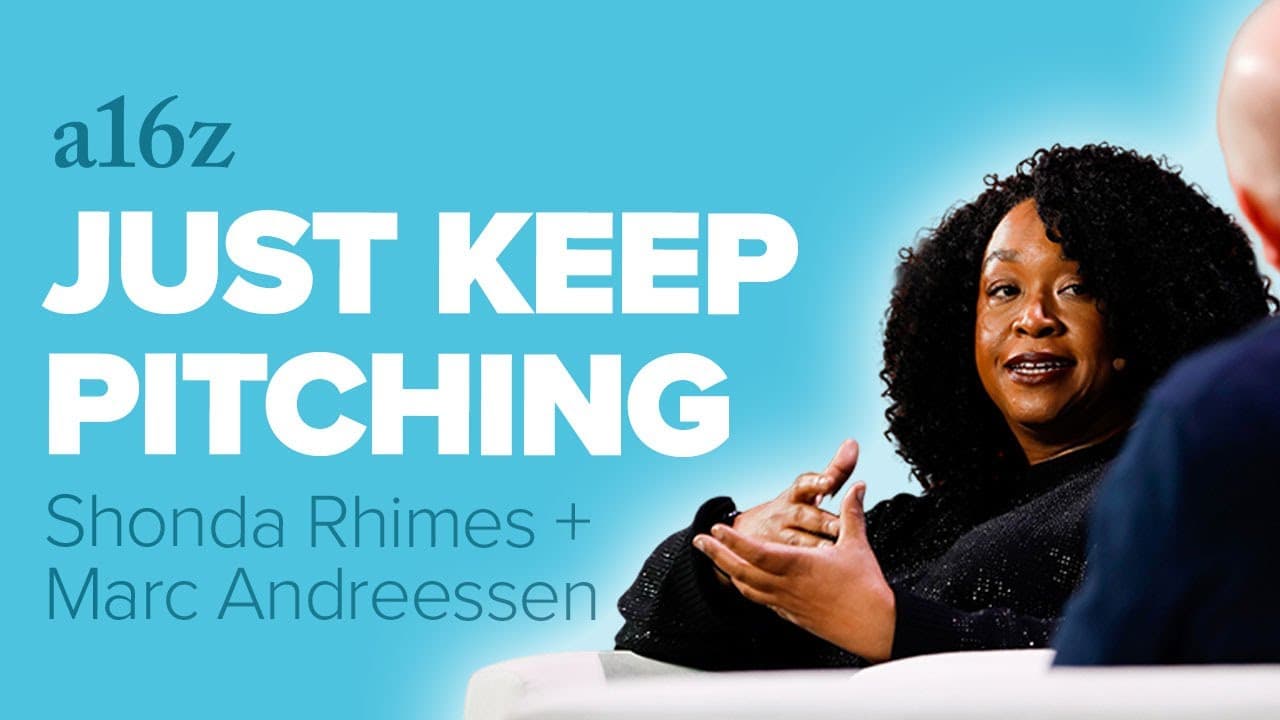
Scaling Creativity with Marc Andreessen and Shonda Rimes
TL;DR
Shonda Rhimes scaled creativity by pairing original ideas with relentless pitching, disciplined execution, and a trusted team that could support multiple productions. Her operation sometimes managed three shows in production, produced a new episode every nine days, and oversaw about $350 million in seasonal budgets. Read on for her approach to moving from film into television, creating Grey’s Anatomy, delegating work, and expanding Shondaland.
Transcript
that is the lightning in a bottle thing you know it's having the idea that sparks something for somebody that you know nobody else has had that you don't know is gonna work and you're working your tail off you know day in and day out it's making the pitch it's getting in the room and then it's doing the work and hoping it works hey everybody thank ... Read More
Key Insights
- 🎥 Shonda Rhimes believes that television offers more opportunities for character development and storytelling compared to film.
- 💨 Social media and live-tweeting have changed the way TV shows interact with fans and have provided a platform for immediate feedback.
- 👻 Binge-watching allows for more complex storytelling, but Rhimes still believes in maintaining a good pace and plot.
- 💨 Netflix's model of releasing entire seasons at once has changed the way shows are consumed and removes the need for commercial breaks or recaps.
- 🙈 Rhimes sees her company, Shondaland, as an incubator for creative talent and an opportunity to bring together writers and producers to collaborate.
Install to Summarize YouTube Videos and Get Transcripts
Explore YouTube Video Summarizer or Get YouTube Transcript Extractor
Questions & Answers
Q: How did Shonda Rhimes scale her creativity from one television show to multiple productions?
Rhimes built an infrastructure around people she trusted, distributed experienced staff across different shows, and trained them to understand her vision. Delegating responsibility allowed her to manage several projects instead of personally handling every task.
Q: How did Shonda Rhimes get started in television?
After having a child, Rhimes began watching more television and saw the kind of character development she had wanted to create in movies. She asked her agents for an opportunity, researched ideas, entered pitch meetings, and received approval after pitching about three concepts.
Q: How was Grey’s Anatomy created?
Rhimes had been writing movies when she decided she wanted to write television, despite having no prior television experience. After researching and pitching several ideas, she learned that Bob Iger wanted a medical show and developed Grey’s Anatomy.
Q: What does Shonda Rhimes say it takes to create something from scratch?
She describes the process as finding an idea that sparks something for someone even though nobody knows whether it will work. It also requires working relentlessly, making the pitch, getting into the room, completing the work, and hoping the result connects.
Q: Why did Shonda Rhimes move from writing films to television?
Rhimes realized that television was providing the rich character development she had been seeking in movies. Watching 24 within 24 hours helped convince her that television offered an interesting creative opportunity.
Q: Why did Shonda Rhimes expand beyond a single show?
Rhimes wanted a second line of work in case one show was canceled and also wanted to broaden her creative horizons. That expansion required her to build an organization capable of supporting several productions.
Q: What was the production scale of Shonda Rhimes’s television operation?
Rhimes described having three shows in production at a time, sometimes four, with a new episode made every nine days. Using an estimated $5 million per network episode, that represented about $20 million of television every nine days and roughly $350 million in seasonal budgets.
Q: How large was the global audience for Shonda Rhimes’s shows?
Rhimes said her programs aired back-to-back on Thursday nights and reached about 30 million viewers. She also said the shows aired in 256 territories and 67 languages around the world.
Summary
In this interview, Shonda Rhimes discusses her career as a television producer and writer, the process of creating successful shows, the impact of social media on television, and her move to Netflix. She emphasizes the importance of audience engagement and the role of the writer in television. Rhimes also highlights the shift in storytelling from film to TV and the freedom that streaming platforms like Netflix offer to create more complex and sophisticated shows. She shares her excitement about the future of television and the creative possibilities that lie ahead.
Questions & Answers
Q: How does Shonda Rhimes describe the process of going from 0 to 1 in television?
Rhimes explains that going from 0 to 1 in television is about having the idea that sparks something, being unique and different from what others have done before. It involves hard work, making pitches, getting in the room, and hoping that the idea works. She shares her own experience of starting with Grey's Anatomy without any prior experience in television.
Q: How did Shonda Rhimes transition from film to television?
Rhimes reveals that she transitioned to television after having a child and being stuck at home. She started watching television and realized that the character development she had been longing for in movies was happening on TV. She decided to pitch ideas for a television show and eventually got the opportunity to create Grey's Anatomy. Her interest in surgery and talking to young female surgical residents shaped the concept of the show.
Q: What did Shonda Rhimes consider when creating Grey's Anatomy?
Rhimes took into consideration what Bob Iger, the CEO of ABC, wanted. She wanted to make something that appealed to the network and its audience. Additionally, she wanted to create a show that she personally wanted to see, with interesting characters and compelling storylines. Rhimes focused on making the show diverse and relatable, reflecting different experiences and perspectives.
Q: How did Shonda Rhimes decide to expand from one show to multiple shows?
Rhimes wanted to do more than just have one successful show. She wanted a backup plan in case Grey's Anatomy didn't continue. She also wanted to take on more creative challenges and expand her empire. She brought on writing and producing partners, trusted her team to handle certain aspects, and built the infrastructure to support multiple shows.
Q: What is a day in the life of Shonda Rhimes like now that she has a successful production company?
Rhimes describes her daily routine, which includes meetings with her executive and leadership teams, creative work in the writers' room, communicating with other show creators, and addressing any issues or tasks that need her attention. She values the importance of trusting her team and empowering them to take charge while still being involved in the creative process.
Q: How does Shonda Rhimes evaluate potential hires for her production company?
Rhimes looks for interesting and hard-working people who are passionate about what they do. She values output and creativity more than pedigrees or other formal qualifications. She gives examples of employees who demonstrated their dedication and resourcefulness, regardless of their background or circumstances.
Q: How does someone at Shonda Rhimes' production company get the opportunity to pitch their own show?
Rhimes explains that many of the creators of her shows were initially part of her writing team and had worked with her for several years. She believes in nurturing and mentoring talented individuals from within her company. She encourages their growth and gives them opportunities to pitch their own ideas, sometimes even before leaving the company.
Q: How does Shonda Rhimes know if a show is going to work?
Rhimes states that usually around episode 10, she becomes sure whether a show will succeed or not. At that point, she can assess if the show has a clear direction, a strong engine to keep going, and if she fully understands what the show is about. While there are no guarantees, this milestone gives her an indication of the show's potential for longevity.
Q: Has social media influenced Shonda Rhimes' approach to television?
Rhimes acknowledges that social media has changed how TV shows interact with fans and the media. Live-tweeting, in particular, became a significant aspect of shows like Scandal, creating immediate engagement and allowing for real-time feedback. While it didn't affect her writing process, it provided valuable insights and helped build a loyal and supportive fan base.
Q: What does Shonda Rhimes expect from her partnership with Netflix?
Rhimes reveals that Netflix gives her the freedom to make shows that make people want to subscribe to the platform. The focus is on creating good content rather than adhering to specific audience demographics or the demands of advertisers. Netflix supports her vision and encourages innovation and creativity, which is exciting for Rhimes.
Q: Will the format of the shows Shonda Rhimes creates for Netflix differ from those she made for ABC?
Rhimes believes that there will be differences between the shows she makes for ABC and those for Netflix. ABC has a specific audience and brand, while Netflix's goal is to attract subscribers. She aims to create shows that appeal to a wider audience while still keeping her core audience engaged. The shift to Netflix allows for more creative freedom and content variety.
Q: Will the format of television shows change with streaming platforms like Netflix?
Rhimes believes that the format of television shows can evolve with streaming platforms. The absence of commercial breaks and other constraints can allow for more complexity and sophistication in storytelling. While the binge-watching model has its advantages, Rhimes emphasizes that maintaining a good pace and plot progression is still essential to keep viewers engaged.
Q: How does Shonda Rhimes see the future of television?
Rhimes is optimistic about the future of television and the creative possibilities it offers. She believes that the industry is in a transformative phase where new horizons and opportunities are emerging. There is a sense of excitement and a chance to push boundaries, creating content that captivates audiences worldwide.
Takeaways
Shonda Rhimes discusses her journey in the television industry, from creating Grey's Anatomy to building a successful production company. She emphasizes the importance of audience engagement, innovation, and creative freedom. Rhimes shares her excitement about the future of television, where streaming platforms allow for more diverse and complex storytelling. She looks forward to creating shows that resonate with viewers worldwide.
Summary & Key Takeaways
-
Shonda Rhimes went from having no shows on network television to creating Grey's Anatomy, and quickly establishing herself in the industry.
-
Rhimes explains her decision to create multiple shows, stating that she wanted to build a second line in case one show got canceled and to expand her creative horizons.
-
She discusses the process of building an infrastructure and trusting the people around her to handle the various projects.
Read in Other Languages (beta)
Share This Summary 📚
Summarize YouTube Videos and Get Video Transcripts with 1-Click
Try YouTube Summary with ChatGPT & Claude or YouTube Transcript Generator
Explore More Summaries from a16z 📚




Summarize YouTube Videos and Get Video Transcripts with 1-Click
Try YouTube Summary with ChatGPT & Claude or YouTube Transcript Generator