How to Stay in a Good Mood During a Hard Season
TL;DR
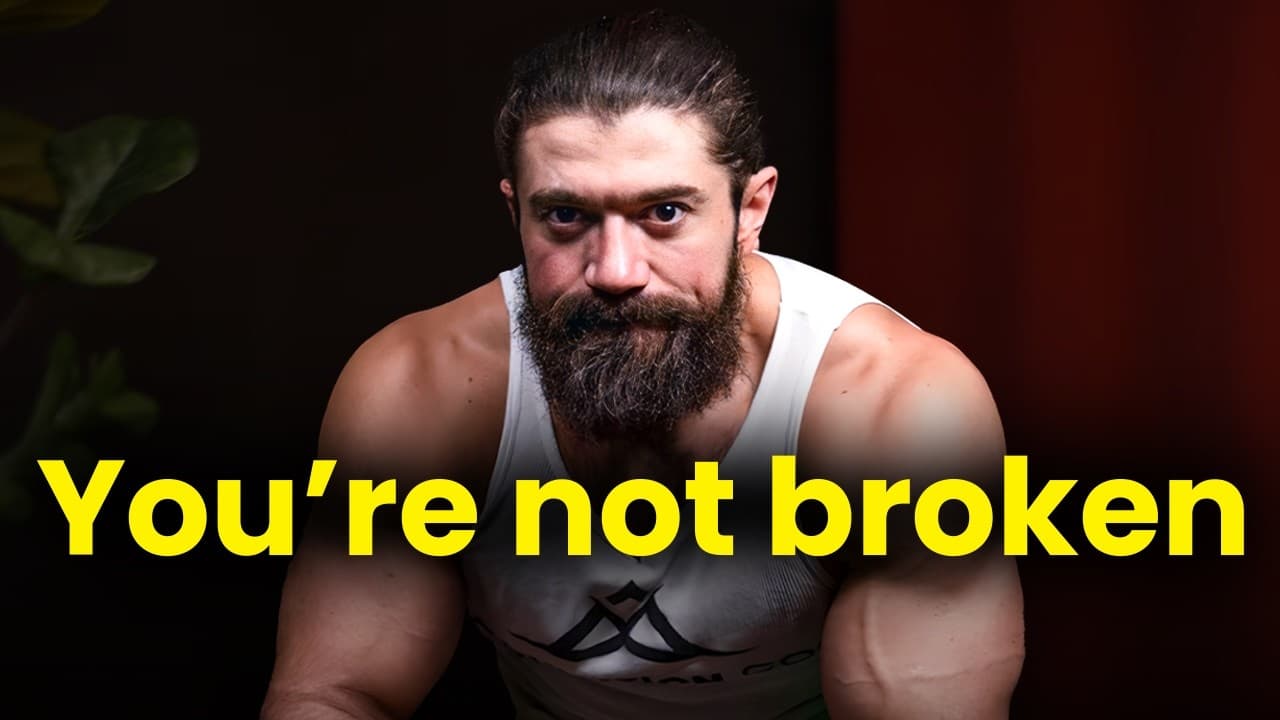
The greatest skill is staying in a great mood without a reason to be in one, because if you can be in a bad mood for no reason, you can be in a good mood for no reason too. Reframe hard events by asking what they actually change about your life, then aim for one good day at a time, or even one good moment inside a bad day.
Transcript
the single greatest skill you can develop is the ability to stay in a great mood in the absence of things to be in a great mood about i've had some of the hardest days of my life this year maybe you feel the same way and so in this video I want to share a four-part framework that has helped me move forward even when life feels hard so number one le... Read More
Key Insights
- The single greatest skill is the ability to stay in a great mood in the absence of things to be in a great mood about. The reasoning is simple: if you can be in a bad mood for no reason, you might as well be in a good mood for no reason too.
- Hard days are mathematically guaranteed. Across any 100 days, roughly the top 10% are smiley-face days, the middle 80 are neutral, and the bottom 10% are bad. Wanting top 10% days means by definition also accepting bottom 10% days.
- Reframing reality is presented as the most important skill a person can have. A friend told Hormozi he could get away with whatever he wanted as long as he framed it right, and that perspective carried him through difficult conversations this year.
- Viktor Frankl, who wrote Man's Search for Meaning about his time in the concentration camps during the Holocaust, said he who has a why to live for can bear almost any how. The why is the reframe for dealing with the how.
- A useful reframe question is: in what world would this be an amazing thing, and would I describe it 40 or 50 years from now as the pivot point or origin story that got me where I wanted to go.
- The utilitarian test after a loss is asking what it actually changes. After a multi-8-figure bill due in cash within 72 hours, the answer was nothing: not the food eaten, where he lives, where he works, or what he does. Only an expectation of the future changed.
- Marcus Aurelius asked what are you so afraid of losing when nothing in this world belongs to you. The framing is stewardship: you rent your chips for a minute, push them to the middle when the game ends, and other people distribute them when you die.
- Progress on large obstacles works like compounding. Bill Ackman, facing a lawsuit, a divorce, and a $4 billion loss at Pershing Square at the same time, concluded you just get a little bit done every day; you see nothing in a week but real movement at 30 and 90 days.
Install to Summarize YouTube Videos and Get Transcripts
Explore YouTube Video Summarizer or Get YouTube Transcript Extractor
Questions & Answers
Q: What is the single greatest skill you can develop according to Alex Hormozi?
The single greatest skill is the ability to stay in a great mood in the absence of things to be in a great mood about. His argument for why this is achievable rather than naive: if you are capable of being in a bad mood for no reason, then you might as well be in a good mood for no reason too. Mood, in this framing, is not strictly caused by circumstances, so it can be chosen independently of them. He calls this the first of four parts in a framework he used to keep moving forward during some of the hardest days of his life.
Q: How does the math of hard days help you handle a bad day?
Think of any 100 days of your life as a standard distribution. The top 10% are smiley-face days, the middle 80 are roughly neutral, and the bottom 10% are bad days. Recognizing this makes a bad day feel structural rather than personal: when Hormozi is having a rough time, he tells himself that today might just be a bottom 10% day. The deeper point is that without bottom 10% days you would have no way to recognize the difference between an ordinary day and a top 10% day, so wanting the good ones means accepting the bad ones by definition.
Q: What did Viktor Frankl say about enduring hardship?
Viktor Frankl wrote Man's Search for Meaning about the period he spent in the concentration camps during the Holocaust, which he survived. The line Hormozi cites is: he who has a why to live for can bear almost any how. Hormozi's reading is that the why functions as the reframe for dealing with the how. If you have a strong enough reason, the difficulty of the method or the circumstances becomes bearable, which is why he treats reframing reality as the most important skill a person can have rather than as a soft or optional one.
Q: How should you think about losing money you did not expect to lose?
Hormozi received a multi-8-figure bill out of nowhere that had to be paid in cash within 72 hours, money he had entirely different plans for. His utilitarian test was to ask what the loss actually changed about what he does. It did not change the food he eats, where he lives, where he works, or what he does. Nothing in his actual life changed. The only thing that changed was an expectation of the future that existed in his mind, which meant the suffering was self-selected and he got to pick how long he wanted to beat himself up for.
Q: What is the Marcus Aurelius quote about ownership and why does it matter?
The quote is: what are you so afraid of losing when nothing in this world belongs to you. Hormozi extends it with a poker metaphor. You cannot take anything with you, you have to push all your chips to the middle of the board when the game is over, and other people distribute your chips when you die. So you are really just a steward, renting the chips for a minute. Being upset about losing something that was never yours ruins the one genuinely finite thing you have, the present moment, over something that does not affect how you actually live.
Q: How do you make progress when a problem lasts months instead of days?
Hormozi cites a bit by Bill Ackman, who was being sued, going through a divorce, and had just lost $4 billion at Pershing Square, all at the same time. Ackman's conclusion was that you just get a little bit done every day. Like compounding in investing, you see nothing over a day or a week, but at 30 days you notice you moved the ball, and at 90 days you see real progress. Hormozi adds that big goals come with equally large obstacles, so you cannot assume the goals take years while the obstacles resolve overnight; some obstacles take a year or more to maneuver around.
Q: What is Alex Hormozi's good day formula?
His formula has only three items: eat with people he likes, lift with people he likes, and write something. If he does those three things, he considers it a pretty good day and feels he earned his shower. He is explicit that the three items will be entirely different for someone else, so the value is in having a short, checkable definition of a good day rather than in copying his particular list. The formula is the tactical layer under the broader idea of stringing good days together to convert a bad season back into a good one.
Q: Why does Hormozi say not being in a rush makes a good day into a great day?
Comparing days where all three formula items happened, the difference between the good ones and the better ones was that he did not have to be somewhere else. Eating without a clock, lifting without a clock, and writing for as long as he feels like are what turn the good day formula into what he calls the super good day formula. He organizes his day to avoid hard stops, so if he lifts longer the team knows a 9:00 commitment can slide to 9:30 or 9:45. Removing the rush means giving something else up, and he is willing to trade some money or upside for consistently better days.
Summary & Key Takeaways
-
Hormozi opens by naming the greatest skill as staying in a great mood without reasons to be in one, and shares a four-part framework built during some of the hardest days of his life. Part one is learning that skill, supported by the math of hard days: a standard distribution guarantees a bottom 10%, which is what makes the top 10% recognizable at all.
-
The core technique is reframing. A friend's remark that he could get away with anything if he framed it right, Viktor Frankl's line that a why lets you bear almost any how, and Marcus Aurelius on owning nothing all feed the same move: ask in what world this becomes an amazing thing, or the origin story you tell decades later.
-
Applied to a real loss, a multi-8-figure bill payable in cash within 72 hours, the utilitarian question was what it actually changed. Nothing about his food, home, work, or daily life changed; only a mental expectation of the future did. Mark Twain's line about living through many terrible tragedies, only some of which happened, makes the point that suffering is mostly mental.
-
The tactical layer scales down: turn a bad season into a good day, and a bad day into a good moment, since moments are what you actually remember. Hormozi's good day formula is eating with people he likes, lifting with people he likes, and writing something, with the multiplier being no rush and few hard stops, a trade he makes by giving up money or upside.
Read in Other Languages (beta)
Share This Summary 📚
Summarize YouTube Videos and Get Video Transcripts with 1-Click
Try YouTube Summary with ChatGPT & Claude or YouTube Transcript Generator
Explore More Summaries from Alex Hormozi 📚
Summarize YouTube Videos and Get Video Transcripts with 1-Click
Try YouTube Summary with ChatGPT & Claude or YouTube Transcript Generator