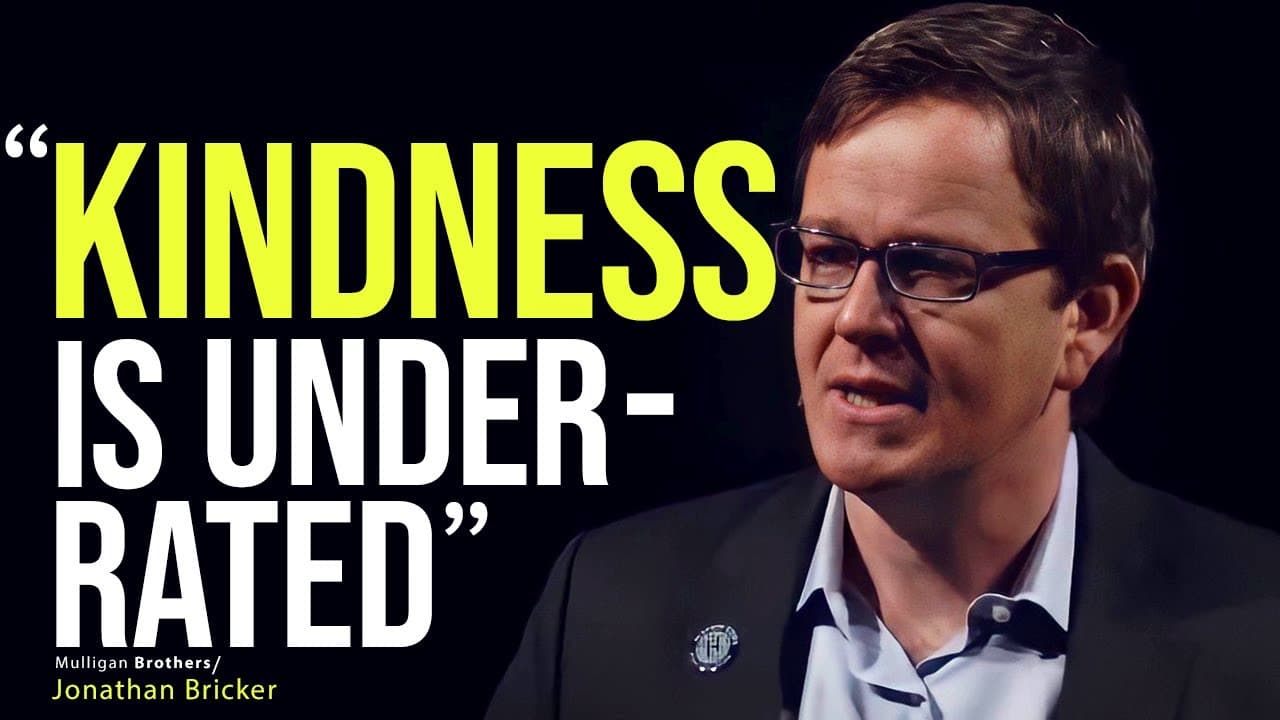
Why Is Kindness Underrated? Jonathan Bricker on Self-Belief and Suffering
TL;DR
Kindness is underrated because it creates space from negative self-talk and helps break the cycle of self-loathing. Jonathan Bricker suggests viewing yourself through the eyes of your future self or a good friend, considering the circumstances that shaped you, and naming one thing you are grateful for each morning and night. Read on for practical ways to shift perspective and treat yourself more kindly.
Transcript
it's jordan mulligan from the mulligan brothers and today's highlight is about kindness being underrated what a great video to jump into with jonathan bricker this video was brought to us by mullenrz.com where you can buy the t-shirt and the journal the link in the description it helps support all of this but before that is kindness underrated let'... Read More
Key Insights
- 🤳 Kindness is essential for self-love and breaking negative self-talk cycles.
- 🆘 Diactic framing can help shift perspectives and develop kindness.
- 🎮 Letting go of control over uncontrollable aspects leads to self-control.
Install to Summarize YouTube Videos and Get Transcripts
Explore YouTube Video Summarizer or Get YouTube Transcript Extractor
Questions & Answers
Q: Why does Jonathan Bricker say kindness is underrated?
People may dismiss kindness as weak and believe that being tough on themselves is what gets things done. Bricker says kindness instead creates space from negative self-talk and opens another way of seeing yourself.
Q: How can kindness help break the cycle of self-loathing?
Kindness creates distance from harsh thoughts such as calling yourself a loser or saying you cannot succeed. That space lets you question whether the self-talk is useful or has actually helped you move forward.
Q: How can your future self help you respond to negative self-talk?
Imagine yourself five years from now and ask what that future version would say about the words you use toward yourself today. The exercise can introduce wisdom and perspective that are difficult to access while caught inside negative thoughts.
Q: How can a good friend’s perspective encourage self-kindness?
Ask what a really good friend would say about your negative self-talk. A friend may question whether those statements are helpful, useful, or likely to move you forward.
Q: What is diactic framing in Jonathan Bricker’s discussion?
Bricker uses diactic framing as the technical term connected to shifting perspective and seeing yourself from outside yourself. He says behavioral science and rigorous studies support this area, while encouraging people to try the exercises and see whether they create space.
Q: Why should you consider the circumstances that shaped your suffering?
Your family, siblings, neighborhood, school, and childhood stress may have shaped experiences that you did not create. Seeing that broader history can make present suffering understandable and show why blaming yourself misses the full context.
Q: How can gratitude help develop kindness?
Bricker recommends thinking of one thing you are grateful for when you wake up and when you go to bed. He says gratitude is difficult to hold alongside self-loathing or anger at yourself, so it creates space for kindness toward yourself and others.
Q: Does personal change happen immediately?
Bricker says all change is incremental and nothing happens immediately. Gratitude can begin shifting how you look at yourself, and that self-view helps guide what you do each day.
Summary & Key Takeaways
-
Definition: Kindness creates space from negative self-talk and can help break a cycle of self-loathing.
-
Compare: Harsh self-criticism may seem productive, but Bricker questions whether calling yourself a loser has ever helped you move forward.
-
Tool: Imagine yourself five years from now and ask what wisdom your future self would offer about today’s negative self-talk.
-
Tool: Consider how a really good friend would respond to the harsh words you say about yourself.
-
Definition: Diactic framing is the technical term Bricker gives for shifting perspective and seeing yourself from outside yourself.
-
Who: Family, siblings, parents, neighborhoods, and schools can shape circumstances that later contribute to suffering.
-
Definition: Self-blame misses the broader and more nuanced history that led a person to the present moment.
-
Number: Think of one thing you are grateful for when you wake up and when you go to bed.
-
Compare: Gratitude is difficult to experience alongside self-loathing or anger at yourself, creating space for kindness.
-
When: Change happens incrementally, while shifts in self-perception help guide what you do each day.
Read in Other Languages (beta)
Share This Summary 📚
Summarize YouTube Videos and Get Video Transcripts with 1-Click
Try YouTube Summary with ChatGPT & Claude or YouTube Transcript Generator
Explore More Summaries from Mulligan Brothers Interviews 📚


![The Most Powerful Motivational Speech From Eddie Pinero and Inky Johnson [ MUST WATCH ] thumbnail](/_next/image?url=https%3A%2F%2Fi.ytimg.com%2Fvi%2F0Hz1UEQ0fRU%2Fhqdefault.jpg&w=750&q=75)



Summarize YouTube Videos and Get Video Transcripts with 1-Click
Try YouTube Summary with ChatGPT & Claude or YouTube Transcript Generator