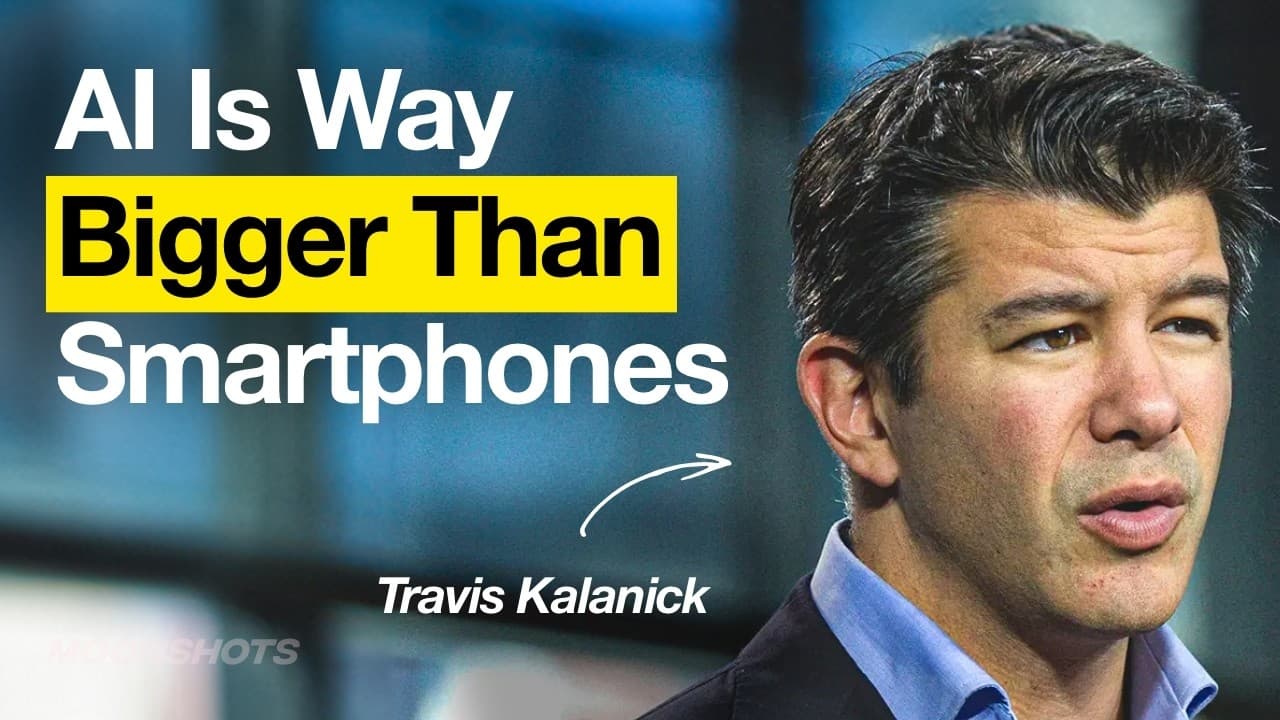
How Does Uber Founder Travis Kalanick Think About AI, Risk, and Building the Future? | EP #164
TL;DR
Travis Kalanick’s approach to building the future is to anticipate where the world is going, create for that world, and earn the trust needed to overcome resistance. Uber’s idea began during a three-mile walk in Paris, when Garrett Camp wished he could push a button for a ride and Kalanick proposed using existing cars and drivers. Read on for his principles on purpose, culture, disruption, and physical-world computing.
Transcript
Will robots and AI replace all of our jobs? If somebody wants to go and make a thing that doesn't make people's lives better, they should count on failing. In your 7-year tenure, 0 to 70 countries, 5 billion rider trips, 7.5 billion in revenues, a $70 billion valuation. I didn't think of it exactly like this at the time, but basically I was digitiz... Read More
Key Insights
- Successful disruption is accompanied by a massive immune reaction from people and institutions affected by change. Building substantial trust with those being asked to adapt can reduce resistance and may transform former adversaries into advocates for the new system.
- Uber originated from a practical transportation problem encountered during a three-mile walk in Paris. Garrett Camp proposed an app supported by purchased cars and hired drivers, while Travis Kalanick argued that existing vehicles and drivers could supply the service more efficiently.
- Entrepreneurial purpose is strongest when it matches a founder's self-awareness and natural abilities. Kalanick compares this alignment to choosing the right sport, since someone suited to basketball should not abandon that fit and attempt to compete as a tennis player.
- A company's mission must identify the people it serves and the improvement it intends to deliver. Kalanick says founders should be fundamentally passionate about those people, connecting personal motivation with a concrete benefit rather than pursuing creation without making lives better.
- Shared core values are essential to organizational culture even when differences attract people to one another. Clearly codified cultural values help companies identify poor alignment during recruitment and reveal mistaken hires early enough to address the mismatch.
- Digitizing the physical world means treating atoms like bits within an atoms-based computer. Manufacturing corresponds to processing because it manipulates atoms, real estate corresponds to storage, and logistics or transportation corresponds to networking because it moves atoms between locations.
- Uber digitized the transportation network of the physical world by coordinating movement through software. Kalanick considers that transition well underway but incomplete, noting that autonomous cars are still needed before the broader transportation system reaches the future he envisions.
- Physical-world computing is generally designed to return time to users through greater efficiency. Kalanick contrasts this model with social media applications, which succeed by capturing attention and consuming time, making their economic logic fundamentally different from atom-based systems.
Install to Summarize YouTube Videos and Get Transcripts
Explore YouTube Video Summarizer or Get YouTube Transcript Extractor
Questions & Answers
Q: How did the original idea for Uber emerge?
The idea emerged while Garrett Camp and Travis Kalanick were walking three miles back to their hotel after dinner in Paris. Camp wished he could push a button and get a ride, then proposed buying 20 S-Classes, hiring 40 drivers, and keeping them in a parking garage. Kalanick argued that they could instead use cars and drivers that already existed.
Q: How should entrepreneurs choose the right company to build?
Kalanick says entrepreneurs should develop an honest understanding of their own nature and find work that matches it. He calls the right opportunity a “professional soulmate” and compares the choice to playing the sport that suits you instead of abandoning basketball for tennis. The venture should also align with the founder’s purpose, operating style, and intended customers.
Q: Why is trust important when disrupting an industry?
Kalanick says disruptive change creates a massive immune reaction among affected people and institutions. Building substantial trust with those being asked to change can reduce that resistance. With enough trust, adversaries can become advocates.
Q: What does digitizing the physical world mean?
Kalanick describes it as treating atoms like bits in a computer. Manufacturing processes or manipulates atoms, real estate stores them, and logistics or transportation moves them between locations. He characterizes these connected systems as atoms-based computers that can create greater efficiency.
Q: How did Uber digitize physical transportation?
Uber used software to coordinate the movement of people through an existing network of cars and drivers. In Kalanick’s framework, transportation and logistics perform the physical-world equivalent of a digital network moving bits. He says the transformation remains incomplete because autonomous cars are still needed for the future he envisions.
Q: How can shared values improve hiring and company culture?
Kalanick says team members can have different personalities and perspectives while still sharing core values. Codifying those values gives recruiters a clearer way to identify poor alignment before hiring. It can also expose a mistaken hire early enough for the organization to address the mismatch.
Q: What role does service play in defining a company’s purpose?
A company’s purpose should identify whom it serves and how its work will improve life for those people. Kalanick argues that founders should have a fundamental passion for the people receiving that benefit. He says someone building something that does not make people’s lives better should count on failing.
Q: Why does market direction matter when building a moonshot?
Kalanick says nobody controls the world, so builders must see where it is going and create for that future. A moonshot therefore depends on anticipating change rather than assuming today’s conditions will remain fixed. This future-oriented purpose can help entrepreneurs pursue significance beyond their existing success.
Summary & Key Takeaways
-
Uber began with Garrett Camp wishing he could push a button and get a ride during a three-mile walk through Paris. Camp initially imagined buying cars and hiring drivers, while Kalanick recognized that existing cars and drivers could form the network, combining Camp's preference for class with Kalanick's focus on efficiency.
-
Kalanick argues that founders and executives should understand their own nature before choosing what to build. A suitable venture resembles a professional soulmate because its purpose, operating style, customers, and challenges match the founder. Teams should then share core values, even when individual personalities and perspectives differ.
-
Kalanick frames his work as digitizing the physical world by treating atoms like bits. Manufacturing manipulates atoms, real estate stores them, and logistics or transportation moves them. Uber digitized transportation, while further progress depends partly on autonomous cars. Physical-world computing generally seeks efficiency and gives people time back.
Read in Other Languages (beta)
Share This Summary 📚
Summarize YouTube Videos and Get Video Transcripts with 1-Click
Try YouTube Summary with ChatGPT & Claude or YouTube Transcript Generator
Explore More Summaries from Peter H. Diamandis 📚






Summarize YouTube Videos and Get Video Transcripts with 1-Click
Try YouTube Summary with ChatGPT & Claude or YouTube Transcript Generator