What Is Vibe Coding and Its Impact on Programming?
TL;DR
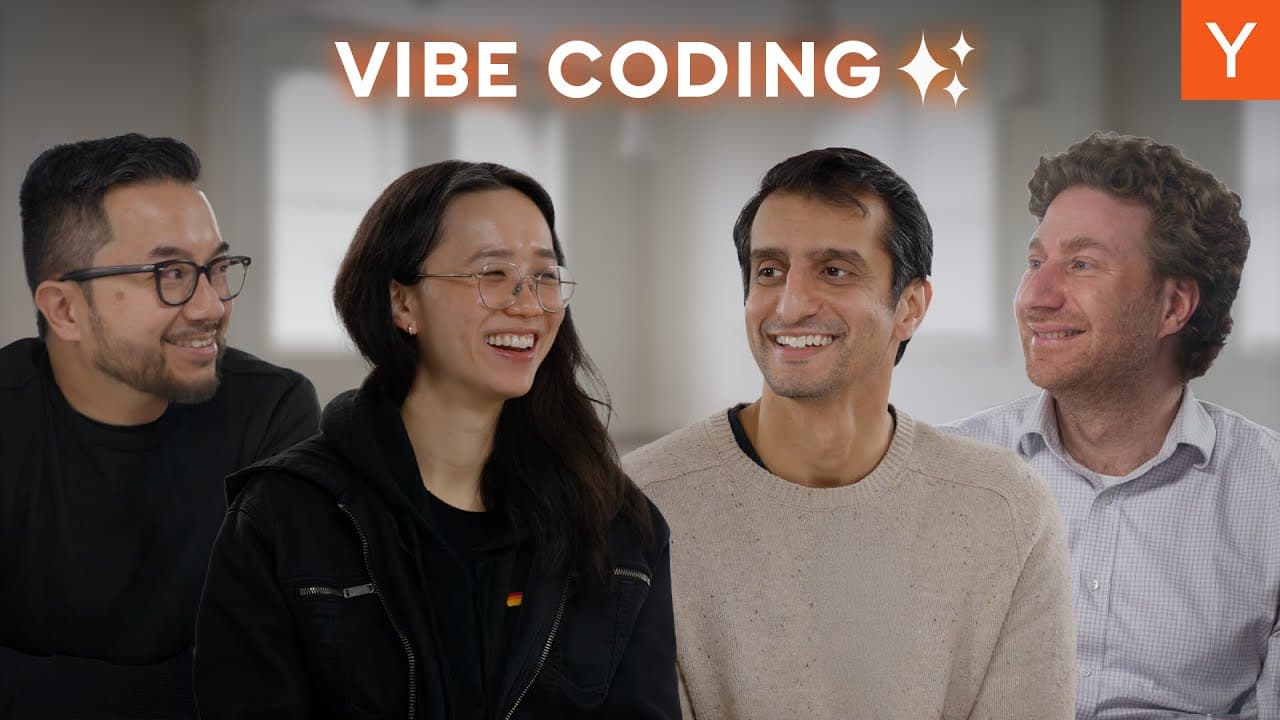
Vibe coding revolutionizes software engineering by prioritizing product-driven development over traditional coding practices, leading to increased productivity. This approach responds to the integration of AI-generated code, changing the skills and roles expected of software engineers while emphasizing the importance of taste and systems thinking.
Transcript
was like somebody dropped some like giant beanock seeds at night we woke up in the morning going on I mean I think our sense right now is this isn't a fat this isn't going away this is actually the dominant way to code and if you're not doing it like you might just be left behind welcome back to another episode of the light con I'm Gary this is Jar... Read More
Key Insights
- 🙈 Vibe coding is seen as a transformative approach, favoring intuitive and rapid product development over traditional coding methods, pushing engineers to adapt quickly to new workflows.
- 👤 The shift towards product engineering emphasizes the importance of understanding user needs and market dynamics, as engineers are expected to engage more directly with product design and development.
- 👨💻 AI-generated code is becoming commonplace, with some founders reporting that tools currently handle the majority of their coding, fundamentally changing expectations for what it means to be a software engineer.
- 🤔 The conversation underscores the importance of systems thinking in engineering roles, highlighting a division between rapid coding for initial product launches and deeper technical expertise required for scaling products effectively.
- 😑 Founders express a strong belief that the future of coding will rely heavily on collaboration with AI tools, necessitating new approaches in hiring and evaluating technical talent.
- 👨💻 Current AI coding tools are lacking in their debugging capabilities, indicating a need for ongoing human involvement to ensure code quality and functionality.
- 👻 Non-traditional backgrounds in technical fields are becoming increasingly relevant in programming, with vibe coding allowing individuals without classical training to excel in software development roles.
Install to Summarize YouTube Videos and Get Transcripts
Explore YouTube Video Summarizer or Get YouTube Transcript Extractor
Questions & Answers
Q: What is vibe coding, and how does it differ from traditional coding?
Vibe coding is a new approach to software engineering that emphasizes embracing exponential tools and productivity over the traditional methods of writing code. Instead of focusing solely on code syntax and structure, vibe coding encourages engineers to leverage AI and other tools to build products quickly and efficiently. This shift allows engineers to operate with a mindset centered around product development and user feedback, making it a more dynamic and effective way of crafting software in today's tech landscape.
Q: How have founders in the YC batch responded to vibe coding?
Founders in the YC batch have expressed strong support for vibe coding, citing that the role of software engineers is evolving into product engineers, where understanding user needs and taste is essential. Many founders report that their coding processes have changed dramatically, with some coding significantly less as AI-generated content now handles the bulk of the coding work. This adaptation reflects a shift in focus from technical execution to overall product direction and user experience.
Q: What are some tools that are critical for supporting vibe coding?
Key tools mentioned for vibe coding include Cursor and Wind Surf, which enable developers to quickly generate and manage code. Cursor is praised for its productivity but requires explicit instructions on where to look in a codebase, while Wind Surf indexes the entire codebase more effectively and autonomously. Both tools assist engineers in speeding up the coding process, aiding in rapid development, while also addressing ongoing challenges like debugging, where human oversight remains crucial.
Q: How is the role of software engineers changing with the rise of vibe coding?
As vibe coding gains prominence, the role of software engineers is transforming into that of product engineers, where understanding the market and user needs is paramount. Engineers are increasingly expected to collaborate with users and iteratively refine products based on direct feedback rather than solely focusing on technical problem-solving. This evolution necessitates a blend of technical skills, user empathy, and product strategy as engineers navigate new tools and methodologies.
Q: What concerns have emerged regarding AI-generated code?
A significant concern raised is that while AI-generated code can dramatically increase productivity, it may lead to challenges in debugging and maintaining code quality. Founders noted that the current AI tools are not particularly adept at identifying and resolving coding errors, which necessitates a continued reliance on human expertise. Developers must be skilled at recognizing and addressing issues in AI-generated code, which underscores the importance of maintaining a strong foundational knowledge in software engineering.
Q: How can non-traditional programmers succeed in the world of vibe coding?
Non-traditional programmers, such as those with backgrounds in math or physics, can achieve success in vibe coding by leveraging their analytical skills alongside new coding tools. The accessibility of vibe coding allows these individuals to become productive without requiring extensive traditional training. They can utilize their ability to understand complex problems and iterate quickly, harnessing the right tools to facilitate their coding tasks and deliver effective solutions for market needs.
Q: What implications does vibe coding have for the future of software engineering education?
Vibe coding implies a significant shift in how software engineering education might need to evolve, focusing less on traditional coding syntax and more on product management, user experience, and system design thinking. Educational programs may need to adapt by integrating tools that emphasize productivity and collaboration, fostering skills in using AI coding assistants, and prioritizing teaching students how to think critically about technology in context rather than just learning to code.
Q: What does the survey suggest about the proportion of AI-generated code?
The survey indicated a striking trend, with a quarter of founders reporting that over 95% of their codebase is AI-generated. This highlights the growing reliance on AI tools in software development, revealing a significant and rapid shift in how products are built. It suggests that many engineers now focus on more strategic roles, where they act as curators or overseers of AI-generated output, sharpening the focus on product development and ideation instead of basic coding tasks.
Summary & Key Takeaways
-
Vibe coding represents a significant shift in software engineering, where the focus is on embracing tools and vibes rather than traditional coding techniques, leading to faster product development.
-
Founders utilizing vibe coding report substantial improvements in productivity, often producing AI-generated code, which has drastically changed the skill set and expectations of software engineers in modern companies.
-
The conversation emphasizes the evolution of software engineering roles, with a new demand for product-oriented skills and systems thinking to adapt to the rapid advancements in AI-driven coding tools.
Read in Other Languages (beta)
Share This Summary 📚
Summarize YouTube Videos and Get Video Transcripts with 1-Click
Try YouTube Summary with ChatGPT & Claude or YouTube Transcript Generator
Explore More Summaries from Y Combinator 📚
Summarize YouTube Videos and Get Video Transcripts with 1-Click
Try YouTube Summary with ChatGPT & Claude or YouTube Transcript Generator