How Should European Investors Choose Profitable ETFs for the Long Term?
TL;DR
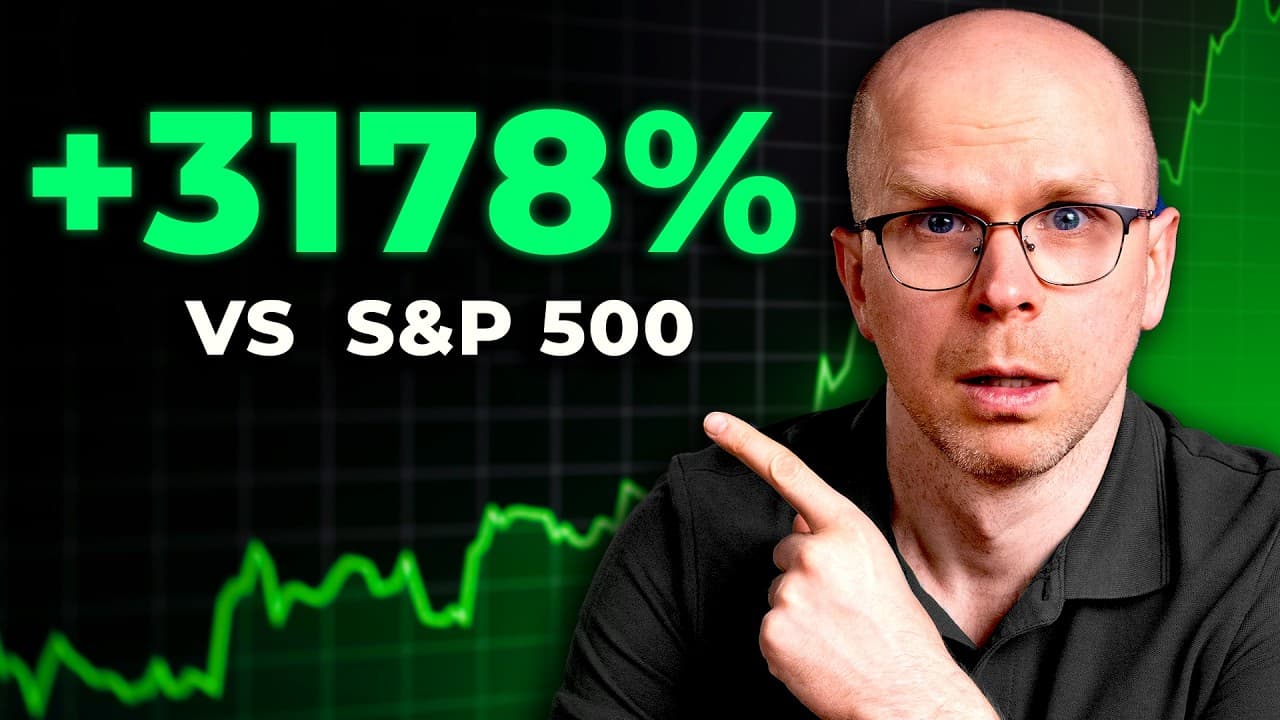
European investors should choose low-cost, broadly diversified ETFs instead of chasing the funds with the highest historical returns. The five-year rankings included a Binance BNB ETP that gained more than 3,000%, yet crypto products, sector funds, and single-country ETFs bring concentrated risks that past performance cannot reveal. Read on to compare those risks and understand why diversification across hundreds of companies, industries, and regions offers a more reliable foundation.
Transcript
If you look at the most profitable ETFs for European investors, you see just crazy results. This one's up 3,178% over 5 years. This one is up 984%. And this one's up 354%. As a professional investor, I always tell people get rich quick doesn't work. But it looks like it does work for some people. Let's go to justetf.com and check out these winning ... Read More
Key Insights
- Historical ETF rankings are records of what already happened, not reliable forecasts of future returns. Reviewing five-year winners can reveal which assets, industries, and countries recently prospered, but the required fund disclaimer correctly warns that past performance is not indicative of future results.
- Crypto products are the largest five-year gainers in the comparison, with the 21Shares Binance BNB ETP gaining more than 3,000%. Other leading exchange-traded products provided exposure to Ethereum, Bitcoin, and Ripple through instruments that investors can buy on a stock exchange.
- Cryptocurrency investing is a two-part gamble because an investor must predict whether crypto technology will prosper and which individual coins will succeed. Binance coin performed strongly, while Terra and FTX coins went to zero and Polka Dot did not perform nearly as well.
- Sector investing is vulnerable to inflated expectations after a successful theme becomes widely recognized. European bank prices already reflect improved profitability following higher interest rates, while semiconductor valuations incorporate projections of substantial demand associated with the AI revolution.
- Investor behavior can reduce the returns actually received from sector funds. The cited Morningstar Mind the Gap research found that sector funds earned 9.6% per year on average over ten years, while investors earned around 7% because they often bought during hype and sold after enthusiasm faded.
- Single-country ETFs concentrate political and economic risks in one market. Greece, Japan, Italy, and Austria performed strongly in the examined five-year period, but their current prices already reflect known economic strength, so continued exceptional returns require results beyond existing expectations.
- Diversification is presented as the only free lunch in investing. A broadly diversified ETF can spread capital across hundreds of companies, numerous industries, and several regions, reducing dependence on any single coin, sector, country, political outcome, or economic trend.
- ETF selection depends partly on an investor's European country of residence and preferred structure. Even within broad American or European stock exposure, investors can choose among hundreds of products, including accumulating, distributing, physical, synthetic, large-cap, small-cap, and value ETFs.
Install to Summarize YouTube Videos and Get Transcripts
Explore YouTube Video Summarizer or Get YouTube Transcript Extractor
Questions & Answers
Q: How should European investors choose profitable ETFs for the long term?
European investors should prioritize low costs and broad diversification rather than selecting ETFs solely because they recently delivered the highest returns. A fund holding hundreds of companies across multiple industries and regions reduces dependence on any single coin, sector, country, political outcome, or economic trend.
Q: Why are past ETF returns unreliable for choosing future winners?
Past returns show which investments already benefited from favorable conditions, not which will lead next. Strong expectations may already be reflected in current prices, so repeating exceptional gains requires results beyond what investors presently anticipate.
Q: What risks come with investing in crypto ETPs?
Crypto ETPs provide stock-exchange-traded exposure to the price of a particular cryptocurrency. Investors must correctly predict both whether cryptocurrency technology will prosper and which coins will survive; Binance coin performed strongly, while Terra and FTX coins went to zero and Polka Dot performed poorly.
Q: Which exchange-traded product gained more than 3,000% over five years?
The 21Shares Binance BNB ETP gained more than 3,000% over five years, with 14 million invested. The comparison also included ETPs offering exposure to Ethereum, Bitcoin, and Ripple, but the speaker warns investors not to expect the same extraordinary return from investing today.
Q: Why can buying a top-performing sector ETF be dangerous?
By the time a successful sector attracts widespread attention, its prices may already incorporate optimistic forecasts. European bank prices reflected higher profitability after interest rates rose, while semiconductor valuations reflected projections of substantial demand associated with the AI revolution.
Q: What does Morningstar's Mind the Gap research show about sector funds?
Over ten years, sector funds earned 9.6% per year on average, while their investors earned around 7% per year. The gap occurred because investors often bought sectors during periods of hype and sold after enthusiasm faded, effectively buying high and selling low.
Q: Why are single-country ETFs risky after strong performance?
A single-country ETF concentrates exposure to one market's political and economic conditions. Greece, Japan, Italy, and Austria ranked highly over the examined five-year period, but known economic strength may already be reflected in their prices, and historical winners do not reliably identify future leaders.
Q: What types of diversified ETFs can European investors consider?
The choices discussed include S&P 500, MSCI World, emerging markets, all-world, and STOXX Europe 600 ETFs. Investors can also compare accumulating and distributing funds, physical and synthetic replication, and large-cap, small-cap, or value exposure, with the suitable selection depending partly on their European country of residence.
Summary & Key Takeaways
-
The five-year performance rankings on JustETF are dominated by crypto products, including a Binance BNB ETP that gained more than 3,000%. Such returns reflect successful past bets, not dependable future opportunities. Cryptocurrency remains a high-risk gamble because investors must correctly predict both the technology's future and the particular coins that will survive.
-
Among equity products, European bank, semiconductor, technology, hydrogen, financial, and energy infrastructure ETFs produced substantial five-year gains. However, strong expectations may already be reflected in their prices. Morningstar's cited research illustrates the behavioral danger: sector funds averaged 9.6% annually while their investors earned only around 7% annually over ten years.
-
Country funds focused on Greece, Japan, Italy, and Austria also ranked highly, but concentrated markets carry political and economic risks. Historical winners cannot reliably identify future leaders. The preferred approach is a low-cost ETF holding hundreds of companies across multiple industries and regions, even if it never becomes the single best-performing fund.
Read in Other Languages (beta)
Share This Summary 📚
Summarize YouTube Videos and Get Video Transcripts with 1-Click
Try YouTube Summary with ChatGPT & Claude or YouTube Transcript Generator
Explore More Summaries from Tom Crosshill 📚





Summarize YouTube Videos and Get Video Transcripts with 1-Click
Try YouTube Summary with ChatGPT & Claude or YouTube Transcript Generator