How Are Trump’s Tariffs Reshaping Davos 2026?
TL;DR
Trump’s threatened tariffs over Greenland pushed European and U.S. stocks lower, lifted gold, and prompted Europe to consider tariffs on €93 billion of U.S. goods. Franklin Templeton CEO Jenny Johnson argues that diversified portfolios can absorb geopolitical shocks, while private-market secondaries, real estate debt, asset-backed credit, AI-driven productivity, and blockchain-based financial products offer investment opportunities.
Transcript
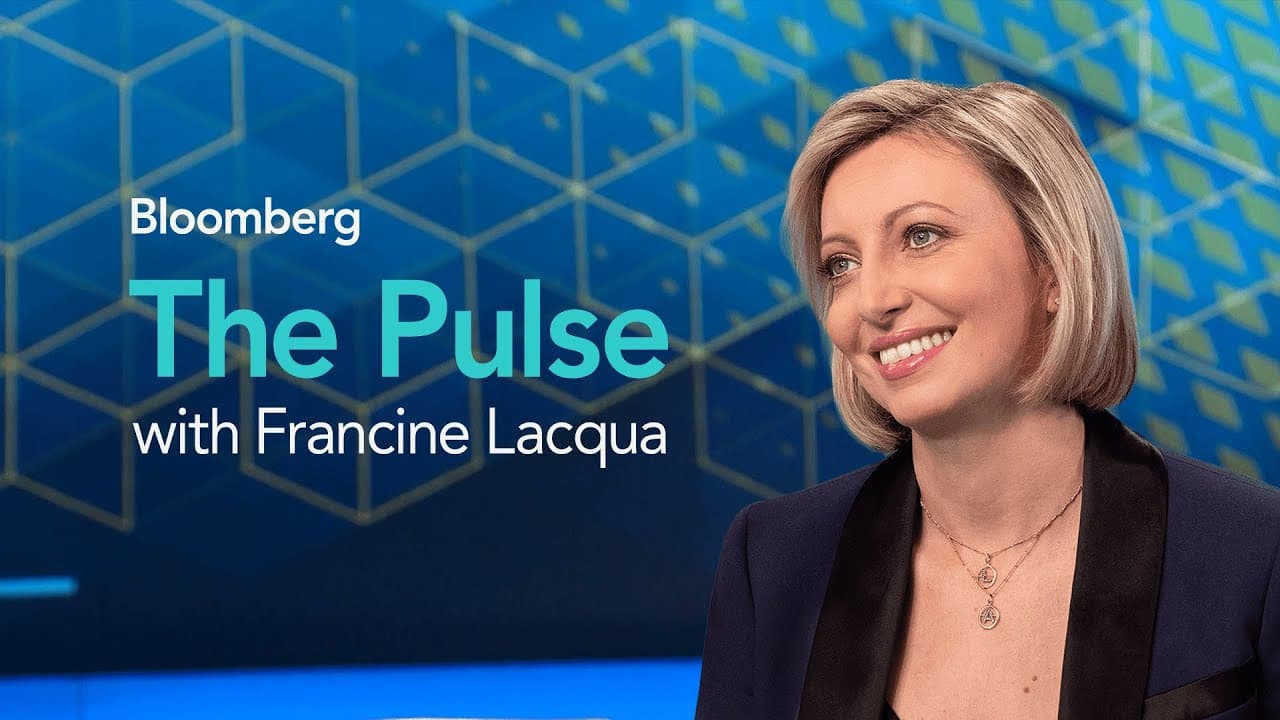
FRANCINE: WELCOME TO "THE PULSE" LIVE FROM DAVOS. PRESIDENT TRUMP'S AFFAIR -- TEARS IN EUROPEAN COUNTRIES OPPOSED TO THE U.S. ACQUISITION GREENLAND. EUROPE CONSIDERING TARIFFS ON $100 BILLION OF U.S. PRODUCTS. HERE'S A SNAPSHOT OF OTHER VOICES WE WILL BE HEARING FROM THIS WEEK, THE U.K. CHANCELLOR, THE HEAD OF THE IMF. AND CHIEF EXECUTIVE'S OF COMM... Read More
Key Insights
- Trump’s tariff threat targeted eight countries that demonstrated support for Greenland through small military delegations. The proposed rate was 10% from February 1, with an increase to 25% in June unless a process toward transferring Greenland to the United States began.
- Europe’s response centered on national sovereignty and solidarity with Denmark. French and German officials repeatedly characterized the tariff threat as blackmail because trade measures were being used to pressure a European country over control of its territory.
- European retaliation could cover €93 billion, described in the program as $108 billion, of U.S. goods. European leaders were also weighing the economic cost of escalation alongside broader questions concerning NATO, Ukraine, and continued U.S. support.
- Private-market access remains limited for average investors even as companies wait longer to go public. Johnson argued that regulatory clarity and carefully structured products could widen access while accounting for each individual investor’s liquidity needs and risk profile.
- Interest-rate caps can reduce the number of borrowers who receive credit because lending prices reflect funding costs, operating expenses, and expected losses. Johnson opposed caps on this basis, despite acknowledging their appeal as an affordability message.
- Franklin Templeton’s private-market strategy includes secondaries, real estate debt, and asset-backed credit. Secondaries can provide liquidity for previously deployed private equity, while reduced regional-bank lending has created what Johnson described as an opportunity in real estate debt.
- AI’s economic impact is expected to move from infrastructure providers toward companies applying the technology successfully inside individual sectors. Johnson said productivity had moved from about 1% toward 2% in the United States, while warning that adoption will involve failed experiments and resistance to change.
- Blockchain-based funds can support operations that conventional financial infrastructure cannot easily provide. Franklin Templeton’s SEC-approved on-chain money-market fund posts interest to accounts daily and was expected to support a Saturday transfer into a stablecoin because the product is native to blockchain infrastructure.
Install to Summarize YouTube Videos and Get Transcripts
Explore YouTube Video Summarizer or Get YouTube Transcript Extractor
Questions & Answers
Q: Why did Trump’s Greenland tariff threat unsettle markets?
Trump threatened 10% tariffs from February 1 on eight countries that supported Greenland through small and symbolic military delegations, with the rate rising to 25% in June unless a process toward U.S. possession began. The dispute pushed European stocks and U.S. futures lower while gold rallied, showing that investors responded by reducing risk and favoring a haven asset.
Q: How was Europe considering responding to the U.S. tariff threat?
European leaders presented a unified defense of Denmark and national sovereignty, while French and German officials described the pressure as blackmail. The European Union was considering tariffs on €93 billion, identified in the program as $108 billion, of U.S. goods. Officials were also pursuing diplomacy and evaluating how much economic pressure European economies could tolerate.
Q: Why does the Greenland dispute have implications beyond trade?
The dispute extends beyond trade because tariffs were threatened to influence sovereignty over Greenland rather than simply address a commercial imbalance. European officials therefore had to consider not only retaliation and economic costs, but also the future of NATO, the war in Ukraine, and continued U.S. support. These connected issues made the European response more difficult to calculate.
Q: How could individual investors gain better access to private markets?
Individual investors could gain broader access through clearer regulation and products structured around their specific risk and liquidity profiles. Johnson said companies are waiting longer to go public, leaving average investors outside a growing part of the market. Potential structures include combinations of public and private assets and perpetual products, but access must be designed fairly and carefully.
Q: Why can capping credit-card interest rates restrict lending?
Credit-card lending rates reflect three components identified by Johnson: the lender’s cost of funds, operating expenses, and the expected loss profile. If regulation caps rates below the level needed to cover those costs and risks, lenders cannot serve as many borrowers. Johnson therefore viewed caps as appealing affordability rhetoric but a difficult policy for maintaining broad credit availability.
Q: Which private-market opportunities did Franklin Templeton favor?
Franklin Templeton favored private-equity secondaries, real estate debt, and asset-backed credit. Johnson said secondaries can address demand for liquidity after large amounts of private equity were deployed without exits arriving as quickly. She also viewed real estate debt as attractive because regional banks were not lending as they previously had, while emphasizing careful underwriting and manager selection.
Q: How should investors evaluate private credit portfolios?
Private credit should be evaluated as a collection of distinct opportunities rather than treated as one broad category. Johnson compared this approach with assessing separate parts of a fixed-income portfolio, such as high yield and other market segments. Investors need to examine underwriting quality, asset type, diversification, and managers because performance differences between top-quartile and bottom-quartile private-market managers are significant.
Q: How could AI affect companies, productivity, and employment?
AI could separate winners from losers within the same sector as companies learn which applications improve their operations. Johnson said U.S. productivity had been near 1% for a decade and was closer to 2%, helping explain how companies could grow without creating as many jobs. She expected investment, failed experiments, organizational resistance, and change-management difficulties before the largest AI benefits emerge.
Q: Why does diversification matter during geopolitical shocks?
Diversification helps portfolios absorb short-term market shocks caused by unexpected policy announcements and geopolitical tension. Johnson said the Trump administration had repeatedly produced surprises, creating volatility that active managers could use as an opportunity. She argued that investors positioned across a properly diversified portfolio can withstand temporary disruption instead of depending heavily on a single market, sector, or outcome.
Q: How can blockchain change the operation of investment funds?
Blockchain can allow regulated investment products to record activity and transfer value outside some traditional operating constraints. Johnson said Franklin Templeton’s SEC-approved on-chain money-market fund posts interest into an investor’s account every day. She also said the fund was expected to support a Saturday transfer into a stablecoin, an operation made possible because the product is native to blockchain infrastructure.
Summary & Key Takeaways
-
Trump’s threat to impose 10% tariffs on eight countries supporting Greenland, rising to 25% in June, intensified U.S.-European tensions. European leaders defended Danish sovereignty, described the pressure as blackmail, considered tariffs on €93 billion of U.S. goods, and weighed consequences for NATO, Ukraine, and their own economies.
-
Franklin Templeton CEO Jenny Johnson said regulatory clarity could broaden individual access to private markets, where companies remain private longer. Her firm raised $23 billion for private markets last year and targets $25 billion this year, with particular interest in secondaries, real estate debt, and asset-backed credit.
-
Johnson argued that diversified portfolios can withstand short-term geopolitical shocks and that volatility creates opportunities for active managers. She expects AI adoption to produce sector-level winners and losers, raise productivity, and require difficult organizational change, while blockchain infrastructure could make regulated financial products transferable outside traditional operating hours.
Read in Other Languages (beta)
Share This Summary 📚
Summarize YouTube Videos and Get Video Transcripts with 1-Click
Try YouTube Summary with ChatGPT & Claude or YouTube Transcript Generator
Explore More Summaries from Bloomberg Television 📚




Summarize YouTube Videos and Get Video Transcripts with 1-Click
Try YouTube Summary with ChatGPT & Claude or YouTube Transcript Generator