How Mytra's Co-Founders Innovate Hardware Solutions
TL;DR
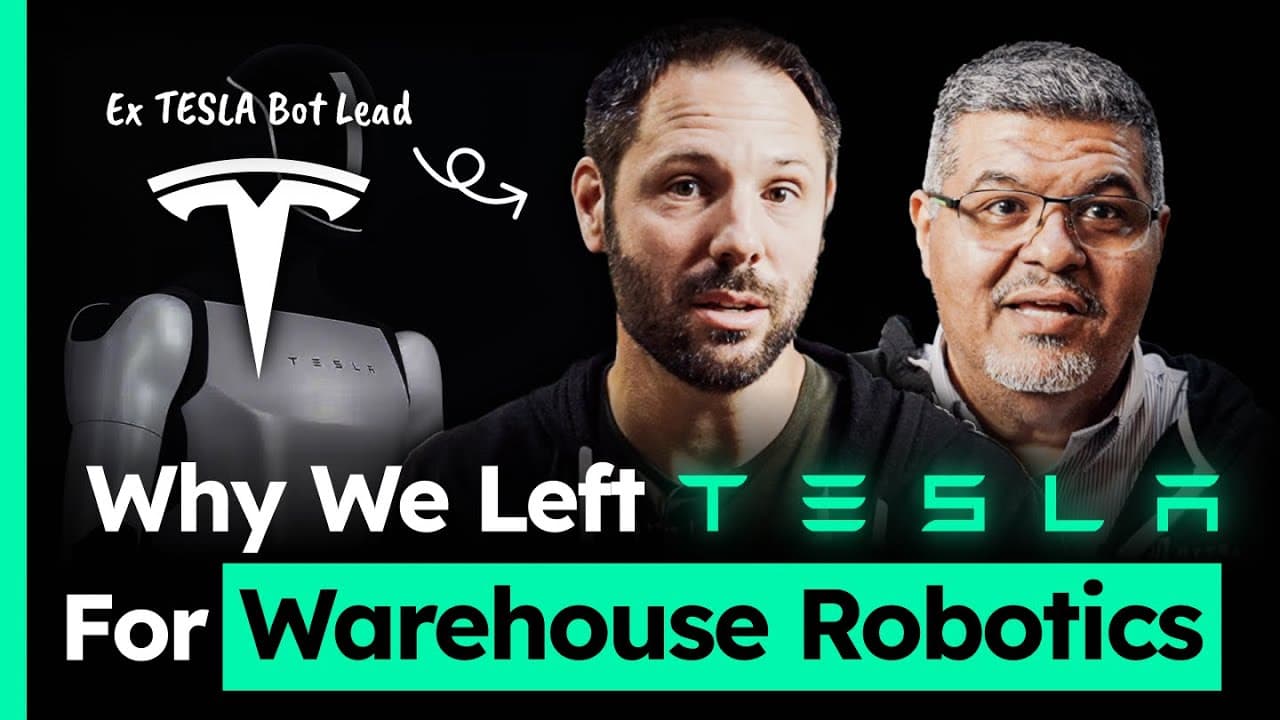
The co-founders of Mytra, Chris Walti and Ahmad Baitalmal, leverage their experiences at Tesla to innovate in autonomous systems for warehousing. They emphasize the importance of understanding real-world problems deeply before creating solutions. Their approach involves simplifying complex processes and designing flexible, software-driven systems to improve material handling efficiency.
Transcript
actually the advice I would give to people trying to create their own company really work in the field a little bit like work in the field you think you have an idea for some new service or product work in that field and get insight that's something I got out of my Stanford experience you maybe you have an idea of what's really valuable and useful ... Read More
Key Insights
- Chris Walti and Ahmad Baitalmal founded Mytra to address unsolved problems in material handling using their Tesla experience.
- Understanding the problem deeply is crucial before creating a solution, as emphasized by the co-founders.
- Mytra's approach focuses on simplifying complex processes and designing flexible, software-driven systems.
- The co-founders highlight the inefficiencies in traditional material movement systems and propose a new paradigm.
- Mytra's robots are designed to be lightweight yet capable of moving heavy loads, improving efficiency.
- The co-founders stress the importance of working directly in the field to gain insights into real-world challenges.
- Hardware innovation is seen as the next frontier, with significant potential to disrupt large industries.
- The co-founders believe that combining software with hardware can close the loop in solving physical world problems.
Install to Summarize YouTube Videos and Get Transcripts
Explore YouTube Video Summarizer or Get YouTube Transcript Extractor
Questions & Answers
Q: How do Mytra's co-founders apply their Tesla experience to their company?
Mytra's co-founders, Chris Walti and Ahmad Baitalmal, leverage their Tesla experience by focusing on solving unsolved problems in material handling. They apply lessons learned in advanced manufacturing and automation to design flexible, software-driven systems that simplify complex processes and improve efficiency in warehousing and logistics.
Q: What is the main problem Mytra aims to solve?
Mytra aims to solve inefficiencies in traditional material movement systems, particularly in warehousing and logistics. By developing lightweight robots capable of moving heavy loads, they seek to improve efficiency and flexibility, creating a new paradigm for material handling that addresses the limitations of existing systems.
Q: Why is understanding real-world problems important for innovation?
Understanding real-world problems is crucial for innovation because it provides the insights needed to create effective solutions. Mytra's co-founders emphasize that deeply immersing oneself in the field helps identify the fundamental issues that need addressing, ensuring that the solutions developed are practical and impactful.
Q: How does Mytra's approach differ from traditional material handling systems?
Mytra's approach differs from traditional material handling systems by focusing on lightweight, flexible robots that can move heavy loads efficiently. Their systems are software-driven, allowing for easy adaptability and optimization, unlike traditional systems that rely on heavy machinery and fixed infrastructure, which can be inefficient and inflexible.
Q: What role does software play in Mytra's hardware solutions?
Software plays a crucial role in Mytra's hardware solutions by enabling the flexibility and adaptability of their systems. By designing robots that are software-driven, Mytra can optimize material handling processes, allowing for easy adjustments and improvements without the need for significant physical changes, thus enhancing efficiency and scalability.
Q: Why is hardware innovation considered the next frontier?
Hardware innovation is considered the next frontier because it has the potential to disrupt large industries by addressing inefficiencies in the physical world. Mytra's co-founders believe that combining software with hardware can close the loop in solving real-world problems, offering significant opportunities for advancement and impact across various sectors.
Q: How do Mytra's robots improve material handling efficiency?
Mytra's robots improve material handling efficiency by being lightweight yet capable of moving heavy loads. This design reduces the need for heavy machinery, such as forklifts, and allows for more flexible and efficient movement of materials. The software-driven approach further enhances adaptability and optimization, leading to significant efficiency gains.
Q: What advice do Mytra's co-founders give to future founders?
Mytra's co-founders advise future founders to deeply immerse themselves in the field they wish to innovate in, gaining firsthand insights into real-world problems. They emphasize the importance of understanding the fundamental issues before creating solutions, ensuring that the innovations developed are practical, impactful, and address the true needs of the industry.
Summary & Key Takeaways
-
Mytra's co-founders, Chris Walti and Ahmad Baitalmal, utilize their Tesla experience to innovate in autonomous systems for material handling. Their approach focuses on simplifying processes and designing flexible, software-driven systems that improve efficiency. By deeply understanding real-world problems, they aim to create meaningful solutions.
-
The co-founders emphasize the importance of gaining insights into real-world challenges before creating solutions. They highlight the inefficiencies in traditional material movement systems and propose a new paradigm with lightweight robots capable of moving heavy loads, improving efficiency and flexibility.
-
Hardware innovation is seen as the next frontier by Mytra's co-founders, with potential to disrupt large industries. They believe that combining software with hardware can close the loop in solving physical world problems, leveraging their experiences at Tesla to address unsolved challenges in material handling.
Read in Other Languages (beta)
Share This Summary 📚
Summarize YouTube Videos and Get Video Transcripts with 1-Click
Try YouTube Summary with ChatGPT & Claude or YouTube Transcript Generator
Explore More Summaries from EO 📚
Summarize YouTube Videos and Get Video Transcripts with 1-Click
Try YouTube Summary with ChatGPT & Claude or YouTube Transcript Generator