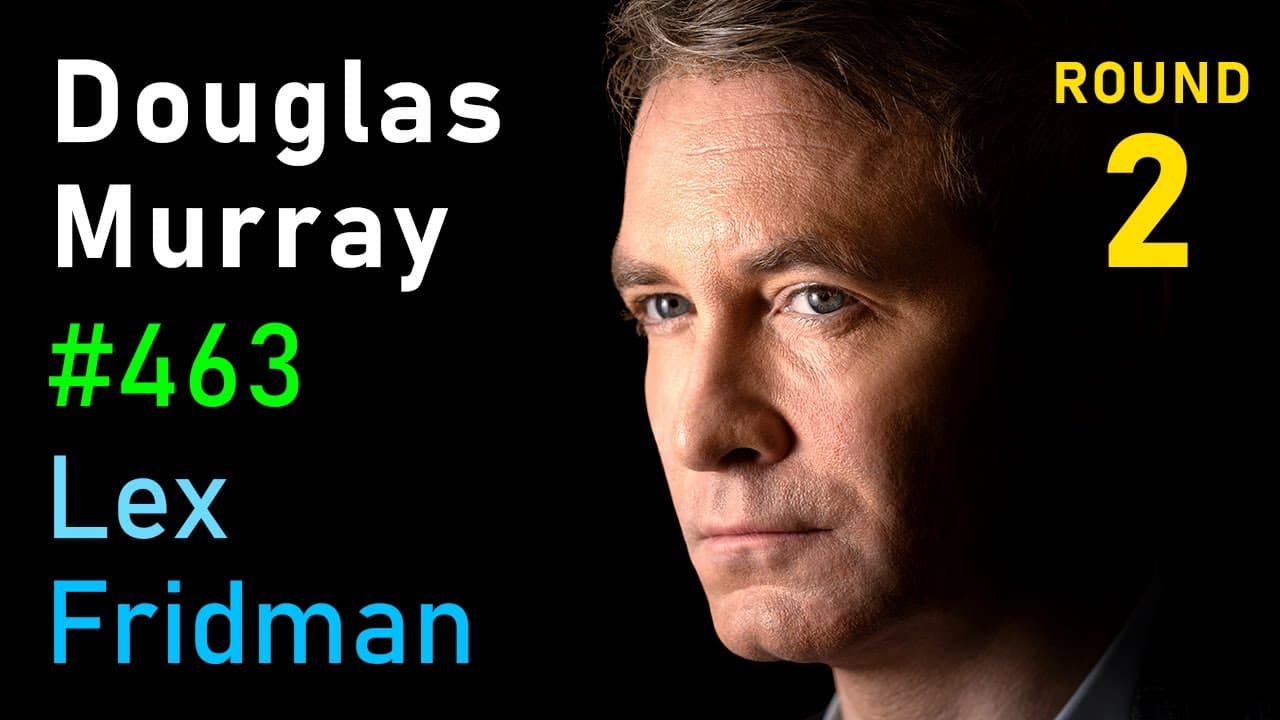
Douglas Murray: Putin, Zelenskyy, Trump, Israel, Netanyahu, Hamas & Gaza | Lex Fridman Podcast #463
TL;DR
Douglas Murray discusses geopolitical conflicts, war, and human suffering with insights on leadership and morality.
Transcript
they end up chanting in front of him "Viva Lamuete long live death." They have their counterparts today They are the people who who taunt Americans Westerners Israelis and others with lines like "We love death more than you love life." The following is a conversation with Douglas Murray author of The War in the West The Madness of Crowds and his ne... Read More
Key Insights
- 💍 Murray stresses the importance of engaging with multiple perspectives to grasp the complexities of geopolitical conflicts.
- 🌍 He notes the shifting morale of soldiers, reflecting the exhaustion that prolonged conflicts induce on both human spirit and national psyche.
- 🇮🇱 There is a call for intellectual humility when navigating the intense narratives surrounding modern warfare, including the Israel-Palestine conflict.
- ❓ Murray examines the corrosive nature of online discourse and the difficulties of identifying truth amidst overwhelming opinions and propaganda.
- 🇦🇬 He argues that anti-Semitism often arises from deeper societal frustrations and is used as a scapegoat for broader issues.
- 🫱 The resilience and hope displayed by Ukrainians amid war challenges the notion of despair, showcasing the human will to fight for survival.
- 🛟 Leaders in wartime must balance the urgency of military response with ethical considerations, acknowledging their consequences on civilian lives.
Install to Summarize YouTube Videos and Get Transcripts
Explore YouTube Video Summarizer or Get YouTube Transcript Extractor
Questions & Answers
Q: What is Douglas Murray's view on the current state of online discourse regarding conflicts?
Murray believes that online spaces are often rife with misinformation, outrage, and division, making it challenging to discern truth. He argues for engaging with various perspectives and approaching discussions with intellectual humility and rigor, advising listeners to seek wisdom from differing viewpoints.
Q: How does Murray perceive the morale of Ukrainian soldiers over time?
According to Murray, when he first visited Ukraine, soldiers exhibited intense optimism and determination in reclaiming their territory. However, after three years of ongoing conflict, he observed a shift in their morale, with many feeling exhaustion and doubt about the possibility of victory, reflecting the toll of prolonged war.
Q: What insights does Murray offer about the leadership styles in the context of the Israel-Palestine conflict?
Murray emphasizes the complexities of leadership during war, highlighting that leaders like Netanyahu face immense pressure to respond decisively to threats. He notes the delicate balance leaders must maintain between securing national interests and addressing international criticism, often leading to difficult moral compromises.
Q: How does Murray describe the phenomenon of anti-Semitism and its historical context?
Murray articulates that anti-Semitism often serves as a simplistic, low-resolution explanation for broader societal issues. He discusses how historical prejudices can re-emerge, particularly during times of conflict, and that anti-Semitic sentiments may disproportionately target Jewish communities based on deep-rooted stereotypes.
Q: What does Murray suggest is a crucial factor for understanding modern conflicts?
He advocates for acknowledging the deep ideological divides that often cloud discourse. Murray argues that many conflicts are driven not just by politics but by extremist ideologies that seek to dehumanize the opponent, making reconciliation more challenging than ever.
Q: What reflections does Murray share about the resilience of Ukrainians in the face of war?
Murray observed a remarkable spirit among Ukrainians, showcasing both resilience and an enduring commitment to their homeland. He highlights their ability to maintain hope and camaraderie, even amid chaos, as an essential quality that enables them to press forward in their struggle.
Q: According to Murray, how should leaders navigate the moral complexities during wartime?
Murray believes that leaders must remain self-aware and recognize the weight of their decisions on civilian populations. He emphasizes the importance of seeking a balance between decisive action and maintaining ethical principles, understanding that the consequences of war extend far beyond military objectives.
Q: How does Murray view the interactions between leadership and public perception in times of war?
He asserts that public opinion can heavily influence leaders' decision-making processes. Leaders must reckon with the pressures of their constituents while trying to engage in rational discourse. Murray urges for a deeper empathy and understanding of the complex motivations driving public sentiment and political action.
Summary & Key Takeaways
-
Douglas Murray engages in a profound dialogue about current geopolitical conflicts, focusing on Russia, Ukraine, Israel, and Gaza, highlighting the human aspects often missed in mainstream discourse.
-
The conversation delves into the nature of propaganda and the complexities of public opinion, stressing the importance of understanding differing perspectives to foster compassion amid outrage.
-
Murray critiques leadership approaches in wartime, emphasizing the necessity of navigating difficult moral landscapes while addressing the motives and implications behind political actions and decisions.
Read in Other Languages (beta)
Share This Summary 📚
Summarize YouTube Videos and Get Video Transcripts with 1-Click
Try YouTube Summary with ChatGPT & Claude or YouTube Transcript Generator
Explore More Summaries from Lex Fridman 📚
Summarize YouTube Videos and Get Video Transcripts with 1-Click
Try YouTube Summary with ChatGPT & Claude or YouTube Transcript Generator