How to Learn Effectively: 13 Years of No-BS Study Advice
TL;DR
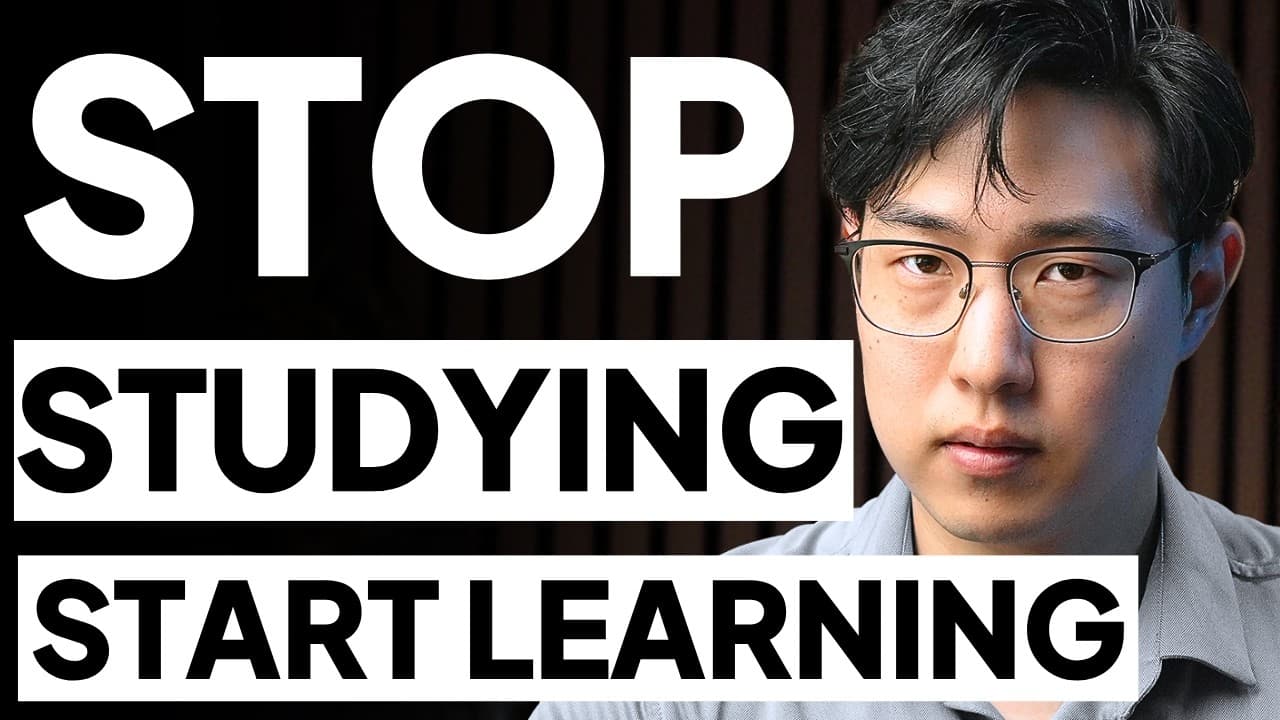
To maximize learning, judge every study method by whether it helps you remember, deeply understand, and apply knowledge, not by time spent studying. The learning coach recommends replacing low-impact activities such as rereading and highlighting with a personalized system of complementary techniques, regular testing, deep processing, spaced repetition, and active recall. Read on to identify ineffective habits and build a stronger learning toolbox.
Transcript
I've been a learning coach for the past 13 years I run a learning program called I can study where I've worked with tens of thousands of Learners around the world to help them Reach their dream results and I'm going to compress 13 years of studying and learning advice into this one video number one studying does not equal learning you can spend a l... Read More
Key Insights
- Studying is a physical activity, while learning is the brain's ability to connect information into knowledge.
- Study hacks are often ineffective; real improvement requires changing long-standing habits.
- Copying successful students may not work due to individual differences in deep processing abilities.
- A learning system should include a variety of techniques, each with its own purpose and limitations.
- The illusion of learning occurs when activities feel productive but don't lead to actual knowledge retention.
- Testing yourself early and often helps identify knowledge gaps before exams.
- Knowledge can be divided into different levels; testing should reflect the complexity of the required understanding.
- Active recall is more effective than passive methods; focus on free recall over cued or recognition-based recall.
Install to Summarize YouTube Videos and Get Transcripts
Explore YouTube Video Summarizer or Get YouTube Transcript Extractor
Questions & Answers
Q: How can I maximize learning from my study sessions?
Measure studying by whether you can remember, deeply understand, and apply the material afterward. Replace low-impact activities such as rereading and highlighting with a personalized system of complementary techniques, including testing and active recall.
Q: What is the difference between studying and learning?
Studying consists of activities such as reading, writing notes, and testing yourself. Learning is the outcome in your brain: information becomes knowledge that you can retain, understand deeply, and apply when needed.
Q: Why are study hacks unlikely to solve serious learning problems?
A 30-second tip cannot usually undo problems rooted in years of accumulated habits. Small adjustments may help, but meaningful improvement generally requires retraining how you study and think rather than searching for shortcuts.
Q: Why might copying a successful student's methods fail?
Learning is personalized, and students differ in their ability to connect information and extract meaning through deep processing. A successful student may achieve strong results with mediocre techniques because of stronger processing, so copying the visible method may not reproduce the same outcome.
Q: What is deep processing, and can it be improved?
Deep processing is the brain's ability to connect information and extract meaningful learning from what it consumes. The transcript says it is influenced by genetics and early childhood experiences, but it can be trained over time.
Q: Why should I build a study system instead of relying on one technique?
There is no perfect technique that handles every learning need. Each method has a specific purpose and limitations, so an effective system uses a toolbox of techniques that supplement one another's weaknesses.
Q: What is the illusion of learning, and how can I avoid it?
The illusion of learning occurs when an activity feels productive without producing durable knowledge. Test yourself early and often to reveal gaps, and evaluate whether you can retain, understand, and apply the material instead of judging progress by effort alone.
Q: How can I improve active recall?
Prioritize free recall, which requires retrieving information without cues, over cued recall or recognition. Practice generating answers from scratch, use open-ended questions, and vary flashcard cues so recall does not depend on one prompt.
Summary & Key Takeaways
-
Studying is distinct from learning; the latter requires retention, understanding, and application. Not all study techniques are equally effective, and many popular 'hacks' offer little real benefit. Instead, focus on building a personalized learning system that emphasizes deep processing and a variety of study methods.
-
Copying successful students may not yield the same results due to individual differences in processing ability. Evaluate and refine your learning toolbox by focusing on high-impact techniques like spaced repetition and active recall. Avoid the illusion of learning by testing yourself early and often to uncover knowledge gaps.
-
Recognize the difference between declarative and procedural knowledge. Testing should reflect the level of understanding required. Active recall, particularly free recall, strengthens memory more effectively than passive review. Use personalized systems to improve learning efficiency and reduce reliance on rote memorization.
Read in Other Languages (beta)
Share This Summary 📚
Summarize YouTube Videos and Get Video Transcripts with 1-Click
Try YouTube Summary with ChatGPT & Claude or YouTube Transcript Generator
Explore More Summaries from Justin Sung 📚
Summarize YouTube Videos and Get Video Transcripts with 1-Click
Try YouTube Summary with ChatGPT & Claude or YouTube Transcript Generator