What Makes Billion-Dollar Unpopular Startup Ideas Succeed?
TL;DR
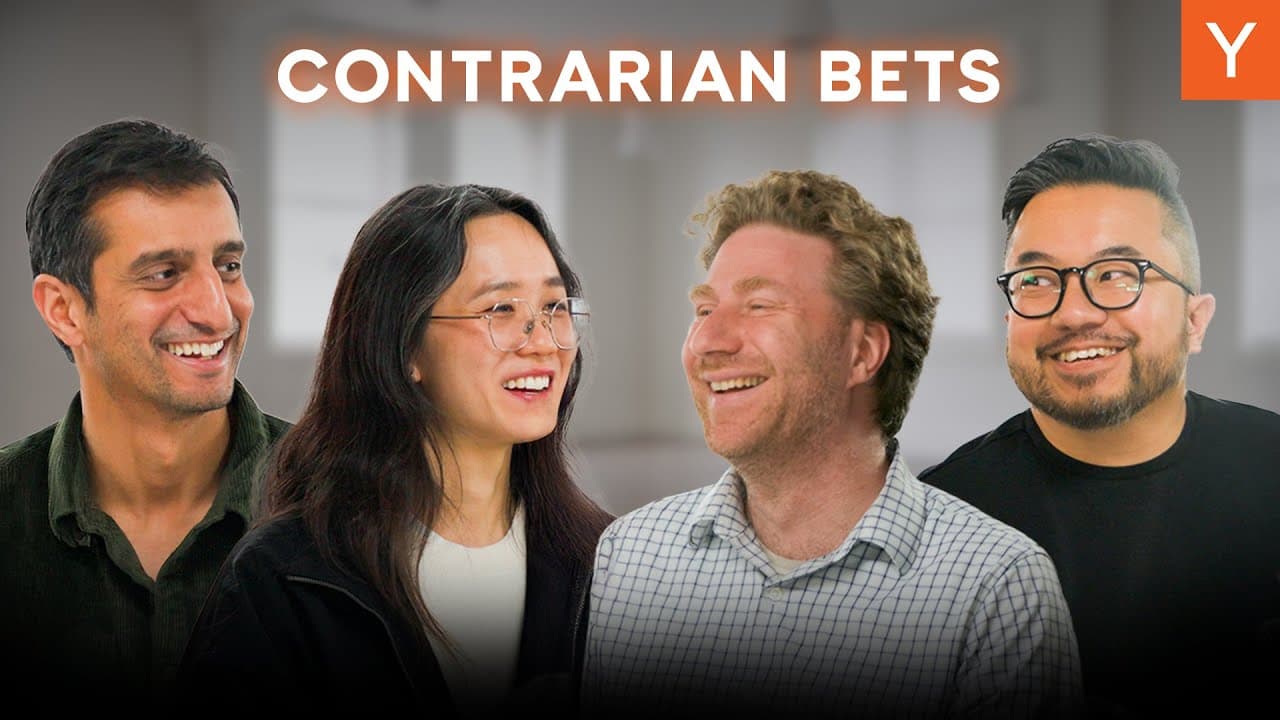
Contrarian startup ideas succeed when founders identify something people desperately want, develop a unique insight, and make a bet that distinguishes them from crowded markets. Obvious opportunities can attract 5, 10, or 100 competitors, while non-obvious ideas may feel dangerous despite signs of product-market fit. Read on to learn how first-principles thinking and customer demand can reveal overlooked opportunities.
Transcript
If you only want to work on things that are hot, you're going to find yourself working on derivative ideas that end up being obvious, that end up having 5, 10, 100 competitors. It's great for that number one, number two, but guess what? Like number three through number 98 of all the people in that market, their startups are going to die. Nine out o... Read More
Key Insights
- Contrarian ideas often face initial skepticism but can lead to groundbreaking success if they address real needs.
- Being first in a crowded market isn't always advantageous; unique insights and differentiation are crucial.
- Non-obvious ideas can feel risky but may offer significant rewards if they solve genuine problems.
- Regulatory environments can adapt to new technologies if they provide substantial consumer benefits.
- Founders should focus on first principles to identify what users truly need, even if it challenges existing norms.
- Successful startups like Uber and DoorDash thrived by entering saturated markets with unique approaches.
- Startups can leverage technological advancements to disrupt traditional industries and create new markets.
- Persistence in the face of skepticism is essential for founders pursuing contrarian ideas, as demonstrated by companies like SpaceX and OpenAI.
- "If you only want to work on things that are hot, you're going to find yourself working on derivative ideas that end up being obvious, that end up having 5, 10, 100 competitors." (0:00)
- "Nine out of 10 people might tell you you're stupid or crazy, but then one out of 10 people might be exactly the person who believes what you believe." (0:20)
- "run out and try to find things that humans really desperately want and need and then you'll figure out the rest." (0:25)
- "Non-obvious sounds like in your body might feel like you know neutral but actually non-obvious feels dangerous and scary like I could devote my life to this waste 10 years on this and have no outcome." (3:35)
Install to Summarize YouTube Videos and Get Transcripts
Explore YouTube Video Summarizer or Get YouTube Transcript Extractor
Questions & Answers
Q: How do contrarian startup ideas succeed?
They succeed by addressing something people genuinely want or need while using a unique insight to stand apart from competitors. Founders can then use customer demand and other signs of product-market fit to determine whether an unpopular idea has real potential.
Q: Why can working only on hot startup ideas be risky?
Hot ideas tend to become derivative and obvious, attracting 5, 10, or even 100 competitors. The transcript warns that while the top one or two companies may do well, many others in the same market will die.
Q: How can founders find a strong startup idea in a crowded market?
Founders should think from first principles and identify a contrarian bet that gives them a genuine advantage. Instead of merely choosing another workflow in a popular vertical, they need a unique insight that helps them stand out.
Q: Why are obvious AI startup ideas becoming harder to pursue?
Multiple startups now operate in verticals such as insurance and banking, making it harder to find untouched workflows. The transcript also says there has not been a model change that significantly shook up the idea space for a while.
Q: How long does the easy opportunity window last after a major technology shift?
The transcript describes a roughly two-year window after shifts such as the internet and smartphone when obvious startup ideas are easier to pursue. After that period, those ideas become picked over and founders must look deeper for a secret.
Q: Why do non-obvious startup ideas feel dangerous?
A non-obvious idea can require someone to devote 10 years of their life without knowing whether it will produce an outcome. That uncertainty makes the idea feel dangerous and scary rather than merely unfamiliar.
Q: What signals can validate an unpopular startup idea?
Rising numbers, customers pulling the product from the founder, and people saying they need it immediately can indicate product-market fit. These signals may matter more than whether people discuss the idea on X, TechCrunch, or at parties.
Q: How should founders respond when most people reject their idea?
They should look for the smaller group that shares their belief instead of treating broad skepticism as conclusive. The transcript suggests that nine out of 10 people may call an idea stupid or crazy, while one out of 10 may believe the same thing as the founder.
Summary & Key Takeaways
-
Contrarian startup ideas often appear risky or impossible but can lead to significant success by addressing unmet needs and leveraging unique insights. Founders should focus on solving real problems and challenging conventional wisdom to stand out in competitive markets. Companies like Uber, DoorDash, and Flock Safety illustrate how non-obvious ideas can transform industries.
-
Regulatory challenges can be navigated by demonstrating substantial consumer benefits, as seen in the rise of Uber and similar platforms. Founders are encouraged to think from first principles, focusing on what users truly need, rather than following established norms or trends. This approach can reveal overlooked opportunities and drive innovation.
-
Persistence and a willingness to challenge the status quo are crucial for success with contrarian ideas. Founders should seek out unique insights, even when faced with skepticism, as demonstrated by companies like SpaceX and OpenAI. By addressing real problems and leveraging new technologies, startups can create new markets and redefine industries.
Read in Other Languages (beta)
Share This Summary 📚
Summarize YouTube Videos and Get Video Transcripts with 1-Click
Try YouTube Summary with ChatGPT & Claude or YouTube Transcript Generator
Explore More Summaries from Y Combinator 📚




Summarize YouTube Videos and Get Video Transcripts with 1-Click
Try YouTube Summary with ChatGPT & Claude or YouTube Transcript Generator