How to Improve Your Decision-Making
TL;DR
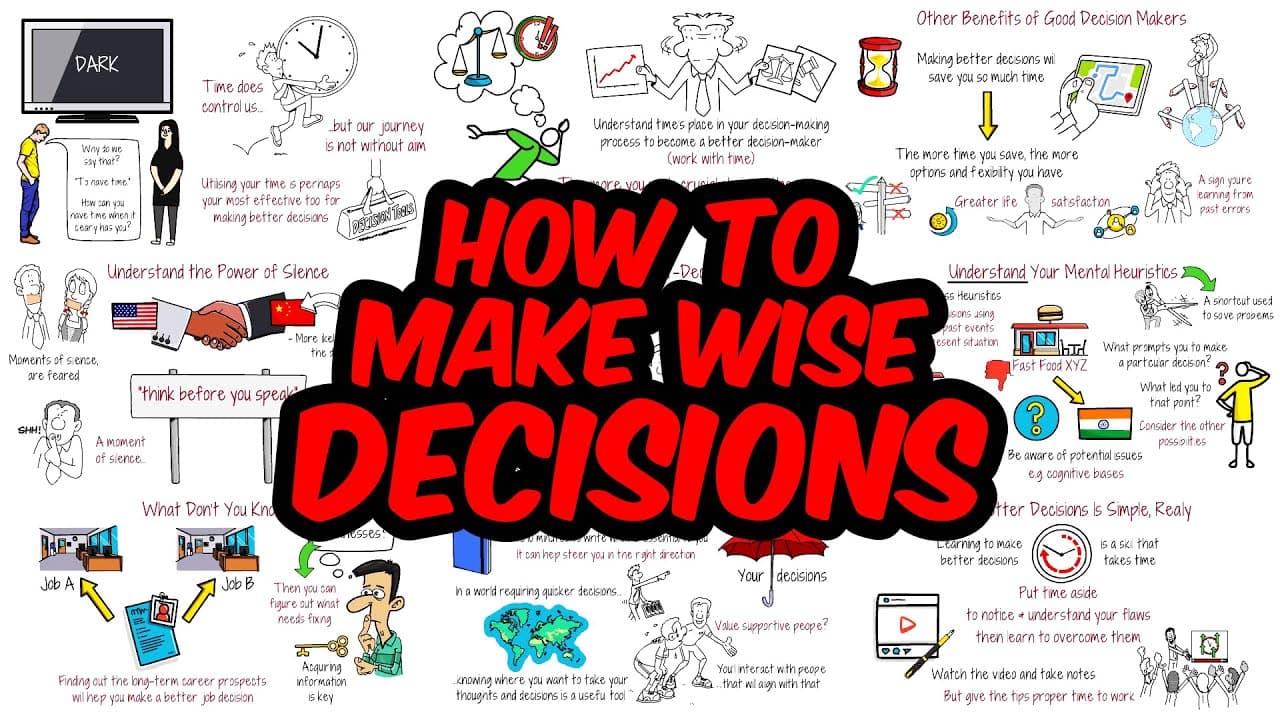
Improve your decision-making by giving crucial choices enough time, using silence to think, reflecting afterward, and examining the mental shortcuts behind your judgments. The transcript shows how ignoring a sat-nav can cost an extra 30 minutes and explains that rushed choices are more likely to produce costly errors. Read on for practical ways to identify triggers, learn from mistakes, and preserve future options.
Transcript
To explain how to make better decisions, let us first look at Dark, a German time-travel science-fiction drama on Netflix. The show dips in an out of multiple timelines, showing characters interact with different versions of themselves and their loved ones. The characters are constantly making decisions with massive consequences in the present day ... Read More
Key Insights
- ⌛ Efficient decision-making saves time, offering more opportunities and flexibility.
- 🤫 Embracing silence and thoughtful reflection can lead to better decisions.
- 🆘 Understanding mental heuristics helps recognize cognitive biases and improve decision outcomes.
- 🧑🏭 Acknowledging unknown factors and aligning decisions with values enhances decision-making quality.
- 🍝 Learning from past mistakes and seeking feedback are crucial for personal and professional development.
- ⌛ Time is a valuable ally in the decision-making process, requiring cooperation for successful outcomes.
- 💄 Identifying and addressing weaknesses contributes to making informed decisions.
Install to Summarize YouTube Videos and Get Transcripts
Explore YouTube Video Summarizer or Get YouTube Transcript Extractor
Questions & Answers
Q: How can you improve your decision-making?
Use time deliberately: avoid rushing crucial choices, pause in silence to think, and reflect on decisions afterward. You should also examine what prompted each choice, consider the alternatives, and recognize when mental heuristics may be creating cognitive biases.
Q: Why should you avoid rushing crucial decisions?
The more you rush a crucial choice, the more likely you are to make a potentially costly error. After a rash decision, you may then spend considerable time thinking about what you could have done differently.
Q: How does silence help you make better decisions?
A moment of silence creates space to think before responding or choosing. When you give yourself that opportunity, the resulting decision is more likely to be better for you.
Q: Why is post-decision reflection important?
Reflection helps you understand why you made a decision, where it led, and why some choices were more beneficial than others. This turns mistakes into material for becoming a better decision-maker rather than occasions for dwelling on errors or being overly self-critical.
Q: Who can help you reflect on a difficult decision?
The transcript recommends talking with someone who has high emotional intelligence and understands you. Verbalizing your thoughts with that person can produce a breakthrough in decision-making and subsequent personal development.
Q: What is a mental heuristic in decision-making?
A mental heuristic is a shortcut used to solve problems quickly and effectively. Investors and financial professionals, for example, may use heuristic approaches to speed up investment decisions and analysis, though shortcuts can overlook important differences and lead to cognitive biases.
Q: How can you recognize problematic decision-making shortcuts?
Start by asking what prompted a particular decision and what led you to that point. Then step back, consider the other possibilities, and analyze why you rejected them so you can recognize similar trigger points later.
Q: What are the benefits of making better decisions?
Better decisions can save time and provide more options and flexibility; ignoring a sat-nav, for example, can add 30 minutes to a journey. Good decision-making also shows that you are learning from past errors and may support job satisfaction, life satisfaction, better pay, or recognition as a leader.
Summary & Key Takeaways
-
"Dark" on Netflix showcases characters navigating complex timelines, making crucial decisions with far-reaching consequences.
-
Rushed decisions often lead to regrets, emphasizing the importance of utilizing time effectively in the decision-making process.
-
Key factors like saving time, embracing silence, post-decision reflection, mental heuristics, learning your unknowns, and aligning decisions with your values contribute to making better choices.
Read in Other Languages (beta)
Share This Summary 📚
Summarize YouTube Videos and Get Video Transcripts with 1-Click
Try YouTube Summary with ChatGPT & Claude or YouTube Transcript Generator
Explore More Summaries from The Art of Improvement 📚


Summarize YouTube Videos and Get Video Transcripts with 1-Click
Try YouTube Summary with ChatGPT & Claude or YouTube Transcript Generator