Is DeepSeek V4 Coming? GitHub Code Leaks Explained
TL;DR
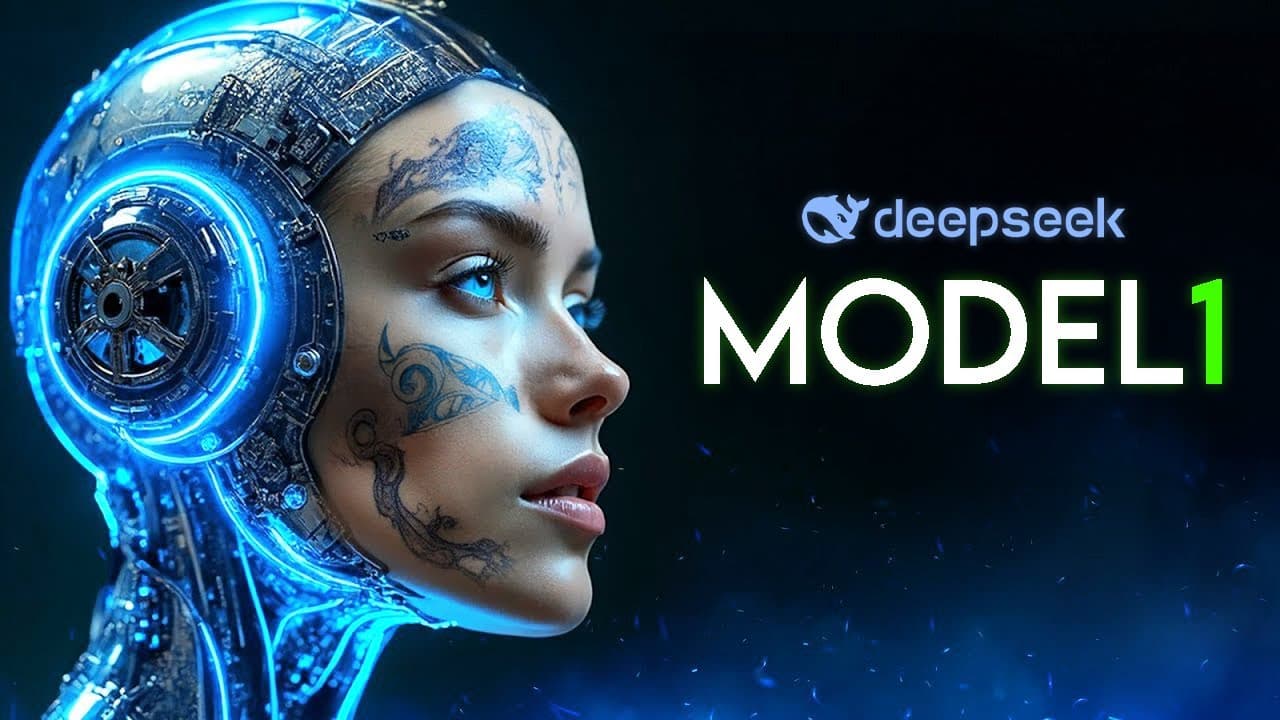
Developers spotted an unknown model identifier repeated many times across a large batch of Flash MLA code DeepSeek pushed to GitHub, alongside its existing version tag, fueling speculation that a new flagship, DeepSeek V4, is near. The same week Zhipu AI released GLM-4.7-Flash, a deployable long-context mixture-of-experts model built for coding and reasoning, while Japanese researchers published an emotion-computing framework that learns feeling categories from body signals without labels.
Transcript
Deepseek might have just exposed its next flagship model on GitHub and it looks huge. JIPU launched a long context model built for real coding and reasoning. Japan just revealed emotion computing AI based on body signals. And news research dropped a competitive programming monster that learns by running code and getting punished for failure. All ri... Read More
Key Insights
- DeepSeek's next flagship is being inferred from code rather than announced, because a large batch of updated Flash MLA files on GitHub contained an unknown 'model one' identifier repeated many times, which developers argue is too frequent to be leftover placeholder text.
- Code changes are treated as stronger evidence than press releases because companies control announcements but code tends to expose what is actually being built internally, making the GitHub updates the basis for the V4 speculation.
- 'Model one' appears to be a genuinely new flagship rather than a minor bump, because the code explicitly separates it from the existing V3.2 version tag in places, signaling a distinct architecture instead of an incremental iteration.
- Three technical signals point to deep redesign: a changed KV cache layout for how context memory is stored and retrieved, different sparsity handling for compute efficiency, and explicit FP8 decoding support to squeeze performance from modern hardware.
- V4 may integrate DeepSeek's own prior research, since the company published papers on a training method called modified hierarchical connections and a biologically inspired memory module called Engram, which people speculate could power the redesigned model.
- GLM-4.7-Flash from Zhipu AI is a mixture-of-experts model that holds a large total parameter count but activates only part of it per token, positioned as a lightweight, free-tier option that people can realistically run locally without a massive GPU cluster.
- GLM-4.7-Flash targets serious agent, coding, and reasoning tasks with long context support, standard chat interfaces, preserved thinking mode for multi-turn agents, and compatibility with common inference backends plus a growing ecosystem of fine-tunes and quantizations.
- Japan's emotion-computing research models feelings as a computational process tied to the body, using an unlabeled multimodal model that discovers emotion categories on its own from participants viewing emotion-evoking images, grounded in the theory of constructed emotion.
Install to Summarize YouTube Videos and Get Transcripts
Explore YouTube Video Summarizer or Get YouTube Transcript Extractor
Questions & Answers
Q: What is DeepSeek V4 and has it been officially announced?
DeepSeek V4 is a rumored next flagship AI model that has not been officially confirmed. It is not a product announcement but an inference drawn from developers noticing DeepSeek update a large batch of Flash MLA code on GitHub, which contained an unknown identifier called 'model one.' Because code changes tend to expose what companies are actually building internally, developers treated this as serious evidence that a new flagship is being prepared, possibly around the Lunar New Year period.
Q: Why do developers think 'model one' signals a new architecture rather than a minor update?
In the leaked code, the 'model one' identifier appears repeatedly and, in some places, is explicitly separated from the existing V3.2 version tag. That separation suggests it is not treated as a normal minor version bump. Developers also found differences in KV cache layout, sparsity handling, and FP8 decoding support, which are deep under-the-hood changes tied to memory efficiency, compute, and speed rather than surface-level improvements, pointing toward something structurally new.
Q: What do KV cache, sparsity, and FP8 decoding mean for the model?
KV cache is the memory structure that lets transformer models track context efficiently without reprocessing everything, so changing its layout affects performance, memory efficiency, and speed in long context. Sparsity handling reflects compute efficiency tricks where parts of the model can be skipped while keeping quality high. FP8 decoding support lowers memory and increases throughput on modern hardware. Together, these signals suggest the model is engineered for efficiency at scale, not just raw intelligence.
Q: How does DeepSeek's prior research connect to the rumored V4?
DeepSeek previously released two technical papers: one on a training method called modified hierarchical connections, and another on a biologically inspired memory module called Engram. People speculate that V4 could be the first DeepSeek flagship to actually integrate these directions, using the new training structure and memory behavior. The reasoning is that companies typically publish this kind of research when they plan to deploy it into a real system, which makes a redesigned architecture more believable.
Q: What is GLM-4.7-Flash and who made it?
GLM-4.7-Flash is a model released by Zhipu AI, also known as Z.ai. It is built for people who want strong reasoning and coding while still being realistic to run locally without a massive GPU cluster. It uses a mixture-of-experts architecture, so it has a large total parameter count but does not activate all parameters for every token. Zhipu positions it as a lightweight, even free-tier option compared to their full GLM-4.7 model, while still targeting serious tasks.
Q: Why is GLM-4.7-Flash considered practical to deploy?
GLM-4.7-Flash matters because most best-in-class models are too expensive to run, too heavy to host, or locked behind paid APIs. It supports long context length, uses a standard interface and chat template that make integration into existing tools easier without rewriting a pipeline, and works with common inference backends. There is already a growing ecosystem of fine-tunes and quantizations, and it recommends a preserved thinking mode so agents can maintain reasoning across multiple turns.
Q: What is the emotion-computation research from Japan about?
A Japanese research team released an AI framework that models how emotions form, not as a magical feelings engine but as a computational process tied to the body. It is based on the theory of constructed emotion, which holds that emotions are concepts built by the brain in real time by combining internal bodily signals like heart rate with external sensory information like what you see or hear. The published research aims to explore the computational process behind emotion concept formation.
Q: How does the emotion AI learn without being told what each emotion is?
The researchers built a multi-layered multimodal probabilistic generative model that discovers hidden patterns and categories by observing how different data types occur together, without explicit labels. It was not trained on statements like 'this is fear' or 'this is joy.' Instead, they trained it on unlabeled data from human participants who viewed emotion-evoking images and videos, and the system had to discover the emotion categories on its own from the patterns in the combined internal and external signals.
Summary & Key Takeaways
-
DeepSeek did not officially announce anything, but developers noticed it updated a large batch of Flash MLA code on GitHub containing an unknown 'model one' identifier repeated many times. Because code exposes internal work more reliably than press releases, this sparked speculation about a new flagship model, DeepSeek V4, arriving around the Lunar New Year period.
-
Analysis of the leaked code found 'model one' separated from the existing V3.2 tag, alongside differences in KV cache layout, sparsity handling, and FP8 decoding support. These point to structural redesign rather than incremental updates, and may integrate DeepSeek's published research on modified hierarchical connections and the Engram memory module.
-
Separately, Zhipu AI released GLM-4.7-Flash, a deployable mixture-of-experts model built for coding, reasoning, and agent workflows with long context. Japanese researchers published an emotion-computing framework that learns emotion categories from body signals without labels, and Nous Research released a competitive-programming model trained by executing code and rewarding correct solutions.
Read in Other Languages (beta)
Share This Summary 📚
Summarize YouTube Videos and Get Video Transcripts with 1-Click
Try YouTube Summary with ChatGPT & Claude or YouTube Transcript Generator
Explore More Summaries from AI Revolution 📚





Summarize YouTube Videos and Get Video Transcripts with 1-Click
Try YouTube Summary with ChatGPT & Claude or YouTube Transcript Generator